
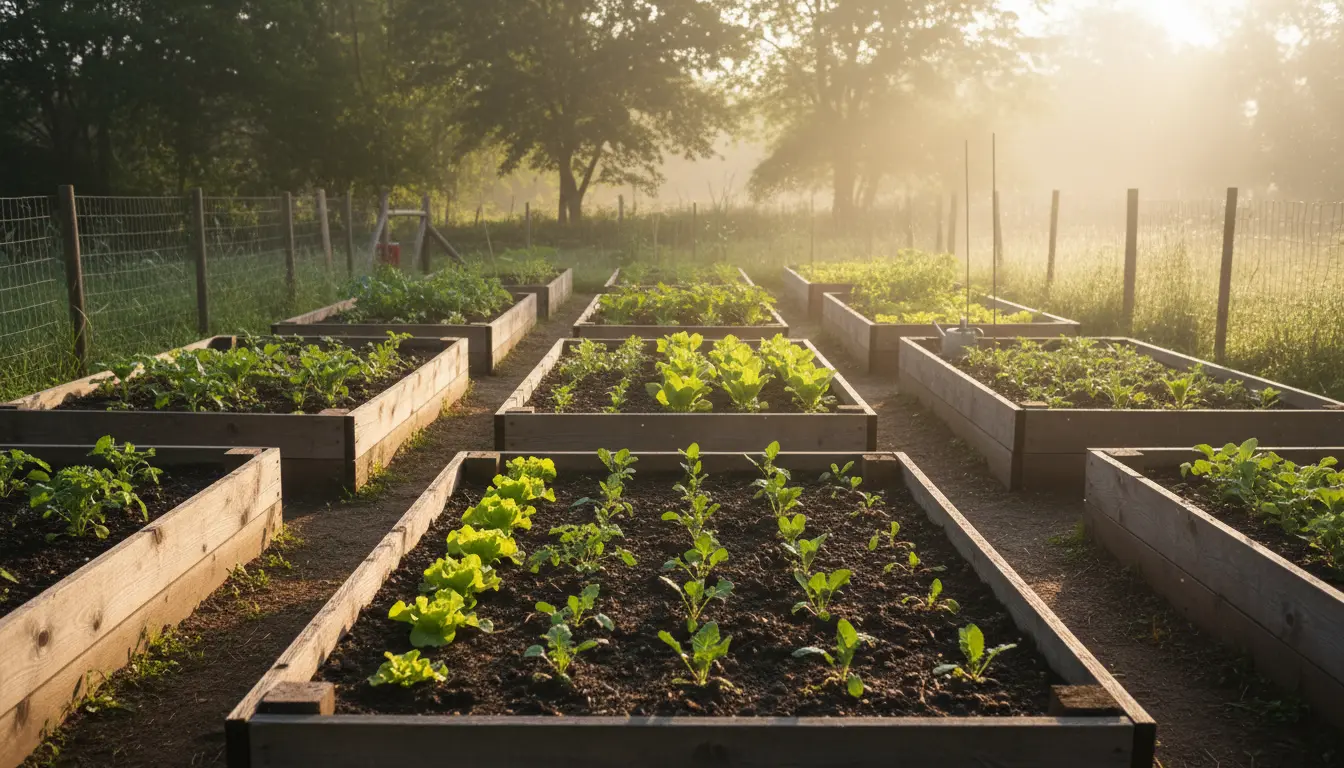
Overview: Why start a vegetable garden at home
Growing your own vegetables saves money and improves food quality. A small garden can fit a backyard, balcony, or a set of containers.
This guide shows practical steps to start a vegetable garden at home and maintain it through the first season. Follow the sequence below to reduce mistakes and get quicker results.
How to Start a Vegetable Garden: Plan Your Space
Assess sunlight, access to water, and available space before planting. Most vegetables need 6–8 hours of direct sunlight daily.
Decide between in-ground beds, raised beds, or containers based on soil quality and mobility needs. Raised beds warm faster and drain well, while containers are ideal for balconies.
Choose Where to Start a Vegetable Garden
List potential locations and track sunlight for a few days. Mark shaded periods and note any strong winds or reflective heat sources.
Ensure the site is within easy reach of a water source to make watering and maintenance practical. Convenience increases regular care.
Prepare Soil and Materials
Good soil makes the biggest difference. Test soil pH with a simple kit; most vegetables prefer pH 6.0–7.0.
Amend heavy clay with compost and coarse sand, and improve sandy soil with organic matter. Use a high-quality potting mix for containers.
Essential Materials to Start a Vegetable Garden
- Seeds or seedlings of suitable varieties
- Compost or well-rotted manure
- Garden tools: trowel, spade, rake, watering can or hose
- Mulch to retain moisture and suppress weeds
- Support structures: stakes, cages, or trellises for vining crops
Planting: Timing and Techniques
Follow local planting calendars for frost dates and seasonal windows. Start cool-season crops earlier and warm-season crops after frost risk passes.
Direct-sow root vegetables and peas where they will grow, and transplant seedlings for tomatoes, peppers, and brassicas. Harden off seedlings for a week before planting outdoors.
Simple Planting Examples
- Tomatoes: Start indoors 6–8 weeks before last frost; transplant after frost-free date.
- Lettuce: Sow every 2–3 weeks for continuous harvest; tolerates partial shade.
- Beans: Sow directly after soil warms; they grow quickly and fix nitrogen.
Watering and Feeding Your Garden
Water deeply and less frequently to encourage strong root systems. Aim for consistent moisture without waterlogging the soil.
Mulch around plants to conserve moisture and reduce weeds. Apply balanced organic fertilizer according to crop needs and soil test results.
Basic Watering Schedule
- Seedlings: Keep soil consistently moist until established.
- Established vegetables: Water 1–2 times per week deeply, more during heat waves.
- Containers: Check moisture daily; they dry faster than beds.
Pest Management and Common Problems
Monitor plants regularly for pests, disease, and nutrient deficiencies. Early detection makes management easier and reduces crop loss.
Use integrated pest management (IPM): physical barriers, hand removal, beneficial insects, and organic sprays as a last resort.
Quick Pest Control Tips
- Use row covers to protect seedlings from flea beetles and cabbage moths.
- Encourage predators like ladybugs for aphid control.
- Rotate crops yearly to reduce soil-borne disease build-up.
Maintenance: Pruning, Staking, and Harvesting
Stake tall plants early to prevent root disturbance later. Prune suckers on indeterminate tomatoes to focus energy into fruit production.
Harvest regularly to encourage continued production. Pick leafy greens when young for tenderness and better flavor.
Seasonal Tasks Checklist
- Spring: Prepare beds, start seeds, set transplants.
- Summer: Water, weed, stake, monitor pests.
- Fall: Clean up spent plants, add compost, save seed if desired.
Small Real-World Case Study
Case Study: Maria’s Balcony Tomato and Herb Garden. Maria had a small south-facing balcony and started with three 10-inch containers. She chose determinate tomatoes and basil to save space.
After preparing potting mix with compost and placing containers in full sun, Maria watered daily for two weeks, then reduced to alternate days. By week 12 she had a steady harvest of cherry tomatoes and fresh herbs.
Key wins: routine watering, monthly compost tea feeding, and staking prevented toppled plants. Her yield fed a family of two all summer and reduced grocery spend on herbs and tomatoes.
Starter Plant List for New Gardeners
- Easy vegetables: Radishes, lettuce, spinach, bush beans
- Beginner-friendly fruiting crops: Cherry tomatoes, peppers
- Herbs: Basil, parsley, chives
Final Tips to Start a Vegetable Garden Successfully
Start small and expand after your first season. Simple success is better than an overwhelmed garden that gets neglected.
Keep a garden journal to track planting dates, varieties, and results. Notes help refine timing and variety choices for better yields next year.