
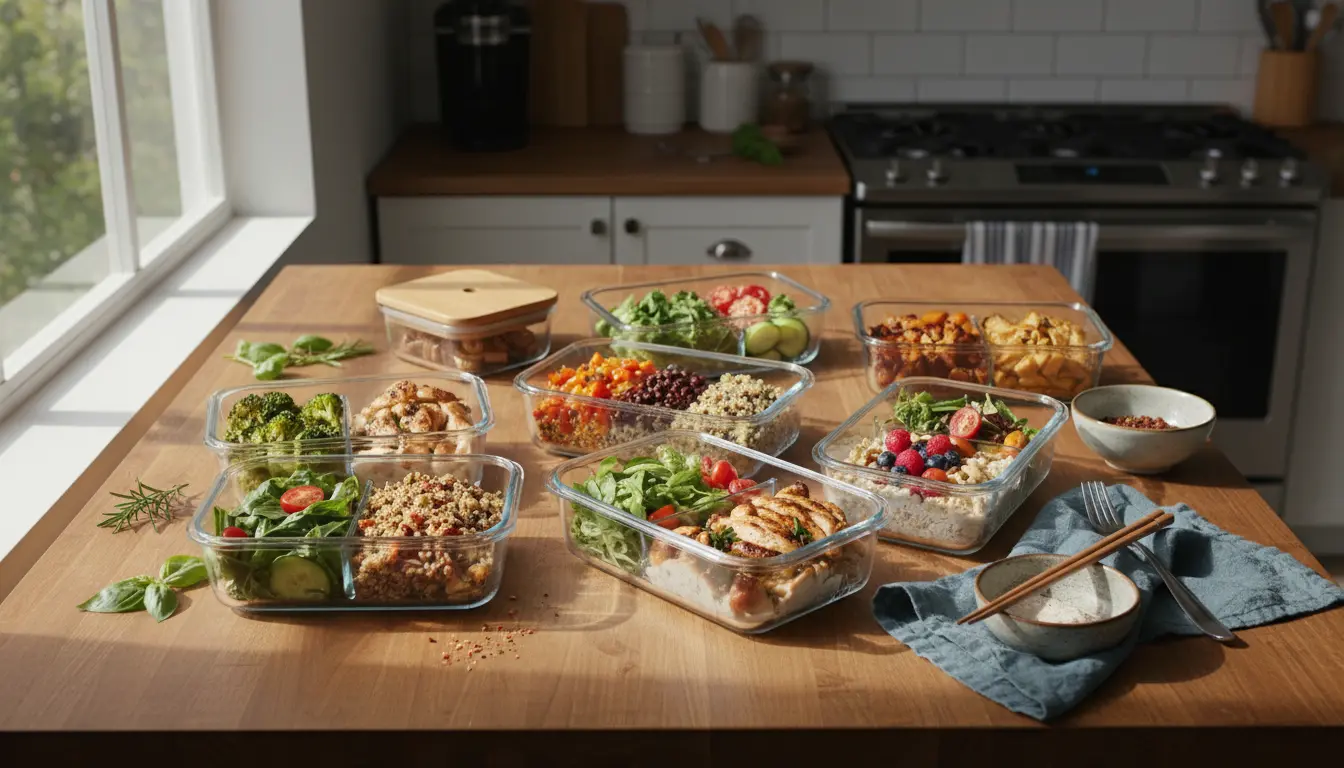
Why Meal Prep for Busy Professionals Works
Meal prep cuts decision fatigue and saves time on weekdays. For busy professionals, it creates a simple routine that supports consistent, healthier choices.
This guide focuses on practical steps you can repeat weekly, even with unpredictable schedules. The goal is sustainable habits, not perfection.
Getting Started: Tools and Staples for Meal Prep
Start with basic tools that make batch cooking and storage easy. You don’t need expensive gadgets—just reliable containers and a few utensils.
- Glass or BPA-free airtight containers (multiple sizes)
- Sharp chef’s knife and cutting board
- Sheet pans, one large pot, and a skillet
- Measuring cups, spoons, and a digital scale (optional)
- Labels and markers for dates
Meal Prep for Busy Professionals: Weekly Planning
Spend 15–30 minutes planning before grocery shopping. A simple plan reduces waste and grocery trips.
Follow this planning template:
- Pick 2 proteins (chicken breast, canned tuna, tofu).
- Choose 2–3 vegetables that store well (broccoli, carrots, bell peppers).
- Select 1–2 starches or grains (brown rice, quinoa, sweet potatoes).
- Find 2 sauces/dressings to vary flavors (vinaigrette, tahini sauce).
- Plan one quick breakfast and one easy snack.
Sample Weekly Menu for Meal Prep
Keep meals interchangeable. Build bowls, wraps, or reheatable plates from the same components.
- Lunches: Grain + protein + roasted veg + dressing
- Dinners: Protein + sauteed greens + sweet potato
- Breakfasts: Overnight oats or boiled eggs and fruit
- Snacks: Hummus with carrot sticks, mixed nuts
Shopping Tips for Busy Professionals
Shop with a clear list organized by store section. This shortens time in the aisle and reduces impulse buys.
Buy versatile items and prioritize fresh produce that will last a week. Frozen vegetables are a good backup for unpredictability.
Batch Cooking Techniques That Save Time
Batch cook components, not full plated meals. Components mix and match all week and reheat consistently.
- Roast a large tray of mixed vegetables at 400°F for 25–35 minutes.
- Cook a grain batch: 2 cups dry rice yields about 6 cups cooked.
- Pan-sear or bake multiple protein portions at once; slice when rested.
- Make sauces in small jars to change flavor profiles quickly.
Storage and Safety
Cool foods before sealing containers to avoid condensation and faster spoilage. Store most items in the fridge for up to 4 days.
Freeze individual portions if you need longer storage. Label containers with date and contents for quick identification.
Reheating and Assembly Tips
Reheat evenly by loosening lids and heating in short intervals. Stir halfway through to avoid cold spots.
Assemble bowls just before eating to keep textures intact—dressings on the side until serving to prevent sogginess.
Quick Recipes and Flavor Ideas
Use simple recipes that scale well. Here are a few reliable combinations:
- Asian Bowl: Brown rice, grilled chicken, steamed broccoli, soy-ginger sauce
- Mediterranean Plate: Quinoa, roasted chickpeas, cucumber, tzatziki
- Taco Bowl: Cilantro-lime rice, black beans, salsa, avocado
Meal Prep for Busy Professionals: Managing Limited Time
If you only have one hour, prioritize protein and at least one vegetable. Use frozen grains or pre-washed salad greens to save time.
Another option is split preparation across two shorter sessions—chop on Sunday evening, cook on Monday morning.
Common Challenges and Solutions
Challenge: Boredom with meals. Solution: Use different dressings and spices to change flavors without extra prep.
Challenge: Unexpected late meetings. Solution: Keep two ready-to-eat frozen meals and one fresh salad option for quick swaps.
Preparing just three core components each week can reduce weekday cooking time by up to 70 percent. Simple repetition creates large time savings.
Real-World Example: Case Study
Case study: Laura, a project manager with a 10-hour workday, struggled with takeout expenses and low energy. She adopted a 90-minute Sunday prep routine.
Her routine: roast chicken and vegetables, cook a pot of quinoa, portion breakfasts (overnight oats) and snacks. She rotated three sauces to keep meals varied.
Result: Laura saved two hours weekly, reduced lunch spending by 60 percent, and reported more consistent afternoon energy levels.
Daily Checklist for Meal Prep Success
- Sunday: Plan, shop, and batch-cook core components
- Monday: Assemble lunches and pack snacks
- Midweek: Replenish fresh items if needed (greens, fruit)
- End of week: Use freezer portions first to avoid waste
Final Tips for Busy Professionals
Start small and build a routine that fits your calendar. Consistency matters more than variety in the first month.
Invest time in a simple system: plan, shop, cook, store, and label. With repetition, meal prep becomes a minor weekly task that pays big dividends.