
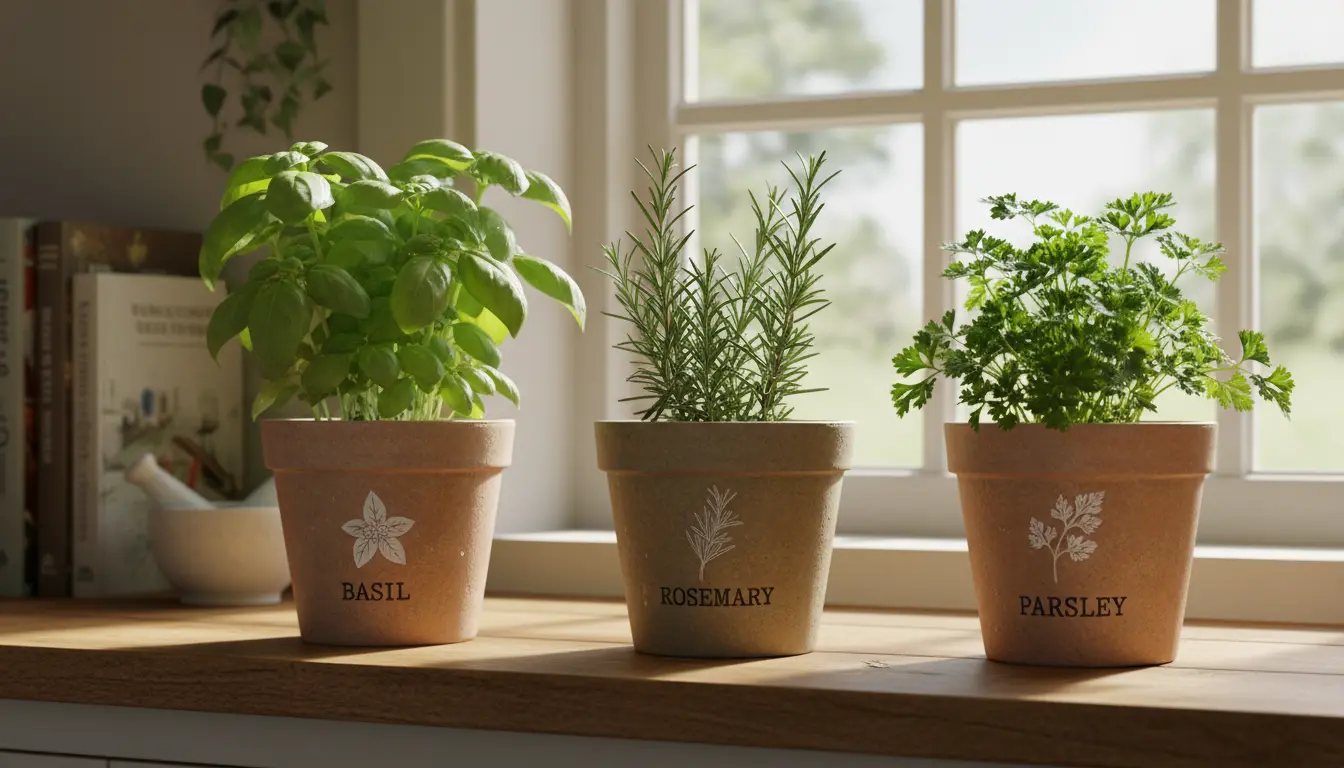
Why choose indoor herb gardening
Indoor herb gardening is a simple way to get fresh flavor year-round without a yard. It saves money, reduces waste, and gives quick culinary rewards.
This guide shows practical steps to start and maintain healthy indoor herbs, with clear instructions and troubleshooting tips.
Essential supplies for indoor herb gardening
Before you begin, gather a few basic items so your herbs thrive indoors. Good supplies make the difference between a short-lived pot and a productive kitchen garden.
- Containers with drainage holes (4–8 inch pots for most herbs)
- Quality potting mix designed for containers
- Labels, a small watering can, and pruning shears
- A sunny windowsill or a grow light if natural light is limited
Light for indoor herb gardening
Most culinary herbs need 6–8 hours of bright light daily. South- or west-facing windows work well in many climates.
If windows are shady, use a full-spectrum LED grow light positioned 6–12 inches above plants for 12–14 hours a day.
Soil and containers for indoor herb gardening
Use a lightweight potting mix with good drainage; avoid garden soil which compacts indoors. Containers should have drainage holes to prevent root rot.
Self-watering pots help beginners, but monitor moisture—overwatering is a common issue.
Step-by-step guide to indoor herb gardening
Follow these steps to set up your first herb pots. The sequence below is designed for ease and consistent results.
- Choose herbs: start with forgiving varieties like basil, chives, mint, parsley, and thyme.
- Pick containers sized to each herb’s root system: shallow for basil, deeper for mint that spreads.
- Fill pots with potting mix and moisten before planting.
- Plant seeds or small transplants at the recommended depth; label each pot.
- Place pots where they receive adequate light and maintain even moisture.
Choosing the right herbs
Begin with herbs that respond well to indoor conditions. Easy choices include:
- Basil — loves warmth and light
- Chives — tolerant of less light and forgiving on water
- Mint — aggressive grower; plant in its own pot
- Parsley — slower but steady in bright light
- Thyme and oregano — low-maintenance and drought-tolerant
Watering and feeding for success
Watering is the most common point of error. Herbs prefer an evenly moist but not waterlogged soil.
- Check soil with your finger: water when the top 1 inch is dry.
- Use room-temperature water and avoid wetting leaves repeatedly.
- Feed lightly with a balanced liquid fertilizer every 4–6 weeks during the active growing season.
Pruning and harvesting
Regular harvesting encourages bushy growth. Pinch or cut above a leaf pair to promote branching.
Remove any flower buds on herbs like basil to keep energy focused on foliage, unless you want seeds.
Troubleshooting common issues in indoor herb gardening
Indoor herb gardens face predictable problems. Identifying them early helps you fix conditions quickly.
- Yellow leaves: often overwatering or poor drainage
- Leggy plants: insufficient light—move closer to light or add supplemental lighting
- Pest issues: inspect regularly; treat with mild soap spray or remove affected leaves
- Slow growth: feed lightly and check root space; repot if rootbound
Preventive steps
Maintain airflow, rotate pots for even light, and clean pots every season to reduce disease risk. Starting with healthy transplants reduces early failures.
Small real-world example: Apartment basil success
Case study: A renter named Sara wanted fresh basil for cooking. She placed two basil pots on a south-facing windowsill and used a small LED grow light during cloudy spells.
Within six weeks she had steady harvests, reduced grocery basil purchases, and learned to pinch tips weekly to keep the plants bushy. A single pot provided leaves for pesto and salads for months.
Quick maintenance checklist for indoor herb gardening
Use this short checklist once a week to keep herbs thriving.
- Check soil moisture and water if top inch is dry
- Rotate pots for even light exposure
- Harvest or pinch back growth to encourage density
- Inspect for pests or disease and act early
Wrapping up indoor herb gardening
Indoor herb gardening is accessible and rewarding with modest investment. Focus on light, drainage, and regular harvesting to build a productive kitchen herb garden.
Start small, learn from the first season, and expand based on what grows best in your home environment.