
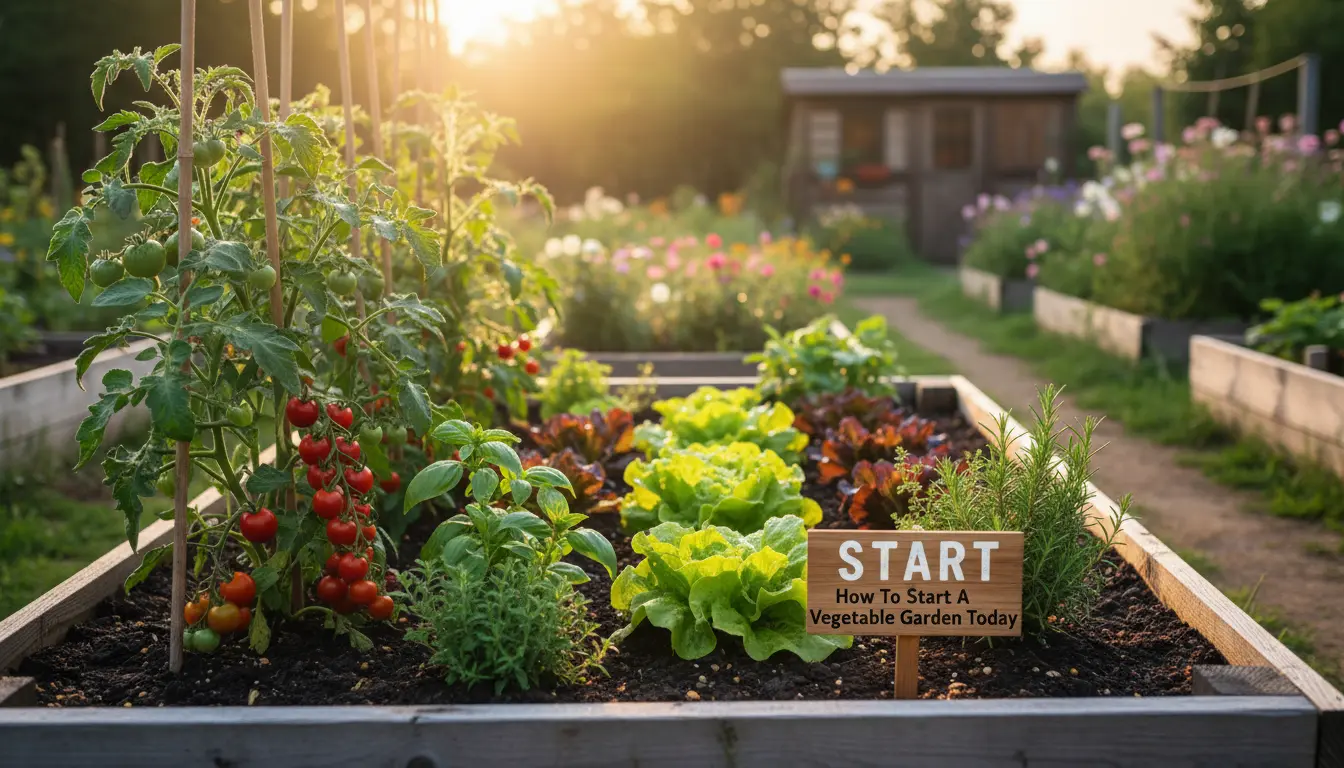
Start with a simple plan before you start a vegetable garden
Starting a vegetable garden works best when you plan. A clear plan saves time, money, and disappointment.
Decide what you want to grow, how much space you have, and how much time you can commit each week.
Choose the right site to start a vegetable garden
Vegetables need sun. Pick a spot that gets at least six hours of direct sunlight daily for most crops.
Also consider water access, wind exposure, and nearby trees whose roots may compete for nutrients.
Soil and drainage when you start a vegetable garden
Good soil is the foundation of a productive garden. Test for drainage by digging a hole and filling it with water to see how fast it drains.
If drainage is slow, use raised beds or improve soil with organic matter like compost to increase porosity.
Plan your layout to start a vegetable garden
For beginners, start small: one or two raised beds or a 10 x 10 foot plot. Small plots are easier to manage and maintain.
Group plants with similar water and sun needs together. This reduces waste and makes care simpler.
Crop selection and succession planting
Choose vegetables that grow well in your climate and that you will actually eat. Popular beginner crops include lettuce, radishes, tomatoes, and beans.
Practice succession planting: sow a new crop every few weeks to extend harvests and keep beds productive.
Prepare soil and plant when you start a vegetable garden
Amend soil with 2–3 inches of compost mixed into the top 6–12 inches. This adds nutrients and improves texture.
Use a shovel or garden fork to loosen compacted soil and remove large rocks or debris before planting.
Planting tips for seedlings and seeds
Follow spacing and depth instructions on seed packets or plant tags. Crowded plants reduce yields and invite disease.
Water new plantings gently but thoroughly to help roots establish. Keep the soil consistently moist during the first few weeks.
Watering and feeding your vegetable garden
Most vegetable gardens need about one inch of water per week from rain or irrigation. Adjust for hot or windy conditions.
Use drip irrigation or soaker hoses to deliver water at the soil level and reduce leaf wetness that can cause disease.
Fertilizing and soil testing
Get a basic soil test to check pH and nutrient levels. Local extension offices often provide affordable testing and recommendations.
Use balanced organic fertilizers or compost tea as needed, and avoid over-fertilizing, which can harm plants and the environment.
Manage pests and diseases in a vegetable garden
Start with preventive measures: clean tools, crop rotation, and healthy soil reduce many problems before they begin.
Inspect plants weekly for common pests like aphids, slugs, and caterpillars. Handpick pests or use targeted, low-toxicity controls when needed.
Companion planting and physical barriers
- Companion plants like marigolds can deter certain pests.
- Row covers protect young seedlings from insects and birds.
- Mulch suppresses weeds and keeps soil temperature stable.
Harvest and store vegetables
Harvest at peak ripeness for best flavor. Regular harvesting often encourages more production.
Learn simple storage methods: cool, dry storage for root vegetables and blanch-and-freeze for surplus greens and beans.
Simple seasonal calendar for a vegetable garden
Use a seasonal calendar that matches your area. Typical tasks include soil prep in early spring, planting in late spring, and fall cleanup.
- Spring: soil test, start seeds, plant cool-season crops
- Summer: manage water, harvest regularly, watch for heat stress
- Fall: plant cover crops, harvest remaining produce, clean beds
One 10 x 10 foot vegetable plot can produce enough salad greens for a family of four through the summer if planted and rotated properly.
Case Study: Small raised bed success
Anna, a first-time gardener, started with a single 4 x 8 raised bed in her backyard. She filled it with a mix of store-bought compost and garden soil.
She planted tomatoes, basil, lettuce, and bush beans and watered with a simple soaker hose on a timer. By midsummer she harvested regular salads and several pints of cherry tomatoes.
Key lessons from Anna: start small, focus on daily care, and choose crops you enjoy eating. This approach kept her motivated and reduced overwhelm.
Practical checklist to start a vegetable garden
- Choose a sunny site and measure available space.
- Test soil or decide on a raised bed.
- Select easy crops for your climate.
- Prepare soil with compost and loosen the top 6–12 inches.
- Plant according to seedling or seed directions.
- Set up simple irrigation and mulching.
- Monitor weekly and harvest on time.
Summary: start a vegetable garden with confidence
Starting a vegetable garden is manageable with a small plan and steady care. Focus on site selection, soil preparation, and choosing the right crops.
Begin small, learn from each season, and expand gradually. Consistent attention will lead to better yields and a more enjoyable gardening experience.