
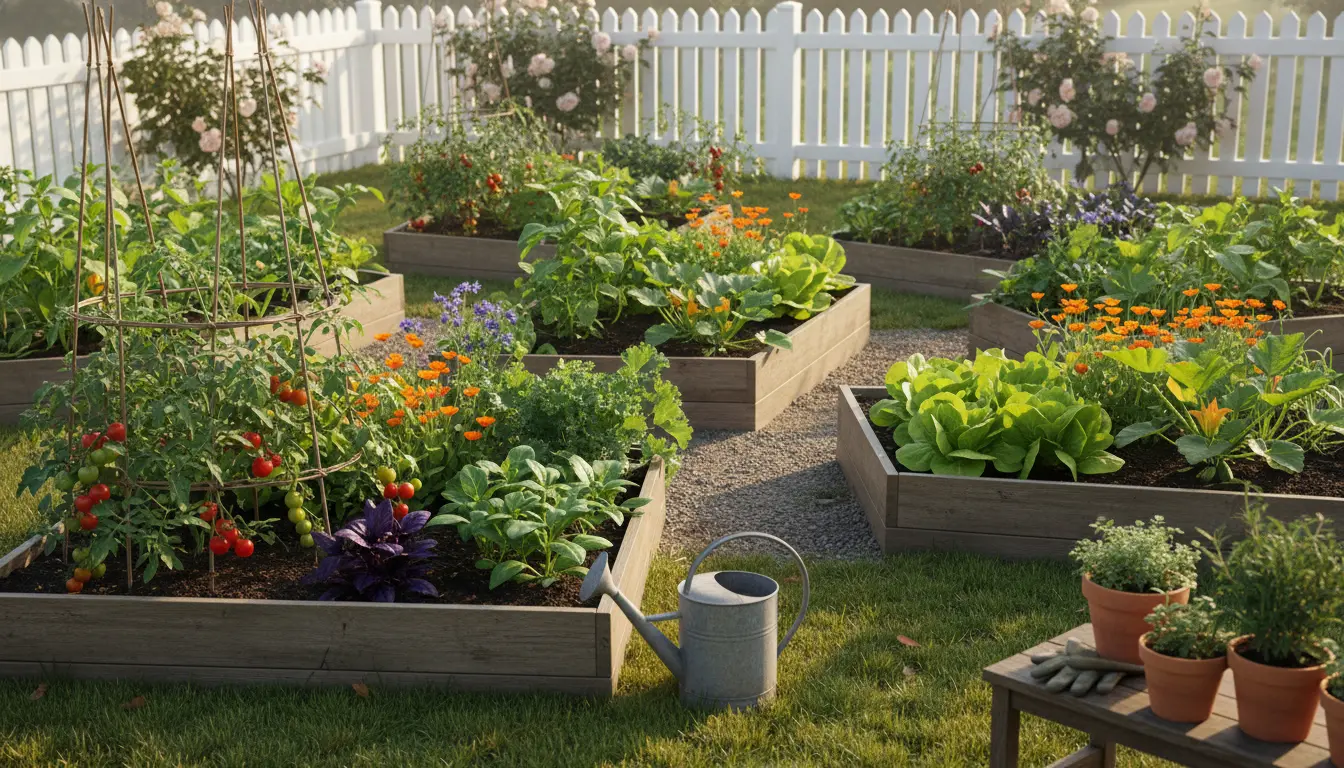
Starting a vegetable garden is a practical way to grow fresh food and learn outdoor skills. This guide explains clear steps you can follow to start a vegetable garden, whether you have a yard, raised beds, or containers.
How to Start a Vegetable Garden: Plan the Garden
Good planning saves time and increases harvest success when you start a vegetable garden. Decide what you want to grow, where to place beds, and how much time you can commit.
Choose a Location
Pick a spot that gets at least 6 hours of direct sunlight for most vegetables. Ensure easy access to water and consider wind protection and nearby shade from trees or buildings.
Select Vegetables to Grow
Choose crops based on your climate, available space, and cooking habits to stay motivated. Early-season winners include lettuce, radishes, and spinach; warm-season staples include tomatoes, beans, and peppers.
- Easy for beginners: lettuce, radish, spinach, green beans
- Best for containers: cherry tomatoes, herbs, peppers, leaf lettuce
- Good for small plots: carrots, beets, bush beans
How to Start a Vegetable Garden: Prepare Soil and Beds
Healthy soil is the foundation when you start a vegetable garden. Invest time to test and improve soil before planting for better yields and fewer pests.
Test Soil and Add Amendments
Use a basic soil testing kit to check pH and nutrient levels. Amend heavy clay with compost and sand, and add organic matter to sandy soil to improve water retention.
Create Beds or Containers
Raised beds warm faster and drain well, making them ideal for many beginners who start a vegetable garden. If using containers, choose pots at least 12 inches deep for most vegetables and ensure drainage holes.
How to Start a Vegetable Garden: Planting and Care
Plant at the right time and use simple care routines to keep plants productive. Proper watering, mulching, and support for vines reduce maintenance and boost yields.
Planting Techniques
Follow seed packet or plant tag spacing and depth instructions to start a vegetable garden correctly. Stagger plantings for continuous harvests; sow lettuce and radishes every 2–3 weeks for steady greens.
Watering and Mulching
Water deeply once or twice a week rather than light daily sprinkling to encourage strong roots. Apply 2–3 inches of organic mulch to retain moisture, suppress weeds, and moderate soil temperature.
Fertilizing and Support
Feed vegetables with a balanced organic fertilizer at planting and again mid-season if needed. Use stakes, cages, or trellises for tomatoes, peas, and cucumbers to save space and reduce disease.
How to Start a Vegetable Garden: Manage Pests and Problems
Common pests and diseases can be managed with observation and simple techniques rather than heavy chemicals. Early detection and rotation of crops reduce problems long term.
Common Issues and Solutions
Look for yellowing leaves, holes, or unusual spots and identify the cause before treating. Use row covers for insect control, hand-pick slugs, and apply organic fungicides only when necessary.
- Problem: Aphids — Solution: Blast with water or use insecticidal soap
- Problem: Blight on tomatoes — Solution: Remove infected plants and rotate crops
- Problem: Poor germination — Solution: Improve seed depth and soil warmth
Quick Tools and Supplies to Start a Vegetable Garden
Gather a few basic tools to make garden tasks easier and more efficient. You do not need expensive gear to start a vegetable garden well.
- Hand trowel and fork
- Garden hose with a gentle nozzle or a watering can
- Wheelbarrow or bucket for compost and soil
- Mulch, compost, and basic organic fertilizer
Small Case Study: Urban Balcony Garden
Maria used a 6-foot balcony to start a small vegetable garden and began with containers and vertical supports. She planted cherry tomatoes, basil, and lettuce and now harvests fresh salad greens weekly.
She followed these simple steps: chose compact varieties, used good potting mix, watered consistently, and rotated herbs with greens seasonally. Her example shows that even limited space can yield regular vegetables when you start a vegetable garden with careful planning.
Final Tips When You Start a Vegetable Garden
Start small and expand as you learn; this prevents overload and increases the chance of success. Keep a simple log of planting dates and harvests to improve planning next season.
Regular observation, timely watering, and steady additions of compost will keep plants productive. With routine care and the steps above, anyone can start a vegetable garden and enjoy fresh produce from home.