
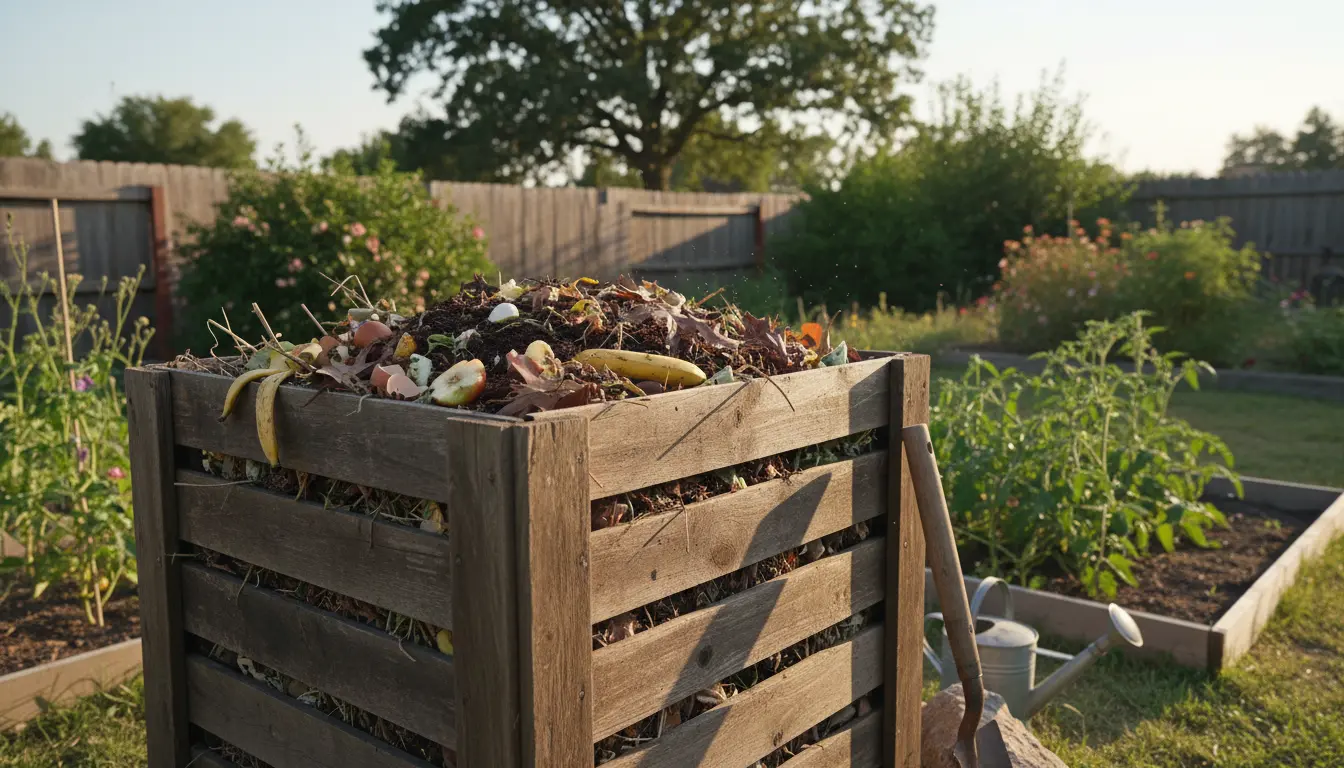
Composting at home turns kitchen scraps and yard waste into nutrient-rich soil. This guide gives step-by-step instructions you can use whether you have a backyard or a small balcony.
Why composting at home matters
Composting reduces household waste and lowers methane emissions from landfills. It also creates free soil amendments that improve plant health and water retention.
Understanding the basics will help you avoid common problems and keep the process efficient. Start with a simple setup and adjust as you learn.
How to start composting at home
Follow these core steps to begin composting at home today. Each step is practical and works for small and large setups.
1. Choose the right bin for composting at home
Select a container that fits your space and waste volume. Options include open piles, tumblers, plastic bins, and worm bins for indoor or small-space composting.
- Backyard: A 3-bin system or a single large tumbler keeps things organized.
- Small yard or balcony: A sealed compost bin or worm (vermicompost) setup works well.
- Apartment kitchens: Use a small bokashi or worm bin and transfer finished material to a community compost site if needed.
2. Gather the right materials for composting at home
Compost needs a balance of carbon (brown) and nitrogen (green) materials. Aim roughly for a 2–3:1 ratio of browns to greens by volume.
- Green materials: vegetable scraps, coffee grounds, fresh grass clippings.
- Brown materials: dry leaves, straw, shredded paper, cardboard.
Avoid meat, dairy, oily foods, and pet waste in most home compost systems to prevent pests and odors.
3. Layering and maintenance tips
Create layers of green and brown materials and keep the pile moist like a wrung-out sponge. Turn the pile every 1–2 weeks to add oxygen and speed decomposition.
- If the pile smells, add more brown material and increase turning.
- If decomposition is slow, chop materials smaller and ensure adequate moisture and oxygen.
Troubleshooting common problems with composting at home
Most issues are symptoms of imbalance: too wet, too dry, too compact, or lacking nitrogen. Diagnosing is usually straightforward.
Problem: Bad odor
Bad smells usually mean anaerobic conditions. Add dry brown material and turn the pile to reintroduce air.
Problem: Slow breakdown
Slow composting can result from large pieces, low temperature, or dryness. Chop inputs, add water if dry, and insulate the pile in cold weather.
Using finished compost from your home system
Finished compost is dark, crumbly, and smells earthy. Use it as a soil amendment, mulch, or potting mix ingredient.
- Top-dress vegetable beds with 1–2 inches of compost annually.
- Mix compost into potting soil at 10–30% for container plants.
Composting one household can divert hundreds of pounds of organic waste from landfills each year and reduce methane emissions.
Small real-world example: A balcony compost case study
Case study: Nina, a city renter, started a worm bin on her balcony using a 10‑liter plastic bin and red wigglers. She added kitchen vegetable scraps and shredded paper.
In four months Nina produced enough vermicompost to feed three balcony planters. She avoided odors by maintaining moisture and feeding the worms small portions. Her tomato yield improved noticeably the next season.
Starter checklist for composting at home
Use this short checklist to set up quickly and avoid common mistakes. Follow it during your first month to develop good habits.
- Choose a bin suited to your space (tumbler, bin, worm box).
- Collect greens and browns separately in two containers.
- Layer materials and maintain moisture like a sponge.
- Turn or aerate regularly and monitor smell and temperature.
- Use finished compost after 3–12 months depending on system and management.
Tips to scale or improve composting at home
As you gain experience, scale by adding a second bin, using a hot compost method, or joining a community compost program. Record what you add and how often to refine your process.
Consider simple upgrades like a compost thermometer, a shredder for bigger inputs, or a rain cover to control moisture.
Composting at home is a practical way to cut waste, build healthy soil, and support a sustainable garden. Start with a manageable setup, learn from small adjustments, and expand as you become confident.