
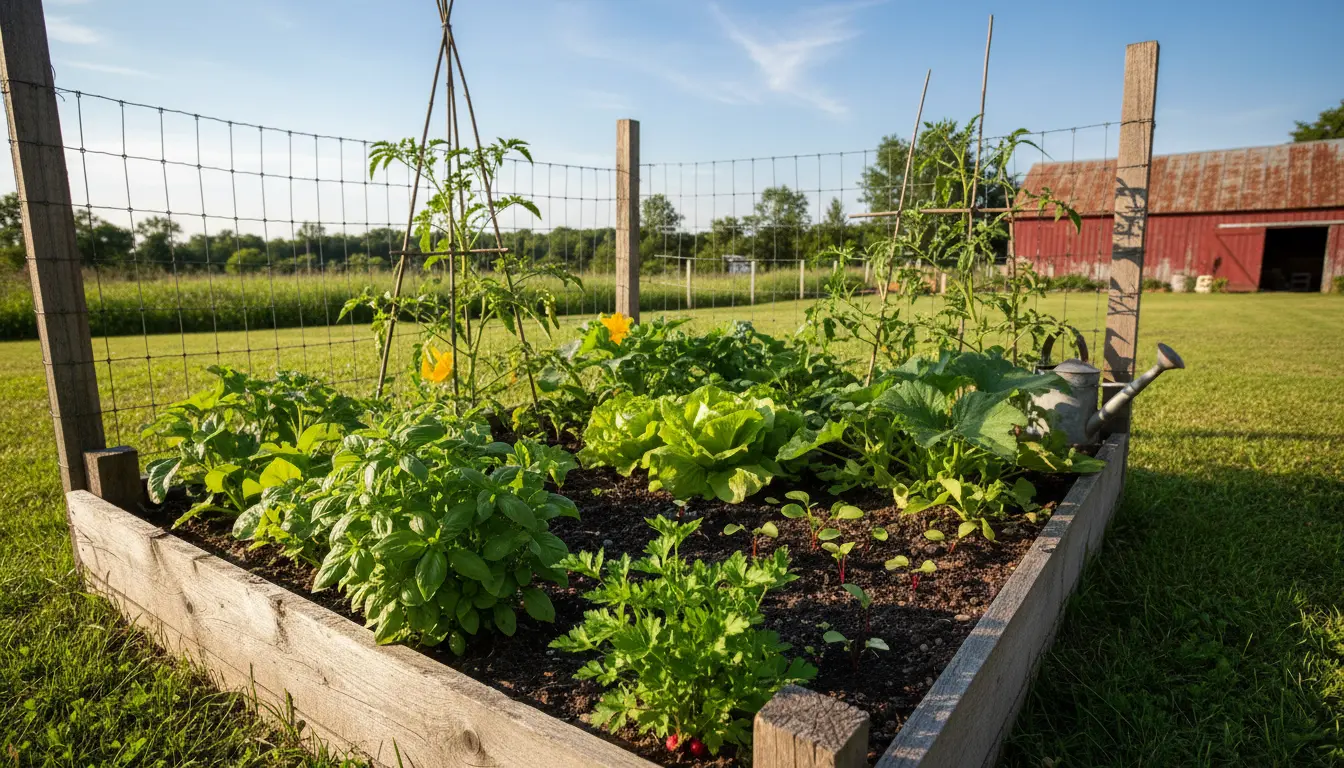
Plan Your Small Vegetable Garden
Starting a small vegetable garden begins with a simple plan. Decide what you want to grow, how much space you have, and how much time you can commit each week.
Sketch a layout, list preferred vegetables, and set a realistic timeline for planting and harvest. Planning prevents wasted space and helps prioritize high-value crops.
Choose Your Small Vegetable Garden Goals
Identify goals such as fresh salad greens, a few tomatoes, or year-round herbs. Match crops to your climate and season length to increase success.
- Short-term harvests: lettuce, radishes, herbs.
- Mid-term crops: bush beans, peppers.
- Longer-term: tomatoes, winter squash.
Choose the Right Location for a Small Vegetable Garden
Sunlight is the most important factor. Most vegetables need 6 to 8 hours of direct sunlight daily.
If full sun isn’t available, prioritize sun-loving crops for the brightest spots. Use containers or raised beds to take advantage of small sunny areas.
Small Vegetable Garden Size and Layout
Common small garden footprints include 4×4, 4×8 raised beds, balcony containers, or a few large pots. Keep paths narrow to maximize growing area.
- Raised bed 4×8 ft: fits many vegetables and allows easy access.
- Containers: ideal for balconies and patios.
- Vertical supports: save space for vining plants.
Soil and Containers for a Small Vegetable Garden
Good soil is the foundation of a productive small vegetable garden. Use a mix that drains well yet holds moisture and nutrients.
Raised beds and containers let you control soil quality. Use a blend of topsoil, compost, and a light organic amendment for best results.
Small Vegetable Garden Soil Basics
Test soil pH if possible; most vegetables prefer 6.0 to 7.0. Add compost annually to maintain fertility and structure.
- Soil mix: 40% topsoil, 40% compost, 20% coarse sand or perlite.
- Use slow-release organic fertilizer at planting and mid-season for heavy feeders.
Planting and Care in a Small Vegetable Garden
Plant according to seed packet directions or transplant guidelines. Observe spacing recommendations to avoid overcrowding.
Water consistently, ideally in the morning to reduce disease risk. Mulch helps conserve moisture and suppress weeds in a small vegetable garden.
Watering and Feeding a Small Vegetable Garden
Use drip irrigation or soaker hoses for efficient watering. Aim for deep, infrequent watering to encourage strong roots.
- Water schedule: 1–2 times per week, more in hot, dry weather.
- Fertilize: side-dress with compost or organic fertilizer every 4–6 weeks for heavy crops.
Pest and Disease Management in a Small Vegetable Garden
Monitor plants weekly to catch problems early. Many pests can be managed manually or with non-toxic methods in a small vegetable garden.
Encourage beneficial insects by planting flowering herbs and avoiding broad-spectrum pesticides that harm pollinators.
Simple Pest Controls
- Handpick larger pests like caterpillars and slugs.
- Use floating row covers to protect young plants from insects.
- Apply neem oil or insecticidal soap for soft-bodied insects when necessary.
Harvesting and Crop Rotation for a Small Vegetable Garden
Harvest vegetables when they reach recommended size; frequent harvesting often increases yield. Keep records of planting dates to plan succession crops.
Rotate plant families each season to reduce soil-borne diseases and pest buildup in a small vegetable garden, even within limited space.
Seasonal Examples and Succession Planting
After early lettuce is harvested, replace it with beans or a late-season brassica. Succession planting makes the most of a small area.
- Spring: peas, lettuce, radish.
- Summer: tomatoes, peppers, basil.
- Fall: kale, broccoli, spinach.
Raised beds can warm faster in spring, allowing earlier planting and often producing 10 to 20 percent higher yields per square foot than in-ground rows.
Small Real-World Case Study
Case: A suburban balcony gardener converted a 6×3 ft area into a small vegetable garden using containers. They planted cherry tomatoes, three basil plants, two pepper plants, and six lettuce pots.
Within one season they harvested roughly 20 pounds of tomatoes, multiple harvests of basil, and continuous lettuce for salads. Care averaged 30 minutes three times a week.
Key takeaways: choose compact varieties, use good potting mix, and stagger planting dates for continuous harvest in limited space.
Quick Checklist Before You Start Your Small Vegetable Garden
- Pick a sunny site with 6+ hours of direct sun.
- Decide on raised beds or containers based on space.
- Prepare or buy quality soil mix and compost.
- Plan crops, planting dates, and succession for continuous harvest.
- Set up simple irrigation and pest monitoring routines.
Starting a small vegetable garden at home is achievable with basic planning and consistent care. Begin small, learn each season, and expand as you gain confidence.