
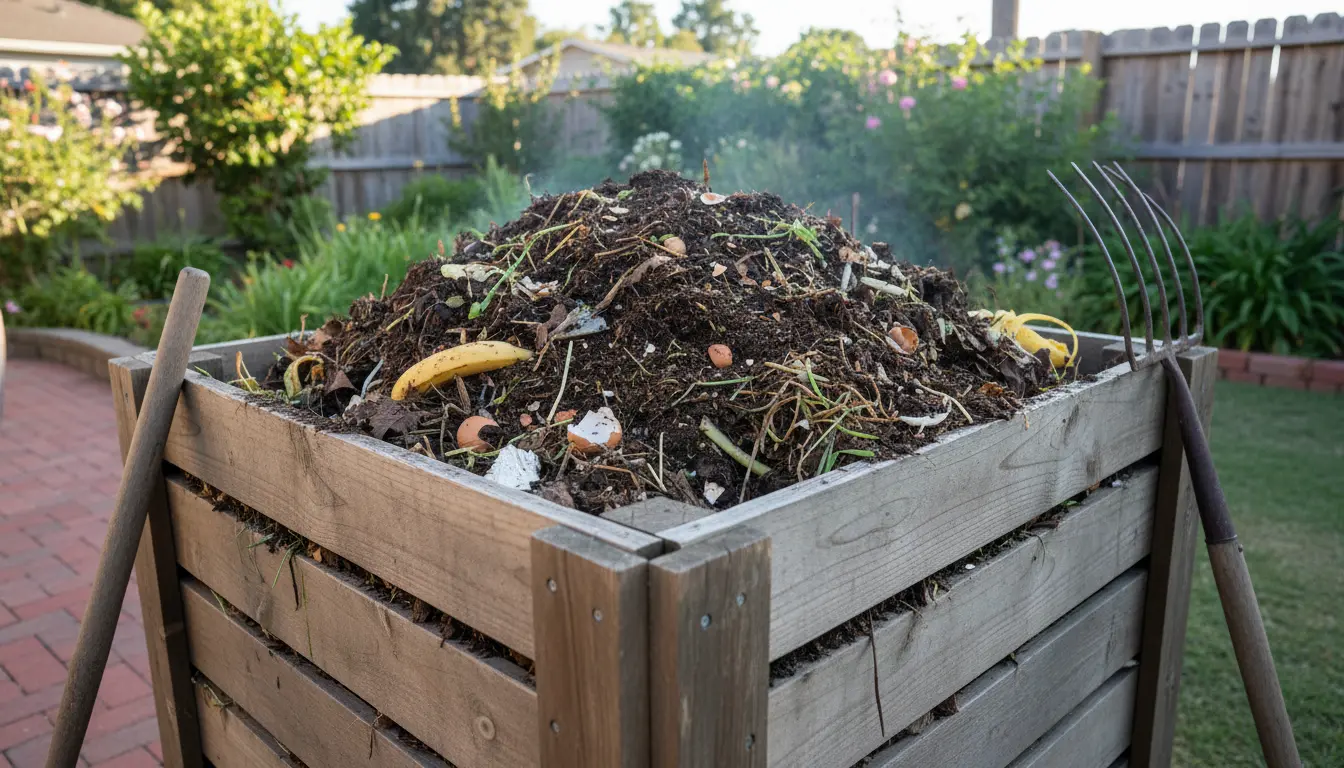
Why choose home composting
Home composting turns kitchen and yard waste into a valuable soil amendment. It reduces landfill waste and improves garden soil structure and fertility.
For beginners, composting is low-cost and scalable, from small apartment setups to larger backyard piles. The key is simple management and basic rules.
Home Composting for Beginners: The basic principles
Composting relies on microorganisms breaking down organic matter. To keep those microbes active, manage four core elements: carbon, nitrogen, air, and moisture.
- Carbon (browns): dry leaves, straw, shredded paper.
- Nitrogen (greens): vegetable scraps, coffee grounds, fresh grass clippings.
- Air: oxygen supports aerobic decomposition, preventing bad odors.
- Moisture: the pile should be as damp as a wrung-out sponge.
How to start home composting for beginners
Choose a container: options include a simple tumbling bin, a stationary bin, or a DIY pile. Size depends on available space and the volume of waste.
Location matters. Place the bin on soil when possible to allow beneficial organisms to move in. Partial shade keeps moisture balanced.
Step-by-step setup
- Place a few inches of coarse material (twigs, straw) to aid drainage and airflow.
- Add alternating layers of browns and greens, aiming for roughly a 3:1 carbon-to-nitrogen volume ratio.
- Keep the pile moist but not waterlogged. Test with a squeeze test.
- Turn or mix the pile every 1–2 weeks to introduce air and speed decomposition.
Tools and materials for easy composting
Beginners do not need specialized tools, but these items help:
- Compost bin or tumbling composter
- Pitchfork or compost aerator for turning
- Kitchen caddy for collecting scraps
- Garden gloves and a small shovel
What to compost and what to avoid
Good items: fruit and vegetable scraps, coffee grounds, eggshells, yard trimmings, shredded paper.
Avoid: meat, dairy, oily foods, diseased plants, pet waste, and large glossy paper, which can attract pests or slow the process.
Finished compost can retain up to 50% more moisture than bare soil, helping plants survive dry periods while reducing the need for added fertilizers.
Maintaining your compost
Routine checks make composting predictable. Monitor temperature, moisture, and odor to keep conditions ideal.
If the pile is cold after a few weeks, add more greens and turn it. Warm piles (between 110–160°F or 43–71°C) indicate active decomposition.
Turning and timing
Turning the pile every one to two weeks speeds composting and helps prevent anaerobic pockets. A tumbling bin simplifies this step.
Compost can take from two months to a year to mature, depending on materials, size, and how often you turn it.
Troubleshooting common problems
Odor: Usually a sign of too much moisture or not enough air. Turn the pile and add dry browns like shredded paper or dry leaves.
Slow breakdown: Add more greens or chop larger pieces into smaller bits to increase surface area for microbes.
Pests: Avoid adding meats and oils. Secure lids, bury food scraps beneath browns, and consider a closed bin if wildlife is a problem.
Quick checklist for troubleshooting
- Pile smells bad → aerate and add browns.
- Pile is dry → moisten and add some greens.
- Pile is attracting pests → remove offending items and cover scraps.
Small case study: A balcony compost success
Case: Anna, an apartment resident, started a small worm bin on her balcony. She collected kitchen scraps in a counter caddy and added them to the bin every few days.
Within six months she produced rich vermicompost that she mixed into her potted plants. The plants showed better growth and she reduced household waste by nearly 30%.
Using finished compost
Finished compost is dark, crumbly, and earthy-smelling. Sift out large pieces and use it as a soil amendment or top dressing.
- Mix into garden beds at planting time to improve structure and fertility.
- Top-dress lawns or potted plants to gradually add nutrients and moisture retention.
- Use as a seed-starting mix component (mixed with sand and potting soil).
Final tips for home composting for beginners
Start small and learn by doing. Composting is forgiving and improves with simple adjustments.
Keep a record of what you add and how the pile responds for the first few months. That helps you fine-tune the carbon-to-nitrogen balance.
With basic attention to materials, moisture, and aeration, home composting is an effective way to recycle organic waste into a valuable garden resource.