
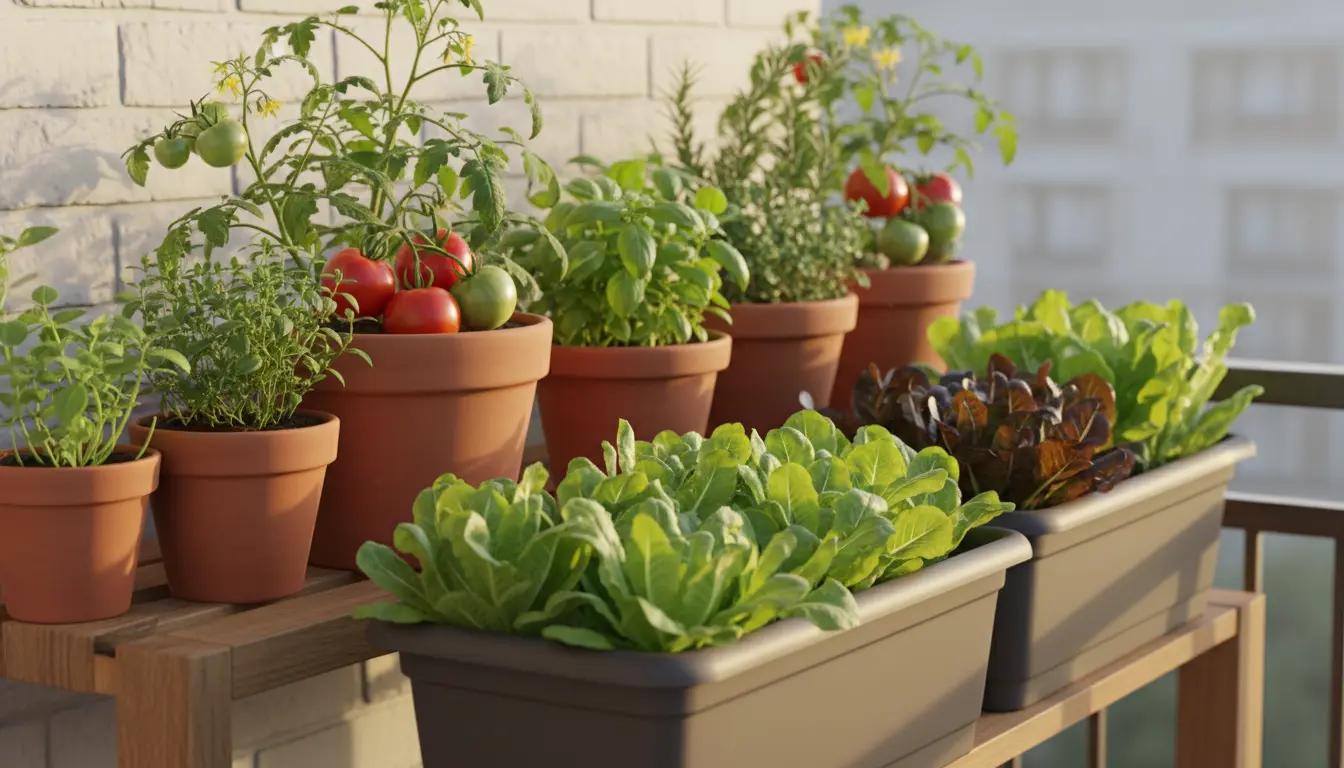
Container gardening lets you grow vegetables on balconies, patios, and small yards. This guide gives clear, practical steps to start a productive small space vegetable garden using containers.
Why Choose Container Gardening
Container gardening is ideal when you lack ground space or have poor soil. It also reduces weeds and makes pest control easier.
Containers are mobile. You can move plants to catch sun, avoid wind, or protect from frost.
Choosing Containers for Your Small Space Vegetable Garden
Pick containers based on plant size and the space available. Larger root systems need deeper pots, while herbs and lettuces do fine in shallower containers.
Best container types for container gardening
- Plastic pots: Lightweight and affordable, retain moisture well.
- Terracotta: Breathable but dry out faster; good for drought-tolerant plants.
- Fabric grow bags: Great drainage and root aeration.
- Wooden planters: Good for larger setups; ensure they are rot-resistant.
Soil and Drainage for a Small Space Vegetable Garden
Use a high-quality potting mix designed for containers. Avoid garden soil, which compacts and limits drainage.
Ensure every container has drainage holes. Add a layer of coarse material at the bottom only if the potting mix is very fine.
Potting mix components to look for
- Peat or coconut coir for moisture retention
- Perlite or vermiculite for aeration
- Compost for nutrients
- Slow-release fertilizer recommended for vegetables
Plant Selection for Your Container Vegetable Garden
Choose plants suited to container life and your climate. Dwarf or determinate varieties work best when space is limited.
Easy vegetables for container gardening
- Tomatoes (compact varieties like Patio or Tiny Tim)
- Peppers (bell and hot peppers)
- Lettuce and salad greens
- Radishes and carrots (short-root types)
- Herbs: basil, parsley, chives, and thyme
Light, Watering, and Feeding in a Small Space Vegetable Garden
Most vegetable plants need 6–8 hours of direct sunlight. Observe your balcony or patio at different times to find the sunniest spot.
Water consistently. Containers dry out faster than ground soil, so check daily in hot weather. Water until it runs from drainage holes.
Fertilizer and feeding schedule
- Start with a potting mix that contains slow-release fertilizer.
- Feed with a balanced liquid fertilizer every 2–4 weeks during the growing season.
- Adjust feeding if plants show nutrient deficiency or excess.
Common Problems and Solutions in Container Gardening
Pests, overwatering, and nutrient imbalance are typical issues in small space gardens. Find each problem early to avoid losing plants.
Quick troubleshooting tips
- Yellowing leaves: Check for overwatering or nutrient deficiency.
- Wilting in heat: Increase watering and provide afternoon shade if needed.
- Pests: Use hand-picking, insecticidal soap, or physical barriers like mesh.
Layout and Space-Saving Tips for Container Vegetable Gardens
Use vertical space with trellises, hanging baskets, and wall planters to multiply growing area. Place taller plants at the back to avoid shading smaller ones.
Group containers with similar water and light needs to simplify care.
Did You Know?
Did You Know? A single 10–12 inch container can produce enough lettuce for a small family salad each week for several months. Containers can be surprisingly productive with the right care.
Case Study: Balcony Tomato Success
Maria, a city dweller with a small balcony, grew three patio tomatoes in 10-inch containers. She placed them where they got morning light and supplied consistent water and weekly liquid feed.
By midsummer she harvested 10–12 medium tomatoes per plant. Key steps she used were choosing compact varieties, staking each plant, and removing side shoots to focus energy on fruiting.
Seasonal Care and Maintenance for Container Gardening
Spring: Refresh potting mix and check containers for damage. Start seedlings or transplant young plants after last frost.
Summer: Monitor moisture closely and increase feeding. Watch for heat stress and provide shade during extreme heat.
Fall: Harvest remaining crops, trim back perennials, and store reusable containers in a dry place.
Final Checklist to Start Your Small Space Vegetable Garden
- Choose containers sized for your plants.
- Select a quality potting mix and ensure drainage.
- Pick compact vegetable varieties suited to containers.
- Place containers where they get enough sun.
- Water consistently and feed regularly.
- Monitor for pests and stress, and adjust care as needed.
With small planning and regular care, container gardening can supply fresh vegetables even in limited spaces. Start with a few easy plants, learn their needs, and expand as you gain confidence.