
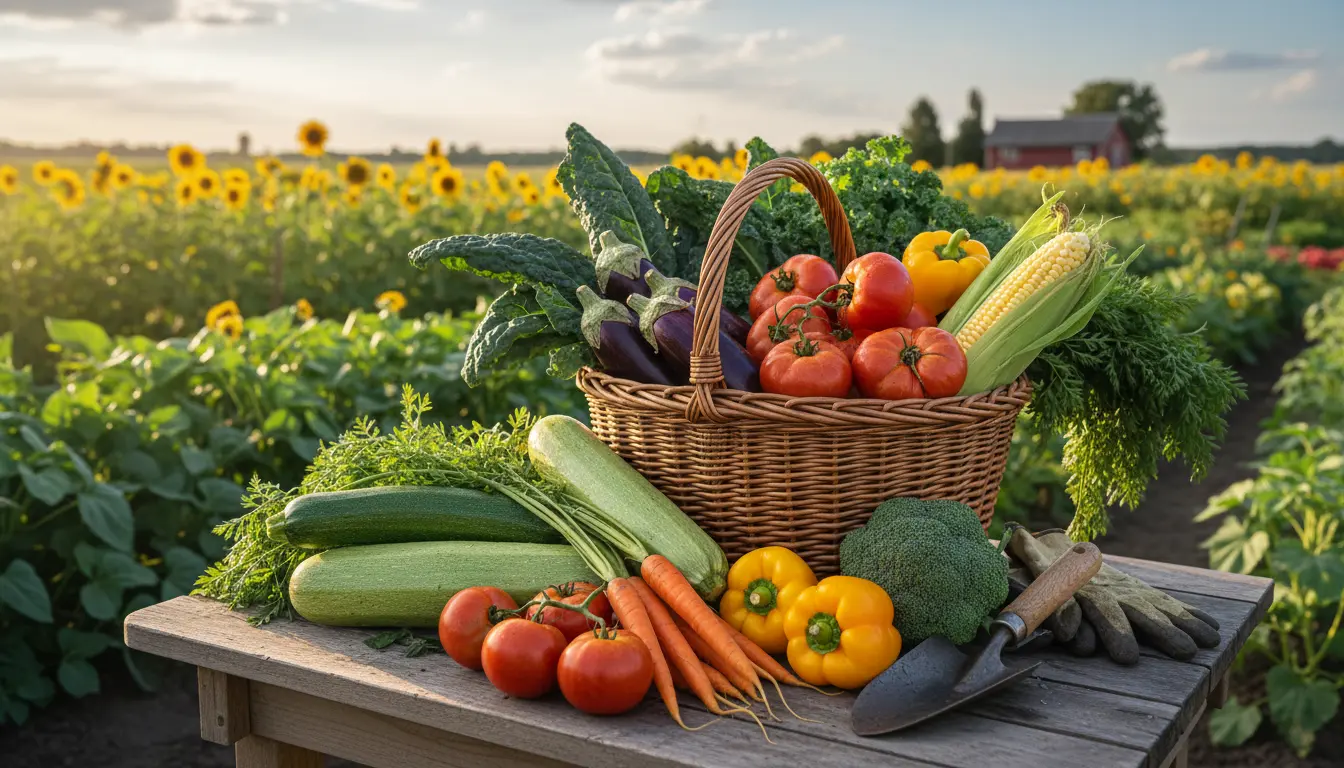
Plan How to Start a Profitable Vegetable Garden
Starting a profitable vegetable garden begins with a clear plan. Decide whether you want to sell produce, supply a local CSA, or supplement household food costs.
Set realistic goals: revenue target, available time, and space. A modest 200–400 sq ft garden can be profitable with the right crops and marketing.
Choose the Right Site and Layout
Site selection directly affects yield and labor. Choose a location with at least 6–8 hours of sunlight and good drainage.
Design simple, efficient beds or rows to maximize planting density and reduce walking time during harvest.
Soil and Water Access
Healthy soil is the foundation of a profitable garden. Test the soil pH and nutrient levels before planting.
Place beds near a water source and use drip irrigation or soaker hoses to save time and water.
Select Profitable Crops
Not all vegetables yield the same profit per square foot. Focus on high-value, fast-turnover crops for limited space.
- High-value leafy greens: lettuce mixes, arugula, spinach
- Herbs: basil, cilantro, dill
- Specialty vegetables: cherry tomatoes, microgreens, baby carrots
- Seasonal staples for bulk sales: cucumbers, summer squash, peppers
Balance quick harvest crops with longer-season plants to maintain consistent income.
Create a Planting Schedule and Crop Plan
Use a simple calendar to plan succession planting and staggered harvests. This keeps supply steady for customers.
Example: plant lettuce every two weeks to ensure continuous harvests rather than one large glut.
Succession Planting Tips
Succession planting increases yield per area and smooths labor. After harvesting a bed, amend soil and replant within 1–2 weeks.
Interplant quick crops like radishes between slower-growing crops to use space efficiently.
Prepare Soil and Fertility Management
Increase profitability by improving soil once and maintaining it. Add compost, use cover crops, and apply balanced fertilizers as needed.
Soil life reduces input needs over time and increases consistent yields.
Pest and Disease Management for Profit
Preventive practices reduce crop loss and save money. Use crop rotation, resistant varieties, and physical barriers when possible.
Integrated Pest Management (IPM) focuses on monitoring and targeted interventions to avoid blanket pesticide use.
Common Practical Defenses
- Row covers for insect control
- Companion planting for pest deterrence
- Clean tools and prompt removal of diseased plants
Labor, Tools, and Time Management
Labor is often the largest ongoing cost. Invest in a few quality tools—hoe, wheelbarrow, sharp pruners—and organize workflows.
Group similar tasks (weeding, thinning, harvesting) to reduce time. Simple records help you estimate labor per task accurately.
Record Keeping and Cost Tracking
Track all costs: seeds, soil amendments, irrigation, tools, and labor. Good records tell you which crops are truly profitable.
Use a spreadsheet or garden management app to log planting dates, yields, and sales revenue.
Marketing and Selling Your Produce
Choose sales channels that fit your capacity: farmers markets, CSA shares, restaurants, or direct online orders. Each has different time demands and margins.
Simple packaging and clear pricing help attract repeat customers. Offer value-added items—salad mixes, herb bundles—to increase per-sale revenue.
Pricing and Customer Relations
Set prices that cover costs and include a profit margin. Be transparent with customers about growing practices—organic, chemical-free, or sustainable methods add value.
Collect feedback and adapt variety choices to customer preferences to grow demand.
Small Real-World Case Study
Case: Maria started a 300 sq ft raised-bed vegetable garden on a suburban lot. She focused on salad greens, basil, and cherry tomatoes.
In her first season she sold weekly at a local farmers market and to two nearby cafes. Her main investments were quality soil, drip irrigation, and a market stall fee.
Results: steady weekly revenue, break-even by mid-summer, and net profit by season end. Key success factors were succession planting and strong relationships with two cafe chefs who bought bulk salad mixes.
Microgreens can yield a higher profit per square foot than many standard vegetables and are ready to harvest in 7–21 days.
Common Mistakes to Avoid
- Overplanting without sales outlets—grow for demand, not assumption.
- Ignoring soil tests—poor soil reduces yields and increases costs.
- Undervaluing your labor—calculate labor into pricing.
Next Steps to Get Started
Start small with a clear crop and sales plan. Track everything in the first season so you can scale what works.
Adjust crop selection, marketing, and labor routines based on data and customer feedback for a profitable second season.
With planning, focused crops, and efficient workflows, you can start a profitable vegetable garden that fits your available time and space.