
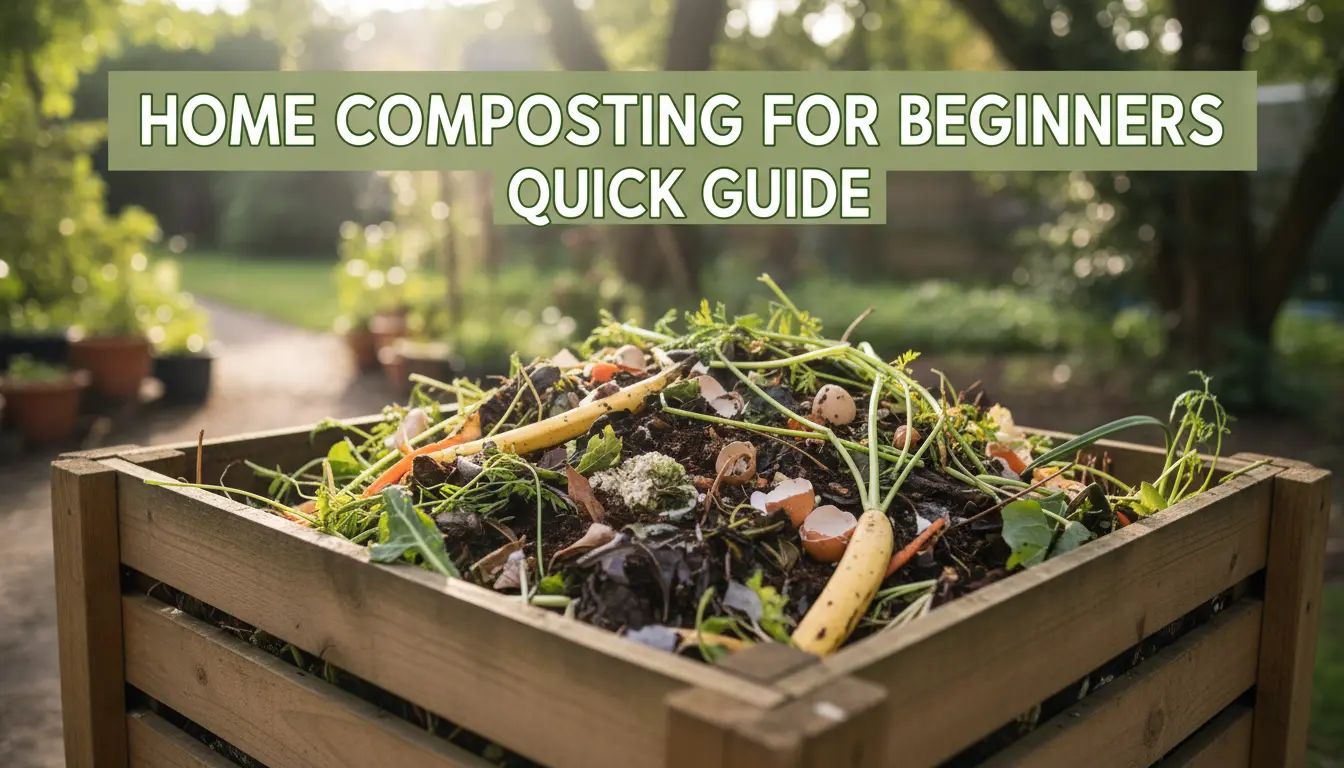
Why Home Composting for Beginners Matters
Home composting turns kitchen scraps and yard waste into nutrient-rich soil. It reduces landfill waste and provides free fertilizer for gardens and potted plants.
For beginners, the process can seem technical, but simple rules and a consistent routine make composting easy and reliable.
Getting Started with Home Composting for Beginners
Start by deciding whether you want a bin, a tumbler, or an open pile. Each method has trade-offs in space, maintenance, and speed.
Use these quick steps to set up your system:
- Pick a location with good drainage and partial shade.
- Choose a container type that fits your space and effort level.
- Gather a supply of brown and green materials before you begin.
Choosing a Bin for Home Composting for Beginners
Common options include plastic bins, wooden pallets, or ready-made tumblers. Tumblers are easy to turn and faster to process, while stationary bins are low-cost and low-maintenance.
Consider these factors when choosing:
- Size relative to your household waste volume.
- Ease of turning and accessing finished compost.
- Pest resistance and ventilation.
Basic Ingredients and Ratios
Compost needs carbon-rich “brown” materials and nitrogen-rich “green” materials. Balance is key: too much green makes a soggy, smelly pile; too much brown slows decomposition.
A practical ratio to aim for is roughly 3 parts brown to 1 part green by volume.
- Brown materials: dry leaves, straw, shredded paper, cardboard.
- Green materials: vegetable scraps, coffee grounds, fresh grass clippings.
What Not to Add
Avoid meat, dairy, oily foods, diseased plants, and pet waste. These items attract pests or can introduce pathogens.
Small bones and large woody branches also slow the composting process.
How to Build and Maintain Your Pile
Layer materials in alternating brown and green strata, keeping layers 2–4 inches thick. Chop larger items to speed decomposition.
Maintain moisture like a wrung-out sponge. If the pile is too dry, add water and fresh greens. If it’s too wet or smells, add more browns and improve aeration.
Turning and Aeration for Faster Composting
Turning the pile every 1–2 weeks introduces oxygen and speeds up breakdown. A tumbler makes turning easy; a pitchfork works for open piles.
If you don’t turn often, expect compost to take longer—up to a year—though the end product is still valuable.
Troubleshooting Common Problems
Smell: Sour or rotten odors indicate too much green or poor aeration. Fix by adding browns and turning the pile.
Pests: Rats or raccoons usually mean food scraps are exposed. Use an enclosed bin and bury food under brown layers.
Slow decomposition: Check moisture, chop materials smaller, and increase surface area by turning.
Composting can reduce household waste by up to 30 percent, depending on diet and yard size. Even small-scale indoor composting with a bokashi or worm bin can significantly cut kitchen waste.
Using Finished Compost
Finished compost is dark, crumbly, and smells earthy. It typically takes 2–12 months depending on method and care.
Use compost as a top dressing, mix into potting soil, or incorporate into garden beds. It improves soil structure, water retention, and nutrient content.
Simple Application Methods
- Top dress lawns or beds with a 1/4 to 1/2 inch layer and let it work into the soil.
- Mix 1 part compost with 2–3 parts potting mix for container plants.
- Work compost into new planting holes to boost seedling growth.
Small Real-World Example: Neighbors Who Cut Waste
A two-person household in Portland started a 60-gallon tumbler and saved a 30-liter garbage bag of food waste each week. After six months, they used finished compost on their vegetable beds and reported healthier tomatoes and better moisture retention during dry spells.
They found weekly turning and a simple stash of shredded newspaper for browns kept the system odor-free and low-effort.
Quick Checklist for Home Composting for Beginners
- Choose bin type and location.
- Gather brown and green materials in roughly 3:1 ratio.
- Maintain moisture and turn regularly for faster results.
- Avoid meat, dairy, and pet waste.
- Harvest dark, crumbly compost and apply to soil.
Final Tips and Next Steps
Start small and refine your routine. If space is limited, try worm composting or a bokashi system for indoor-friendly options.
Keep a small kitchen container for scraps and empty it into your bin daily. Over time you’ll learn local tweaks that suit your climate and waste stream.
Consistent, simple practices make home composting a practical way to reduce waste and enrich your garden.