
Why Use a Home Energy Audit Checklist
A home energy audit checklist helps you find where your house wastes energy. It turns loose observations into clear, prioritized actions you can take right away.
This guide gives a practical, step-by-step home energy audit checklist you can follow with basic tools. No advanced training is required.
How to Use This Home Energy Audit Checklist
Work room by room and record each finding. Mark issues by urgency: immediate, within 3 months, or long term.
Use simple tools such as a flashlight, screwdriver, caulk, weatherstripping, an infrared thermometer, and a basic insulation ruler if available.
Step 1 in a Home Energy Audit Checklist: Check Air Leaks
Air leaks are the most common source of wasted energy. Focus on windows, doors, attic hatches, and where pipes or wires enter the house.
- Inspect window and door seals for gaps or cracked caulk.
- Look for drafts at baseboards, electrical outlets, and recessed lights.
- Use a lit candle or incense on a windy day to spot leaks (watch safety).
Step 2 in a Home Energy Audit Checklist: Inspect Insulation
Proper insulation slows heat flow and reduces heating and cooling costs. Check attic, walls, and basement or crawlspace insulation levels.
- Attic: Aim for insulation depth recommended for your climate; top up if thin or uneven.
- Walls: Use an infrared thermometer to find cold spots in winter.
- Basement: Insulate rim joists and seal any gaps around foundation penetrations.
Step 3 in a Home Energy Audit Checklist: Evaluate Heating and Cooling
HVAC systems cause most household energy use. Regular maintenance and small fixes can improve efficiency significantly.
- Replace or clean filters every 1–3 months depending on use.
- Check thermostat settings and consider a programmable thermostat.
- Inspect ducts for visible gaps; seal with mastic or metal tape (not cloth tape).
Step 4 in a Home Energy Audit Checklist: Lighting and Appliances
Lighting and appliances are easy wins for energy savings. Many simple swaps pay back within a year or two.
- Replace incandescent bulbs with LED bulbs of the same brightness.
- Unplug chargers and electronics or use smart power strips to avoid standby draw.
- Check appliance age and energy labels; consider replacing very old units with energy-efficient models.
Step 5 in a Home Energy Audit Checklist: Water Heating
Water heating is a common but often overlooked energy use. Small steps can reduce its share of your bill.
- Insulate the hot water tank and the first few feet of hot water pipes.
- Lower the water heater temperature to 120°F (49°C) unless higher is needed.
- Install low-flow showerheads and fix leaky faucets promptly.
Tools and Materials for a Home Energy Audit Checklist
Gather inexpensive tools before you start. A simple kit makes the audit faster and more accurate.
- Flashlight, ladder, screwdriver
- Caulk and caulking gun, weatherstripping
- Infrared thermometer or thermal camera (optional)
- Smoke stick or incense to find drafts
Prioritizing and Tracking Issues
After inspecting, rank issues by cost-effectiveness and ease. Start with low-cost fixes that return quickly.
Create a simple tracking sheet with columns for location, issue, recommended fix, estimated cost, and priority. Revisit the list seasonally.
Sealing air leaks and adding insulation can cut heating and cooling bills by up to 20 percent in many homes. Small fixes often pay for themselves within two years.
Real-World Example
Case study: A 20-year-old, 3-bedroom home in a temperate climate completed this home energy audit checklist and made three low-cost changes.
- Sealed gaps around doors and attic hatch with caulk and weatherstripping — cost $60.
- Replaced 10 incandescent bulbs with LEDs — cost $80.
- Insulated the hot water tank with a wrap — cost $30.
Result: The homeowner reported a 12 percent reduction in combined heating and electric use the following winter, roughly $300 saved in the first year. Payback occurred within 6 months on bulbs and tank insulation; air sealing paid back within a year.
When to Call a Professional
Some issues require professional assessment, especially when safety or major system upgrades are involved. Call a pro if you find:
- Visible gas leaks, mold, or asbestos concerns.
- Complex HVAC or ductwork problems.
- Structural repairs needed to add insulation or seal major openings.
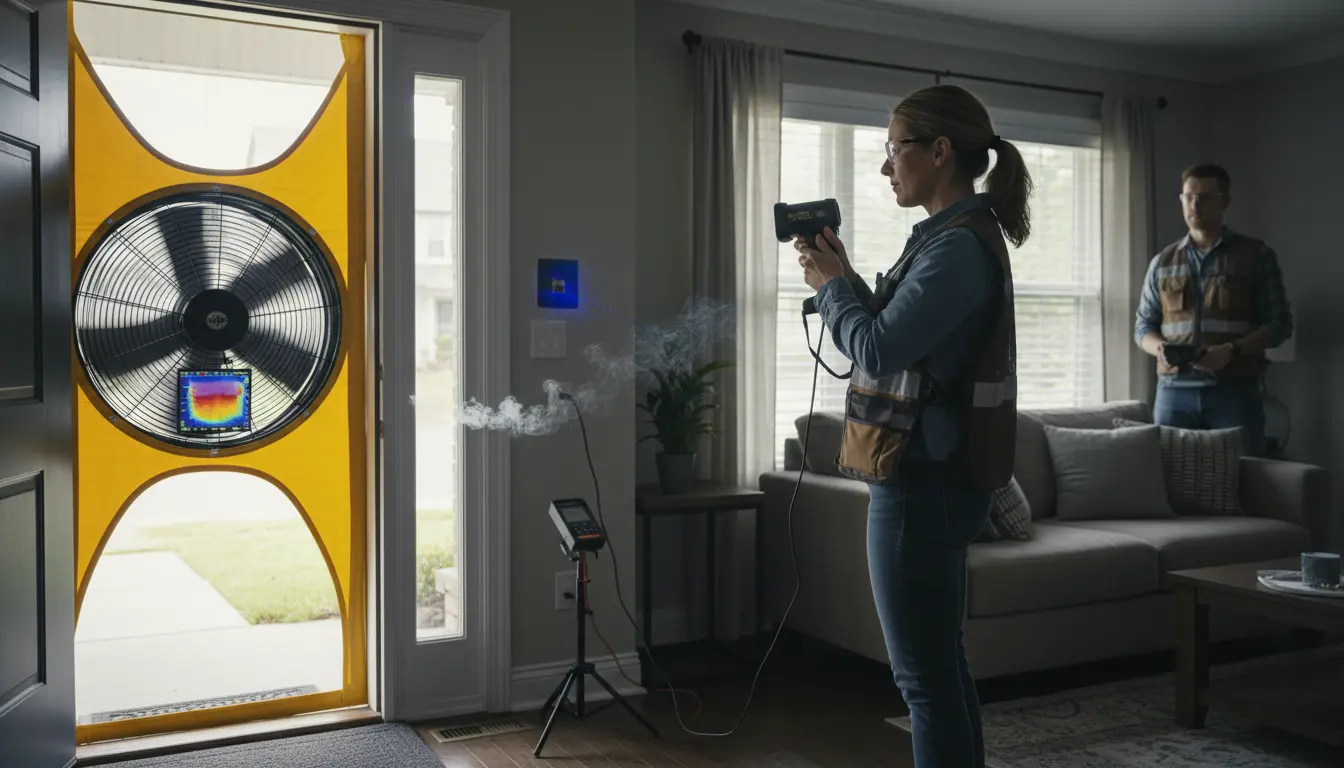
Ask for an energy audit or blower-door test if you want measured leakage rates and prioritization from certified auditors.
Conclusion: Small Steps Add Up
Use this home energy audit checklist as a simple roadmap to find and fix common energy waste. Start with quick, low-cost fixes, track results, and plan larger upgrades based on priority and budget.
Regular seasonal checks keep a home efficient and comfortable year-round.