
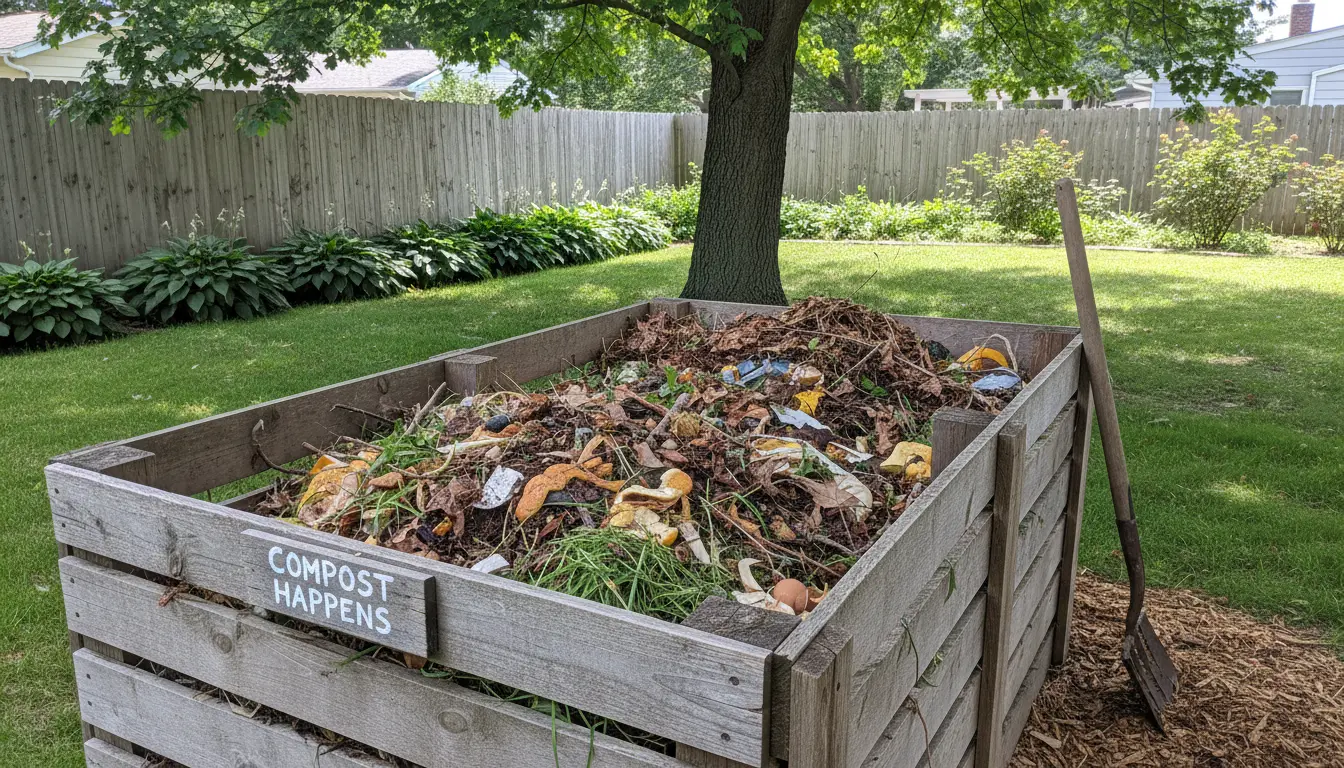
Why Home Composting for Beginners Matters
Home composting reduces kitchen and yard waste while creating a rich soil amendment. It cuts landfill contribution and supports healthier plants.
This guide explains simple, practical steps any beginner can follow to set up and maintain a compost bin or pile at home.
Home Composting for Beginners: Basic Principles
Composting relies on three elements: carbon, nitrogen, and moisture. Carbon provides energy; nitrogen builds proteins for microbes.
Maintain airflow and a balanced mix to encourage decomposition and avoid odors or pests.
Key Materials for Home Composting for Beginners
Choose materials that are easy to source and handle. Separate items into “browns” (carbon) and “greens” (nitrogen).
- Browns: dry leaves, shredded paper, cardboard, straw
- Greens: fruit and vegetable scraps, coffee grounds, grass clippings
- Avoid: meat, dairy, oils, diseased plants, pet waste
How to Start a Compost Bin: Step-by-Step
Pick a bin or location with good drainage and partial shade. Options include tumblers, wire bins, or simple piles.
Follow these steps for a reliable start.
- Site: Place bin near your kitchen or garden for easy access.
- Base Layer: Add coarse browns like twigs for airflow.
- Build Layers: Alternate greens and browns in 2–4 inch layers.
- Moisture: Keep the pile damp like a wrung-out sponge.
- Turn: Aerate every 1–2 weeks with a pitchfork or tumbler.
How Much Material to Add
Aiming for a pile at least 3 feet wide and 3 feet tall helps maintain heat. Smaller bins work but may decompose slower.
Balance is more important than exact amounts: roughly 3 parts browns to 1 part greens by volume is a good starting point.
Troubleshooting for Home Composting for Beginners
Common issues are odors, slow decomposition, and pests. Each has a simple fix.
- Smelly pile: Add more browns and turn to increase airflow.
- Too dry: Add water and more greens to rehydrate microbes.
- Too wet: Mix in coarse browns and improve drainage.
- Pests: Avoid adding meat or oily foods; use closed bins if needed.
Compost can reach internal temperatures of 130–160°F during active decomposition. These temperatures help kill many weed seeds and pathogens.
Turning and Timing for Home Composting for Beginners
Turning introduces oxygen and speeds up decomposition. For hot composting, turn every 1–2 weeks. For slower cold composting, turning monthly is enough.
Finished compost typically takes 2–6 months with hot methods, and 6–12 months with cold methods.
How to Know Compost Is Ready
Finished compost looks dark, crumbly, and earthy-smelling. You should no longer recognize original materials.
If unsure, test a small amount in a pot; plants respond quickly to good compost.
Uses and Benefits of Home Composting for Beginners
Use finished compost as a top dressing, soil amendment, or seed-starting mix component. It improves soil structure and water retention.
Compost adds nutrients gradually and supports beneficial soil organisms for long-term garden health.
Practical Tips to Keep Going
- Collect scraps in a sealed container to reduce kitchen odors.
- Chop or shred materials to speed decomposition.
- Keep a small supply of dry browns near your bin for quick layering.
- Use a kitchen compost caddy with compostable liners for convenience.
Case Study: Small Apartment Compost
Maria lives in a two-bedroom apartment and started a worm bin on a balcony. She used a 10-gallon bin with shredded cardboard and kitchen scraps.
Within four months she harvested 4 liters of vermicompost and reduced her weekly trash by one small bag. Her balcony herbs grew noticeably fuller after two top dressings.
Examples and Quick Checklist
Example start plan for the first month:
- Week 1: Set up bin, add 4″ base of browns, add 1″ greens daily.
- Week 2: Monitor moisture, add water if dry, turn once.
- Week 3–4: Continue adding scraps, turn twice, check for pests.
Quick checklist before you stop for the day:
- Is the pile moist but not soggy?
- Have you balanced greens and browns?
- When was the last time you turned it?
Final Notes on Home Composting for Beginners
Start simple and learn by doing. Small adjustments to moisture, material balance, and aeration solve most problems.
Composting is a low-cost, high-impact practice you can maintain in almost any living situation. Begin with basic steps and refine as you gain experience.