
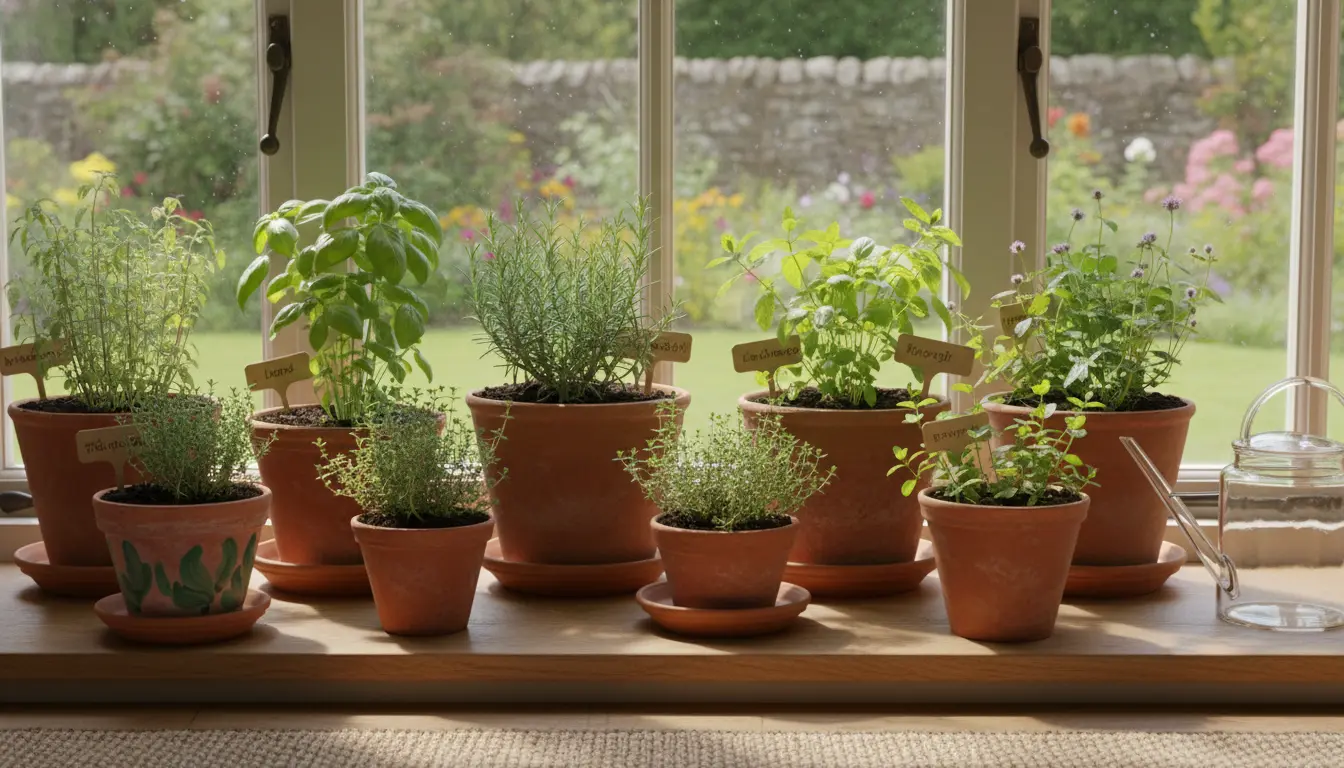
Why Start an Indoor Herb Garden
Growing an indoor herb garden saves money, adds fresh flavor to meals, and brings greenery into small spaces. Herbs are forgiving and ideal for beginners, requiring limited space and equipment.
This guide explains how to plan, plant, and maintain a productive indoor herb garden so you get reliable results.
Choose the Right Herbs for Your Indoor Herb Garden
Select herbs that thrive indoors and match your cooking habits. Some herbs need more light and space than others.
- Basil: Great for sunny windowsills; frequent harvesting encourages growth.
- Mint: Tolerates lower light and can be invasive — use a separate pot.
- Chives: Compact and easy, good in small containers.
- Parsley: Slow starter but steady; prefers bright indirect light.
- Rosemary and Thyme: Need bright light and good airflow.
What You Need to Start an Indoor Herb Garden
Keep equipment simple. Most items are inexpensive and reusable.
- Containers with drainage holes (pots, recycled containers, or herb planters)
- High-quality potting mix formulated for containers
- Seeds or small starter plants from a nursery
- A sunny window or grow light if natural light is insufficient
- Watering can, small hand pruners, and a spray bottle
Container and Soil Tips for an Indoor Herb Garden
Use pots with drainage to avoid root rot. For an indoor herb garden, choose lightweight containers that fit your space.
Mix a standard potting soil with a small amount of perlite to improve drainage. Avoid garden soil, which can compact in pots.
Light Requirements for an Indoor Herb Garden
Light is the most common limiting factor for indoor herb gardens. Most culinary herbs need 6 to 8 hours of bright light per day.
If you have a south- or west-facing window, place sun-loving herbs like basil and rosemary there. For north-facing windows, choose tolerant herbs like mint and parsley.
- Natural light: Best when 6+ hours daily are available.
- Grow lights: Use a full-spectrum LED if natural light is limited.
- Rotate pots weekly to encourage even growth.
Watering and Feeding Your Indoor Herb Garden
Watering is about balance. Overwatering is the biggest mistake for indoor herb gardens.
Check soil moisture by inserting a finger about an inch in; water when the top inch is dry. Use pots with drainage to let excess water escape.
- Frequency: Usually 1–3 times per week depending on light and temperature.
- Feeding: Apply a balanced liquid fertilizer every 4–6 weeks during the growing season.
Common Care Tasks
Pruning and harvesting regularly keeps herbs bushy and productive. Pinch flower buds to direct energy to leaf growth.
- Harvest: Cut outer stems to encourage new shoots.
- Prune: Remove dead or yellow leaves promptly.
- Pest control: Inspect for aphids or spider mites and rinse leaves or use insecticidal soap if needed.
Placement and Microclimate Tips for an Indoor Herb Garden
Consider humidity and temperature. Most herbs prefer room temperatures between 65°F and 75°F and moderate humidity.
Bathrooms with windows can work for certain herbs if they get enough light. Kitchens are ideal because herbs get used and cared for frequently.
Many herbs like basil and cilantro release stronger aromas when harvested in the morning, making morning harvesting ideal for peak flavor.
Troubleshooting Your Indoor Herb Garden
Identify common issues quickly to prevent losses. Symptoms often point to a single cause.
- Yellow leaves across the plant: likely overwatering or poor drainage.
- Leggy growth with sparse leaves: too little light; move plant to brighter spot or add grow light.
- Brown leaf tips: underwatering or low humidity; increase watering frequency or mist occasionally.
Example Care Schedule
Weekly care keeps an indoor herb garden productive and manageable.
- Daily: Check soil surface and rotate pots.
- Weekly: Water as needed and inspect for pests.
- Monthly: Feed with liquid fertilizer and prune for shape.
Real-World Example: Small Apartment Indoor Herb Garden Case Study
Case: Jenna, a city renter with a sunny east window, started a four-pot indoor herb garden with basil, chives, mint, and parsley.
She used 6-inch pots with drainage, a general-purpose potting mix, and a small LED grow strip for winter months. Within six weeks she had regular harvests for cooking.
- Outcome: Jenna reduced grocery herb purchases and prepared fresh pesto twice a month.
- Key adjustments: Mint moved to a larger pot to control spreading; basil was pinched regularly to prevent bolting.
Final Checklist to Start Your Indoor Herb Garden
- Pick 3–5 herb varieties that match your light and cooking needs.
- Choose containers with drainage and quality potting mix.
- Place herbs where they receive sufficient light or install a grow light.
- Water based on soil moisture and feed monthly during growth seasons.
- Harvest regularly and troubleshoot issues quickly.
With minimal effort and a small setup, an indoor herb garden can provide fresh flavors year-round. Start small, observe your plants, and adapt care as they grow.