
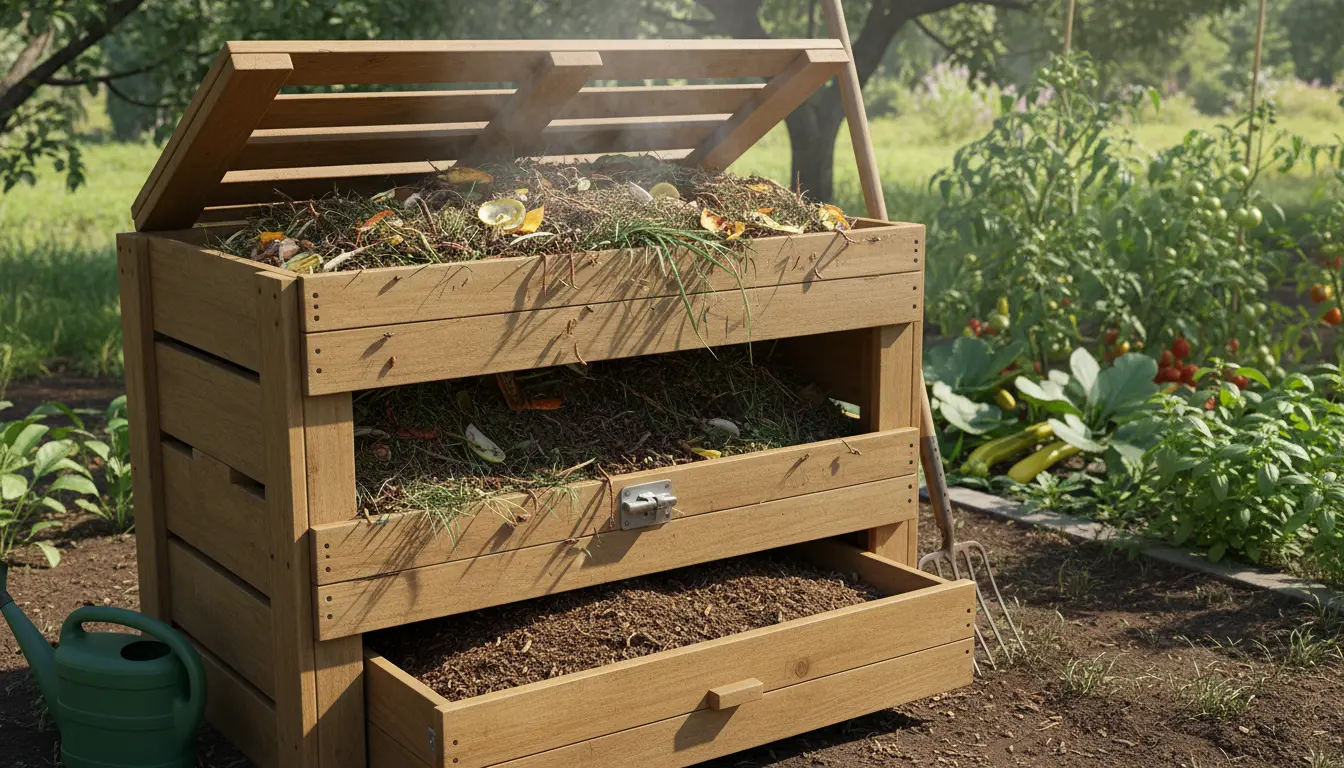
Why Home Composting Matters
Home composting turns kitchen and yard waste into a useful soil amendment while reducing household garbage. For beginners, it is an approachable way to lower landfill waste and improve garden health.
Even a small compost bin can cut monthly trash and provide rich soil for potted plants or a vegetable garden. This guide focuses on simple, practical steps to start home composting with confidence.
Benefits of Home Composting
Home composting offers environmental and practical advantages that are easy to achieve at small scale. It improves soil structure and feeds plants naturally.
- Reduces organic waste sent to landfills
- Creates nutrient-rich compost for gardens and containers
- Improves soil water retention and structure
- Saves money on store-bought soil amendments
Basic Principles of Home Composting
Successful home composting relies on three basic elements: carbon-rich materials, nitrogen-rich materials, and moisture. Microorganisms break down organic matter when these elements are balanced.
Think of carbon as the bulk ‘brown’ materials and nitrogen as the active ‘green’ materials. A balanced mix speeds decomposition and reduces odors.
What to Compost and What Not to Compost
Knowing acceptable inputs makes home composting easy and reliable. Avoid adding items that attract pests or slow decomposition.
- Compost: fruit and vegetable scraps, coffee grounds, tea bags (without staples), eggshells, lawn clippings, dry leaves, shredded paper
- Do not compost: meat, dairy, oils, diseased plants, pet waste, treated wood, large branches
Balancing Greens and Browns
A good rule of thumb is to mix roughly 2–3 parts brown (carbon) to 1 part green (nitrogen) by volume. If your pile is too wet or smelly, add more browns.
Examples of browns: dry leaves, shredded cardboard, straw. Examples of greens: vegetable scraps, fresh grass clippings, coffee grounds.
Step-by-Step Home Composting Setup
Setting up home composting can be done with a simple bin or a small pile. Follow these practical steps to get started.
- Choose a location: a shaded, level spot close to your kitchen for convenience.
- Select a container: a commercial compost bin, tumbling composter, or a homemade wooden/bin setup will work.
- Layer materials: start with coarse browns at the bottom, then add alternating layers of greens and browns.
- Maintain moisture: aim for a damp sponge feel. Add water if dry or cover if too wet from rain.
- Turn occasionally: aerate the pile every 1–2 weeks to keep decomposition active.
Practical Tips for Bin Management
- Chop large items into smaller pieces to speed breakdown.
- Keep a small indoor compost caddy with a tight lid for kitchen scraps.
- Cover fresh food scraps with dry browns to reduce flies and smells.
- If using a tumbler, turn more frequently for faster results.
Troubleshooting Common Home Composting Problems
New composters often encounter a few predictable issues. Troubleshooting is straightforward when you check moisture, aeration, and material balance.
Bad Smell
Smelly compost is usually too wet or high in nitrogen. Fix it by adding dry brown materials and turning the pile to add oxygen.
Slow Decomposition
If the pile seems inactive, add more greens to feed microbes, chop materials smaller, and ensure adequate moisture and aeration.
Pests
Avoid meat and oily foods and bury scraps under browns. Use a closed bin or tumbler to discourage rodents and flies.
Small Real-World Example or Case Study
Case: A two-person household in a small city used a 60-liter tumbling composter for one year. They collected kitchen scraps in a counter caddy and emptied it twice a week into the tumbler.
By following a balance of two parts shredded cardboard to one part kitchen waste, and tumbling every 4–5 days, they produced usable compost in about four months. Their weekly trash volume shrank by roughly 30 percent.
Compost can reduce household waste weight by up to 30 percent and returns nutrients to your garden, lowering the need for synthetic fertilizers.
Getting Started with Home Composting
Start small and iterate. Choose a bin type that fits your space, collect kitchen scraps, and stockpile dry browns like shredded paper or leaves.
Expect the first batch of compost in 2–6 months depending on method and maintenance. Once you begin, refine your routine based on the compost pile’s condition.
Quick Checklist to Start Home Composting
- Bin or tumbler selected
- Indoor caddy for scraps
- Supply of dry browns (cardboard, leaves)
- Simple turning schedule (every 1–2 weeks)
Home composting is a small habit with practical benefits for your garden and the planet. With basic balance, routine, and a bit of attention, beginners can produce nutrient-rich compost and reduce household waste.