
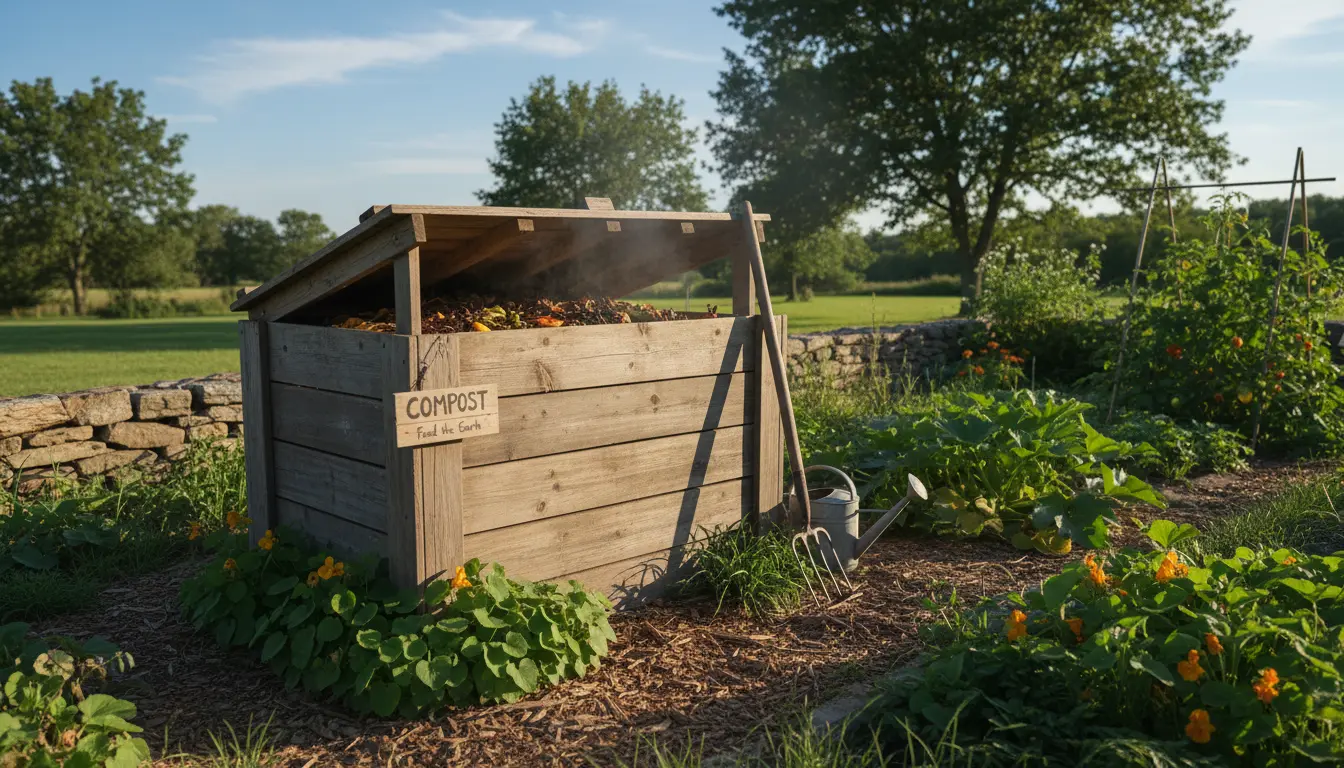
What Is Home Composting and Why Start
Home composting is the controlled breakdown of organic waste into nutrient rich material you can use in your garden. It reduces landfill waste, cuts kitchen trash, and improves soil structure for healthier plants.
This guide explains practical steps to set up and maintain a compost system at home, whether you have a backyard, balcony, or just a small bin.
Choosing a System for Home Composting
Select a compost type that fits your space and schedule. The right system determines how fast the compost processes and how much effort you will need to invest.
Backyard Pile or Bin for Home Composting
A backyard open pile or stationary bin is low cost and simple. It works well for households producing larger amounts of yard and kitchen waste.
Tumbler or Enclosed Bin for Home Composting
Tumblers speed up decomposition by making aeration easy. Enclosed bins are neater and keep pests away, which is useful in urban settings.
Vermicomposting for Small Spaces
Vermicomposting uses worms to break down food scraps quickly. It is ideal for balconies, apartments, and people who want fast, odor free results.
What Materials to Use in Home Composting
Compost needs a balance of carbon rich and nitrogen rich materials. This balance creates the heat and microbial activity needed to break down waste.
- Green materials (nitrogen): fruit and vegetable scraps, coffee grounds, fresh grass clippings
- Brown materials (carbon): dried leaves, shredded paper, cardboard, straw
- Avoid: meat, dairy, oily foods, diseased plants, and pet waste
Aim for a roughly 3 to 1 ratio of browns to greens by volume. That ratio keeps moisture and odor under control while supporting decomposition.
How to Build and Maintain Your Compost
Follow a few simple steps to keep the pile active and healthy. Regular checks take little time and prevent common problems.
- Start with a layer of coarse brown material for airflow.
- Add green and brown materials in alternating layers.
- Keep the pile moist like a wrung out sponge, not dripping wet.
- Turn or mix the pile every 1 to 2 weeks to add oxygen.
- Monitor temperature with a compost thermometer if you want faster composting.
Troubleshooting Home Composting
If the pile smells bad, it is too wet or has too many greens. Add more brown material and turn it to introduce air.
If decomposition is slow, check moisture and particle size. Shredding cardboard and chopping kitchen scraps speeds the process.
How Long Does Home Composting Take
Compost time varies with method and management. Hot, well managed piles can finish in 6 to 12 weeks. Passive piles may take 6 to 12 months.
Vermicompost systems often produce usable castings in 2 to 4 months depending on feeding rate and temperature.
Using Finished Compost
Finished compost looks dark, crumbly, and smells earthy. Use it as a soil amendment, top dressing, or part of potting mixes.
- Mix 10 to 30 percent compost into garden beds to improve fertility.
- Top dress lawns with a thin layer of compost for slow release nutrients.
- Blend compost with potting soil for container plants to retain moisture and boost microbes.
Small Real World Example of Home Composting
A two person household started with a 50 gallon tumbler on their patio. They added kitchen scraps and shredded paper, turning the tumbler twice a week.
Within three months they had dark compost which they mixed into potted herbs and a raised vegetable bed. Their trash volume dropped by nearly 30 percent in six months.
Quick Checklist to Start Home Composting
Use this checklist to begin in a weekend. Keeping tasks short builds a lasting habit.
- Pick a system: bin, tumbler, pile, or worm bin
- Gather initial materials: browns and greens
- Set up a small kitchen caddy for scraps
- Start with layered pile and water lightly
- Turn every 1 to 2 weeks and check moisture
Final Tips for Successful Home Composting
Start small and learn as you go. Composting adapts to local climate and available materials, so watch your pile and adjust layers and moisture.
Keep records of what you add and how often you turn. That habit makes it easier to repeat success and avoid problems in future batches.
Home composting is a practical, low cost way to reduce waste and improve garden soil. With the right system and a small routine, most households can create useful compost in months rather than years.