
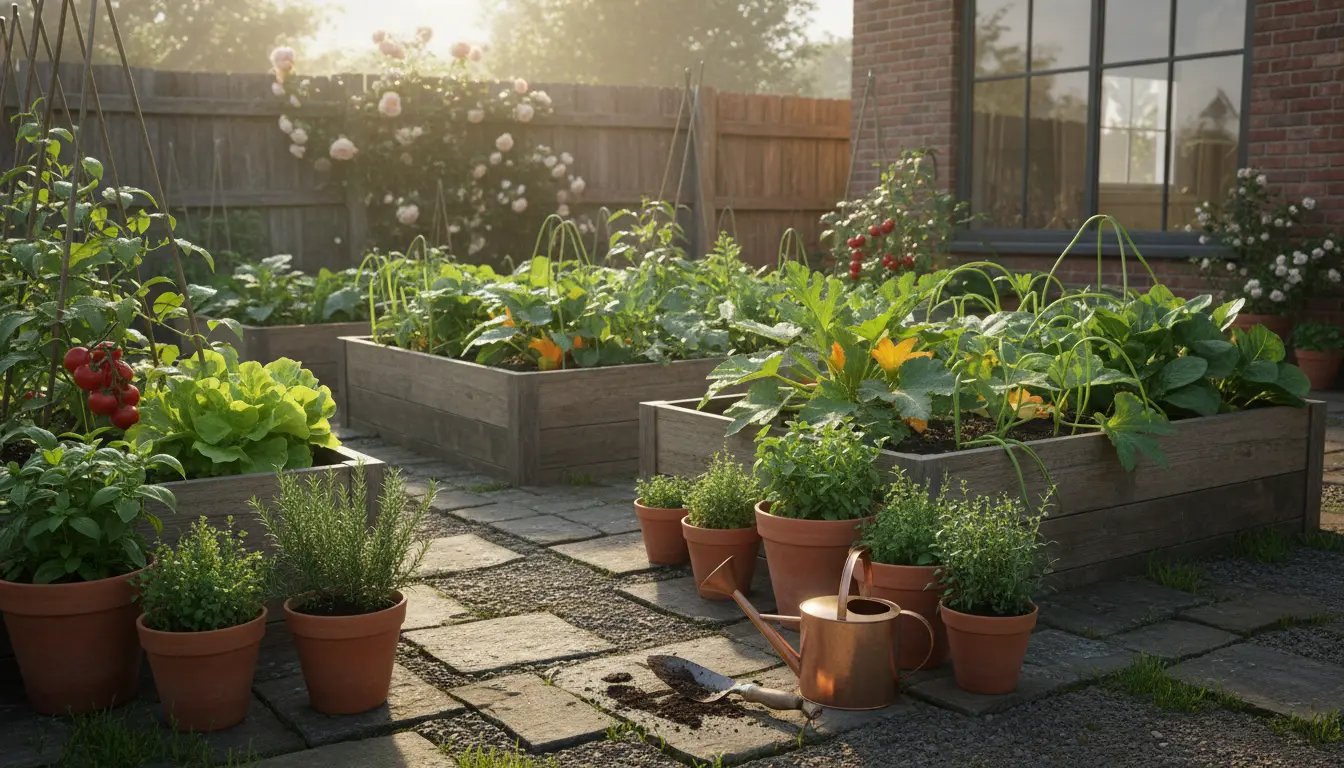
Why Start a Small Vegetable Garden at Home
Starting a small vegetable garden at home gives you fresh produce, lowers grocery bills, and connects you to where food comes from. A compact garden fits patios, balconies, or a small backyard and still yields meaningful harvests.
This guide shows practical, step-by-step methods to plan, plant, and maintain a small vegetable garden so beginners can succeed quickly.
Plan Your Small Vegetable Garden
Good planning reduces wasted effort and improves yields. First, decide whether you will use containers, raised beds, or a small in-ground plot.
Consider sunlight, access to water, and how much time you can commit each week. Most vegetables need 6–8 hours of sun daily.
Choose the Right Location for a Small Vegetable Garden
Pick the sunniest spot available. If only shady areas exist, focus on leafy greens that tolerate less sun.
Locate the garden near a water source to make watering easier and more consistent.
Decide on Size and Layout
Start small—4 to 12 square feet is enough for a beginner. Use simple layouts: a single raised bed, a set of containers, or a 4×4 square for intensive planting.
- Containers: Good for balconies and patios.
- Raised beds: Easier on your back and control soil quality.
- In-ground plots: Best if you have good native soil and space.
Prepare Soil and Containers
Healthy soil is the foundation of a productive small vegetable garden. If using containers, choose pots with drainage holes and at least 12 inches deep for most vegetables.
Mix a quality potting soil or create a raised bed mix with compost, topsoil, and a light amendment like coconut coir for moisture retention.
Soil Mix and Amendments
Use a balanced approach: about 40% compost, 40% topsoil, and 20% coir or perlite in raised beds or containers. Add slow-release, balanced fertilizer at planting time if needed.
Test soil pH if you suspect issues. Most vegetables prefer pH 6.0–7.0. Lime can raise pH and sulfur can lower it.
Choose Plants for a Small Vegetable Garden
Select vegetables that match your climate, harvest preferences, and space. For limited space choose compact or bush varieties.
- Fast crops: Lettuce, radishes, spinach—harvest quickly and rotate.
- Space-efficient: Dwarf tomatoes, bush beans, compact peppers.
- Vertical options: Cucumbers and peas can climb trellises to save ground space.
Succession Planting for Continuous Harvests
Succession planting means sowing new crops every few weeks to maintain steady produce. This strategy maximizes output from a small vegetable garden.
Example: Plant lettuce every 2–3 weeks for a continuous supply through the season.
Watering, Feeding, and Maintenance
Consistent watering is critical for a small vegetable garden. Most vegetables need 1–1.5 inches of water per week, adjusted for heat and rainfall.
Water at the soil level to avoid wetting foliage and reduce disease risk. Mulch helps retain moisture and suppress weeds.
Pest and Disease Management
Start with prevention: clean tools, healthy soil, and crop rotation. For pests use physical barriers, handpicking, or targeted organic controls like insecticidal soap when necessary.
Monitor plants weekly to catch problems early. Remove diseased leaves and isolate severely affected plants.
Harvesting and Storage from a Small Vegetable Garden
Harvest regularly to encourage continued production. Pick vegetables when they are ripe but still tender for best flavor.
Store crops properly: leafy greens in cool, moist conditions; root vegetables in a cool, dark place; tomatoes at room temperature until fully ripe.
Tools and Budget for a Small Vegetable Garden
You don’t need many tools to start. Invest in a few basics and reuse local materials to save money.
- Essential tools: trowel, hand pruner, watering can or hose with gentle nozzle, gloves.
- Optional: small garden fork, trellis material, raised bed lumber or containers.
Case Study: Sarahs 12 Square Foot Patio Garden
Sarah converted a 12-square-foot patio area into a productive small vegetable garden using four 3×3 wooden planters. She planted dwarf tomatoes, basil, lettuce, and bush beans.
Over one growing season she harvested enough salad greens weekly and shelled beans twice a month, reducing her grocery produce spend by about 30% and increasing her confidence in gardening.
Quick Checklist to Start a Small Vegetable Garden
- Pick the sunny location and decide on containers or beds.
- Prepare soil mix with compost and drainage.
- Choose 3–6 easy crops suited to your space and climate.
- Plant with succession timing and set up vertical supports as needed.
- Water consistently, mulch, and monitor for pests weekly.
Final Tips for a Successful Small Vegetable Garden
Start small and learn from each season. Keep a simple garden journal of planting dates, varieties, and harvests to improve next year.
Focus on enjoyment and steady improvement. A small vegetable garden can be both productive and low stress when planned thoughtfully.