
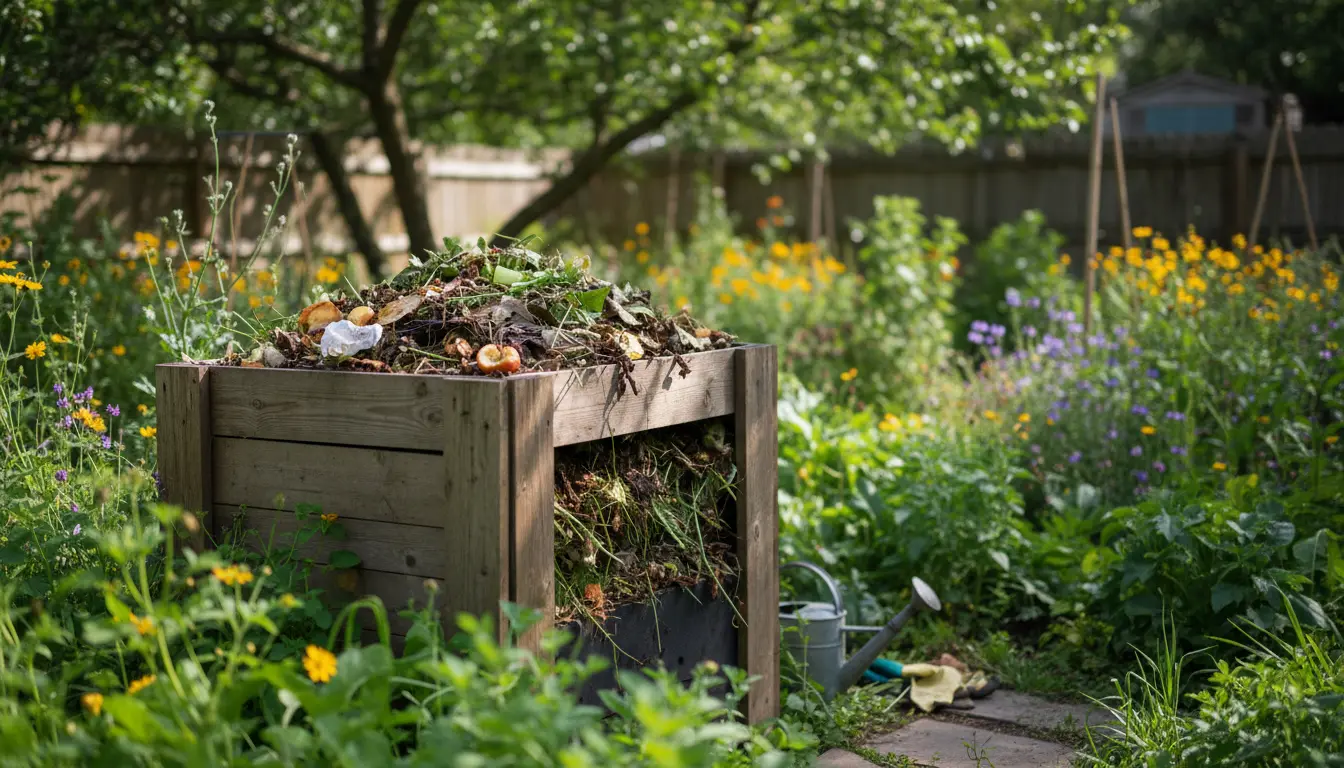
Home Composting Basics
Home composting turns kitchen scraps and yard waste into nutrient-rich soil. It reduces trash, lowers methane from landfills, and feeds plants naturally.
This guide explains simple, low-cost methods that work in most yards or balconies. You will learn what to compost, which systems to choose, and how to maintain a healthy pile.
Why Choose Home Composting
Composting is practical and cost-effective. It reduces garbage volume, improves soil structure, and decreases the need for chemical fertilizers.
Many municipalities offer food-scrap programs, but home composting gives you direct access to finished compost for your garden and potted plants.
Home Composting Materials You Need
Basic Tools for Home Composting
Start with a few simple items that fit your space and budget. Most beginners need a bin, a kitchen container, and a garden fork or shovel.
- Compost bin or tumbler (or a simple pile or wire cage)
- Small countertop pail for food scraps (with a lid)
- Garden fork or shovel for turning
- Water source (hose or watering can) for occasional moistening
Materials to Compost
Balance green and brown materials to keep the pile active. Greens provide nitrogen and browns add carbon.
- Greens: fruit and vegetable scraps, coffee grounds, fresh grass clippings
- Browns: dry leaves, shredded paper, cardboard, straw
- Optional: small amounts of garden waste, eggshells, and wood ash
What Not to Compost
Avoid meat, dairy, oils, diseased plants, and pet waste. These attract pests, create odors, or carry pathogens.
- Meat, fish, bones, and dairy products
- Oils, greasy foods, and large amounts of bread
- Cat or dog feces and diseased plant material
Home Composting Methods
Bin or Pile Method for Home Composting
Place a bin or start a pile on bare soil in a partly shady spot. Layer greens and browns, aiming for roughly 2:1 browns to greens by volume.
Turn the pile every 1–2 weeks to introduce oxygen and speed decomposition. Expect finished compost in 3–12 months depending on conditions.
Tumbler and Vermicomposting Options
Tumblers make turning easier and reduce pest access. They are ideal for small gardens and produce compost faster when turned regularly.
Vermicomposting uses worms to break down scraps indoors or outdoors. Use a worm bin for apartments or year-round composting in cool climates.
Maintaining Your Home Composting System
Maintenance keeps the pile active and odor-free. Monitor moisture, oxygen, and temperature to prevent problems.
- Moisture: The pile should feel like a wrung-out sponge. Add water or dry browns to adjust.
- Air: Turn the pile to add oxygen. Lack of air causes foul smells.
- Size: Aim for at least 1 cubic meter (3x3x3 feet) for faster heating, but smaller piles work if well-managed.
Troubleshooting Common Home Composting Issues
Simple fixes usually solve common problems. Smells often mean too much green or not enough air.
- Odor: Add more brown material and turn the pile.
- Pests: Bury food scraps in the center of the pile and avoid meat/dairy.
- Slow Breakdown: Chop materials smaller and maintain moisture and aeration.
Composting can cut household waste by up to 30 percent. A family of four can divert hundreds of pounds of food scraps each year from the trash.
Using Finished Compost from Home Composting
Finished compost is dark, crumbly, and smells earthy. Use it as a soil amendment, mulch, or in potting mixes to improve fertility and water retention.
Apply a 1–3 inch layer of compost around garden beds or mix a handful into each planting hole for vegetables and flowers.
Small Real-World Example: A Home Composting Case Study
The Martin family (two adults, two children) started home composting using a 50-gallon tumbler. They collected kitchen scraps in a countertop pail and added shredded leaves from their yard.
Over 12 months they diverted roughly 380 pounds (about 173 kg) of organic waste from their trash. They used the finished compost to enrich their vegetable beds and cut their store-bought fertilizer spending by 40 percent.
Key steps that helped them succeed:
- Regularly turning the tumbler twice a week
- Balancing greens and browns each week
- Keeping a small supply of shredded paper on hand for quick fixes
Quick Checklist to Start Home Composting Today
- Choose a method: bin, tumbler, or worm bin
- Collect greens and browns separately
- Keep the pile moist and aerated
- Turn or manage the pile weekly
- Harvest finished compost and use it in your garden
Final Tips for Successful Home Composting
Start small and be consistent. Composting improves with practice and observation. Adjust layers, moisture, and turning frequency based on your results.
Local extension offices and community gardens often offer composting workshops and resources that can help you troubleshoot specific issues.
Home composting is a practical, low-cost way to recycle organic waste and boost garden health. With minimal tools and a little routine, most households can turn scraps into valuable compost within months.