
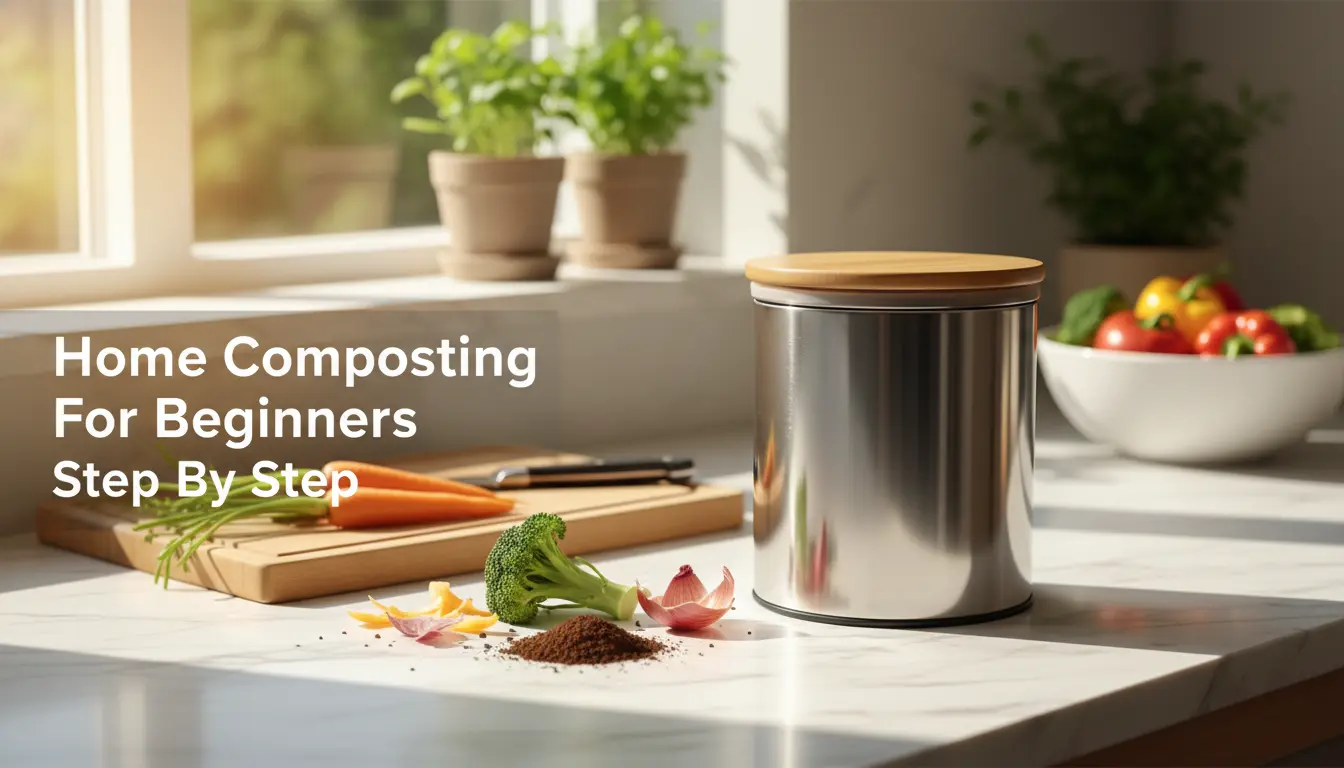
Why start home composting
Home composting turns kitchen and yard waste into valuable soil amendment. It reduces household waste and improves garden soil structure and fertility.
This guide explains simple, practical steps to start composting at home and how to manage the process without special equipment.
Basics of home composting
Compost is the result of organic materials breaking down under controlled conditions. Microbes, worms, and oxygen do the work when you supply the right mix of materials and moisture.
Balance, aeration, and time are the three essentials for a healthy compost pile.
Greens and browns: what to use
Think of ingredients as “greens” (nitrogen-rich) and “browns” (carbon-rich). Both are needed for efficient decomposition.
- Greens: vegetable scraps, fruit peels, coffee grounds, fresh grass clippings.
- Browns: dry leaves, shredded paper, cardboard, straw, small wood chips.
Good compost ratios
A common rule is about 3 parts browns to 1 part greens by volume. Adjust if the pile smells or dries out.
How to start a home compost bin
Choose a container: a simple plastic or wooden bin, tumbler, or an open pile will work. For small spaces, consider a worm bin (vermicompost).
Site your bin in partial sun with good drainage. A level, well-drained spot helps maintain moisture balance.
Step-by-step setup
- Layer 4–6 inches of coarse browns at the bottom for airflow.
- Add a mix of greens and browns in alternating layers, aiming for the 3:1 ratio overall.
- Moisten each layer so it feels like a wrung-out sponge but not dripping.
- Cover the top with a layer of browns to reduce flies and slow evaporation.
Maintaining your compost
Turn the compost every 1–2 weeks to add oxygen. Turning speeds up decomposition and reduces odors.
Check moisture regularly: if it is dry, add water; if it is soggy, add more browns and turn to increase airflow.
Common problems and fixes
- Smelly compost: add more browns, turn the pile, and reduce wet greens like food scraps until balance returns.
- Pests (rats, flies): avoid meat, dairy, and oily foods. Use a covered bin or bury fresh scraps in the pile.
- Slow decomposition: chop materials smaller, add nitrogen-rich greens, and keep it moist.
Compost methods for different situations
Choose the method that fits your space and time.
- Backyard bin or pile: best if you have yard waste and space.
- Tumbler: faster and neater for small yards.
- Vermicompost: ideal for apartments; red worms break down food scraps into rich castings.
- Bokashi: a fermentation method that handles cooked food and dairy, followed by burial or composting.
When is compost ready to use?
Finished compost is dark, crumbly, and smells earthy. Most piles take 3–12 months depending on method and management.
Use finished compost as a soil amendment, mulch, or seed starting mix component. It improves water retention, drainage, and nutrient content.
Small case study: urban apartment composting
Maria, a city apartment dweller, started vermicomposting with a two-bin plastic worm bin under her sink. She collected only fruit and vegetable scraps and coffee grounds.
After three months she harvested rich worm castings and used them to feed houseplants and balcony herbs. Her kitchen waste dropped significantly and her plants grew healthier.
Practical tips and checklist
Keep these simple habits to maintain an efficient home compost system.
- Chop or shred bulky materials before adding them.
- Keep a small countertop container for daily scraps to avoid trips to the bin.
- Record turning and moisture checks on a simple calendar.
- Use finished compost gradually—replace a quarter of potting mix at a time.
Quick examples of do and don’t
- Do add coffee grounds and eggshells; they enrich nitrogen and calcium.
- Do mix dry leaves with fresh food scraps to reduce odor.
- Don’t add meat, dairy, or cooked oils unless using a bokashi system.
- Don’t let the pile become waterlogged; it should never feel like a swamp.
Final thoughts on home composting
Home composting is an accessible way to reduce waste and improve soil health. Start small, observe the pile, and adjust ingredients and moisture as you learn.
With minimal tools and a bit of routine, most households can produce useful compost that benefits gardens and houseplants.