
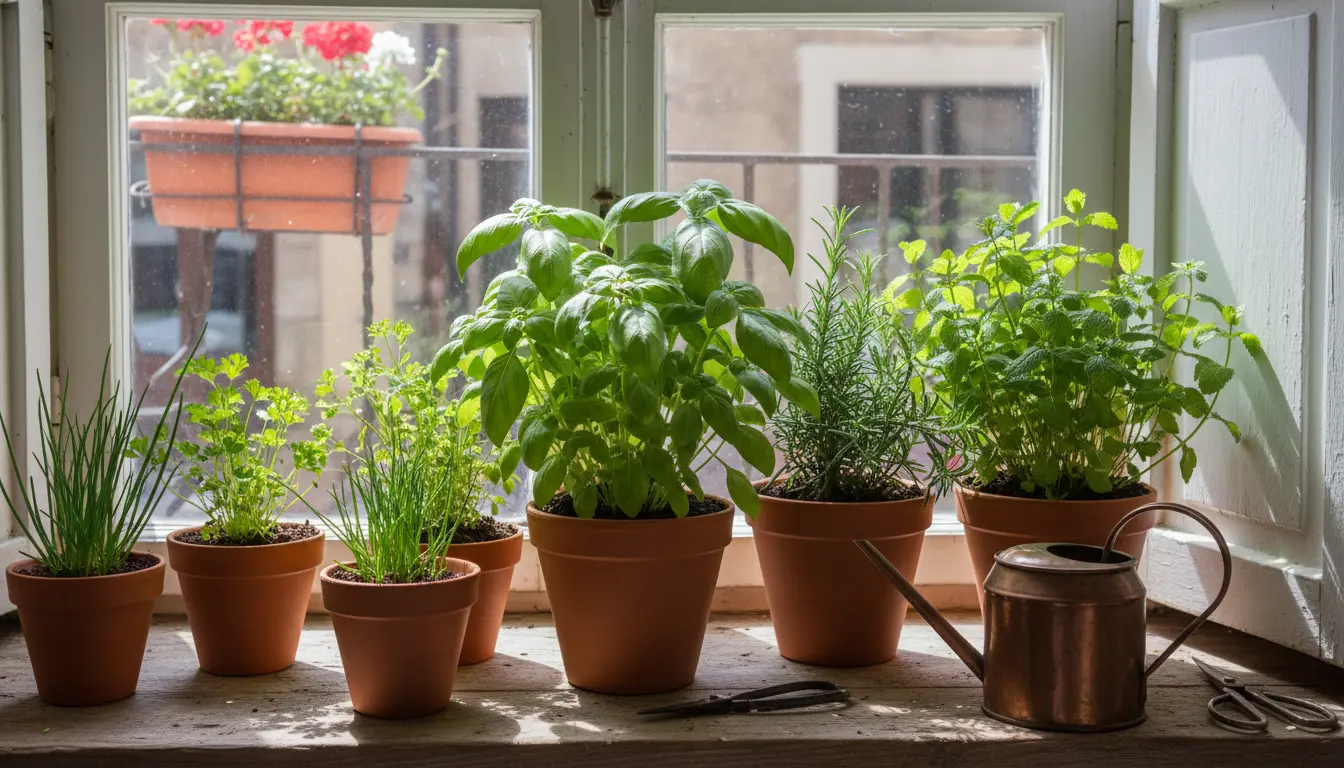
Why start an indoor herb garden
An indoor herb garden gives fresh flavors year-round and saves money on store-bought herbs. It fits small spaces and brings greenery into kitchens and apartments.
This guide explains how to choose herbs, set up containers, manage light and water, and keep plants productive. Follow the steps to get your indoor herb garden growing quickly.
Choosing herbs for your indoor herb garden
Pick herbs that suit your cooking and light conditions. Some herbs thrive on a sunny windowsill while others tolerate lower light.
Best herbs for beginners
- Basil – prefers bright light and regular watering.
- Mint – tolerant of partial shade and forgiving of watering mistakes.
- Parsley – grows well in moderate light and is slow to bolt indoors.
- Thyme – needs bright light and good drainage.
- Chives – compact and easy to harvest from a small pot.
Containers, soil, and light for indoor herb garden
Choose containers with drainage holes to prevent root rot. Use pots sized to each herb: 4–6 inch pots for single herbs, larger pots for mixed plantings.
Use a light, well-draining potting mix formulated for containers. Avoid garden soil, which can compact and hold too much moisture.
Lighting options for your indoor herb garden
Most culinary herbs need 6–8 hours of bright light. A south- or west-facing window usually works best.
If natural light is limited, use a full-spectrum LED grow light. Place the light 6–12 inches above the plants and run it 12–14 hours a day for healthy growth.
Planting and care schedule for an indoor herb garden
Start seeds or use small nursery plants for faster results. When transplanting, loosen roots gently and plant at the same depth as the nursery container.
Establish a simple care schedule to keep the garden productive without overworking it.
Basic weekly care checklist
- Check soil moisture twice a week. Water when the top 1 inch is dry.
- Rotate pots weekly to encourage even light exposure.
- Pinch or trim for bushier growth and to prevent flowering where you want leaves.
- Feed lightly with a balanced liquid fertilizer every 4–6 weeks.
Most herbs taste best before they flower. Regular pinching helps plants produce more leaves instead of seeds.
Watering and feeding tips for an indoor herb garden
Watering is the most common cause of indoor herb problems. Overwatering causes yellow leaves and root rot, while underwatering wilts plants and reduces flavor.
Let the top soil dry slightly between waterings and water thoroughly until excess drains. Empty saucers after 30 minutes to avoid standing water.
Fertilizing your indoor herb garden
Use a diluted, balanced fertilizer (for example 10-10-10 at half strength) every 4–6 weeks. Too much fertilizer can reduce essential oils and flavor.
Organic options like compost tea or fish emulsion also work well at lower strength.
Pruning, harvesting, and encouraging growth
Regular harvesting is good for herbs. Remove leaves from the top to encourage branching and fuller plants.
For most herbs, harvest no more than one-third of the plant at a time. Use clean scissors and cut above a leaf node to promote regrowth.
Troubleshooting common problems with your indoor herb garden
Identify common issues early to save plants. Inspect leaves weekly for pests and signs of disease.
- Yellow leaves: often from overwatering or poor drainage.
- Leggy growth: insufficient light; move plants closer to a window or add a grow light.
- Sticky leaves or white webbing: check for aphids or spider mites and rinse plants or use insecticidal soap.
Small case study: A windowsill success
Sarah, a city renter, started three basil plants on a sunny kitchen windowsill in a 6-inch pot. She rotated pots weekly and used a small LED during winter.
Within six weeks she had enough basil to use fresh in meals, and regular pinching prevented flowering. Minimal space and consistent care produced a steady supply of leaves.
Examples of herb pairings and uses
- Basil + parsley: fresh salads and pesto blends.
- Thyme + rosemary: good for roasting vegetables and meats.
- Mint + chives: bright flavors for drinks, garnishes, and cooked dishes.
Final checklist to start your indoor herb garden
- Choose 3–5 herbs that match your light and cooking needs.
- Use pots with drainage and a light potting mix.
- Provide 6–8 hours of light or a grow light for 12–14 hours.
- Water when the top inch of soil is dry and fertilize lightly.
- Harvest regularly and monitor for pests.
Starting an indoor herb garden is straightforward and rewarding. With the right herbs, light, and simple weekly care, you can enjoy fresh flavors and greenery year-round.