
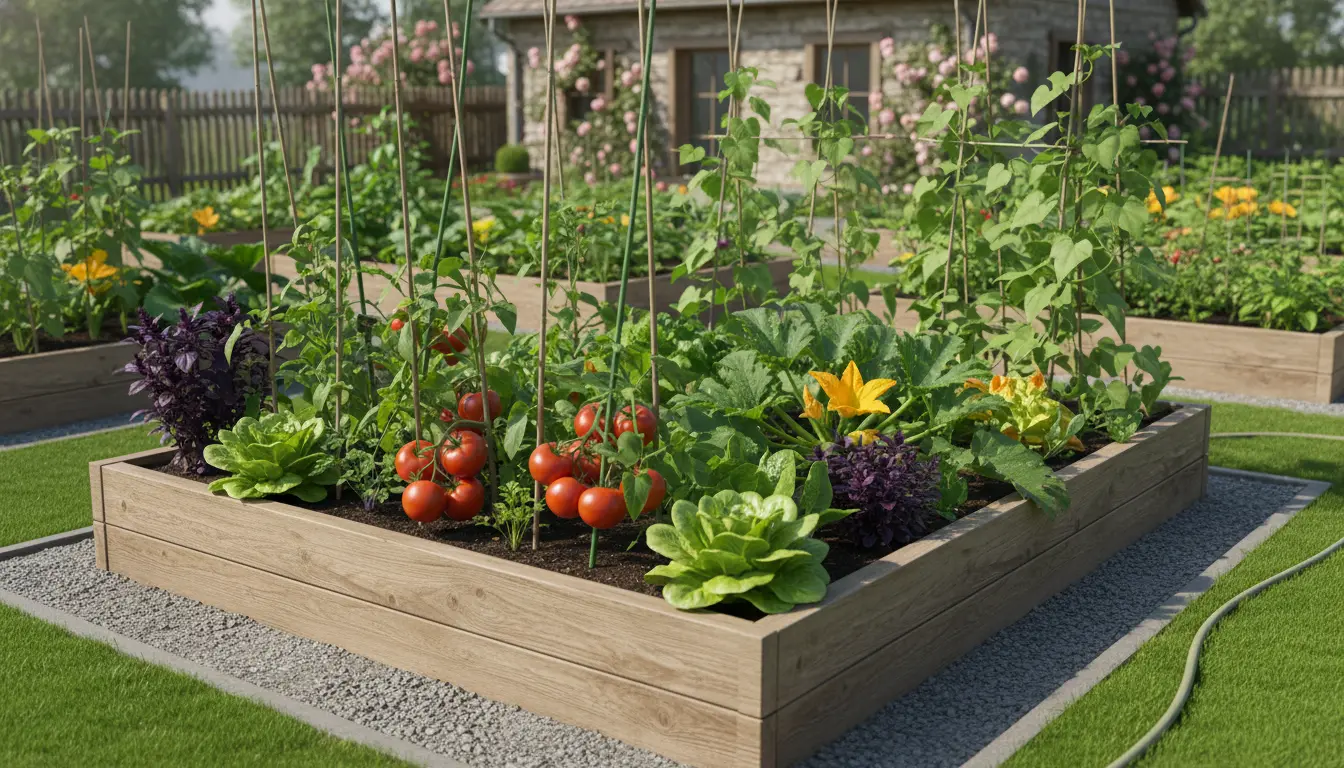
Getting Ready to Start a Vegetable Garden
Starting a vegetable garden is a practical way to grow fresh produce and learn basic horticulture. This guide walks you through straightforward steps to plan, plant, and maintain a productive garden.
Keep the plan simple: pick a sunny spot, improve the soil, select easy crops, and water consistently. These basics make most beginner gardens successful.
Choose the Right Location to Start a Vegetable Garden
Sunlight is the first requirement. Most vegetables need 6 to 8 hours of direct sun per day. Observe potential spots at different times to choose the sunniest area.
Consider access to water and proximity to your home. Closer locations are easier to maintain, especially for daily watering and harvesting.
Soil and Bed Options When You Start a Vegetable Garden
Decide between in-ground beds, raised beds, or containers. Each has pros and cons depending on space and soil quality.
- In-ground beds: Best for large areas with good native soil.
- Raised beds: Easier to control soil quality and drainage.
- Containers: Ideal for balconies and patios; use high-quality potting mix.
Prepare Soil Before You Start a Vegetable Garden
Healthy soil is the foundation of a productive garden. Test the soil pH with a kit or at a local extension office. Most vegetables prefer pH 6.0–7.0.
Work in organic matter such as compost or well-rotted manure to improve structure and fertility. Aim for a 2–4 inch layer mixed into the top 6–8 inches of soil.
Simple Soil Improvement Steps
- Clear weeds and debris.
- Loosen the soil with a fork or tiller.
- Add compost and mix well.
- Rake smooth and form beds.
Choose Easy Vegetables to Start a Vegetable Garden
Begin with low-maintenance, high-reward crops. These build confidence and yield steady harvests for beginners.
- Leafy greens: lettuce, spinach, chard.
- Root crops: radishes, carrots.
- Fast fruiting: tomatoes (determinate types), bush beans.
- Herbs: basil, parsley, chives.
Timing and Planting
Check local frost dates to plan planting times. Sow cool-season crops early, and warm-season crops after the last frost.
Follow seed packet instructions for spacing and depth, or buy seedlings to get a quick start.
Watering and Feeding After You Start a Vegetable Garden
Water consistently; irregular moisture causes stress and reduces yields. Aim for about 1 inch of water per week, adjusting for weather and soil type.
Use mulch to retain moisture and suppress weeds. Organic mulches like straw or shredded leaves work well around vegetables.
Fertilizing Basics
Apply a balanced organic fertilizer at planting and again mid-season for heavy feeders. Avoid excess nitrogen that encourages leaf growth over fruiting.
Pest and Disease Management for New Gardens
Inspect plants regularly and remove affected leaves early. Use physical barriers like row covers for butterflies and beetles.
Encourage beneficial insects by planting flowers like marigolds and borage. As a last resort, choose targeted organic treatments rather than broad-spectrum chemicals.
Harvesting and Rotation
Harvest vegetables at peak ripeness for best flavor and to encourage continued production. Pick regularly — many plants produce more when harvested often.
Practice crop rotation next season to reduce pest and disease buildup. Move families of crops (nightshades, legumes, brassicas) to different beds.
Plants grown in soil with good structure and organic matter can require up to 50% less water than poor soils because healthy soil holds moisture more effectively.
Small Case Study: A Balcony Garden That Started Small
Case: Jenna, an apartment resident, used a 6 ft balcony to grow vegetables in containers. She chose cherry tomatoes, basil, and salad greens in pots and a single raised trough.
By placing containers where they received morning sun, adding composted potting mix, and watering with a drip kit, she harvested tomatoes and weekly salads for four months. Regular pruning and container feeding kept yields steady.
Key takeaways: choose compact varieties, use quality potting mix, and place containers for best sun exposure.
Quick Checklist to Start a Vegetable Garden
- Choose a sunny location near water.
- Decide bed type: in-ground, raised, or containers.
- Test and improve soil with compost.
- Select easy vegetables suited to your climate.
- Water consistently and mulch to retain moisture.
- Monitor pests and encourage beneficial insects.
- Harvest regularly and rotate crops next season.
Final Tips When You Start a Vegetable Garden
Start small and expand as you learn. A handful of productive plants can supply fresh vegetables without becoming overwhelming.
Keep notes on planting dates, varieties, and yields. Simple records help you improve the garden each season and make better choices next year.
With basic planning and consistent care, anyone can start a vegetable garden that provides fresh food and a satisfying hobby.