
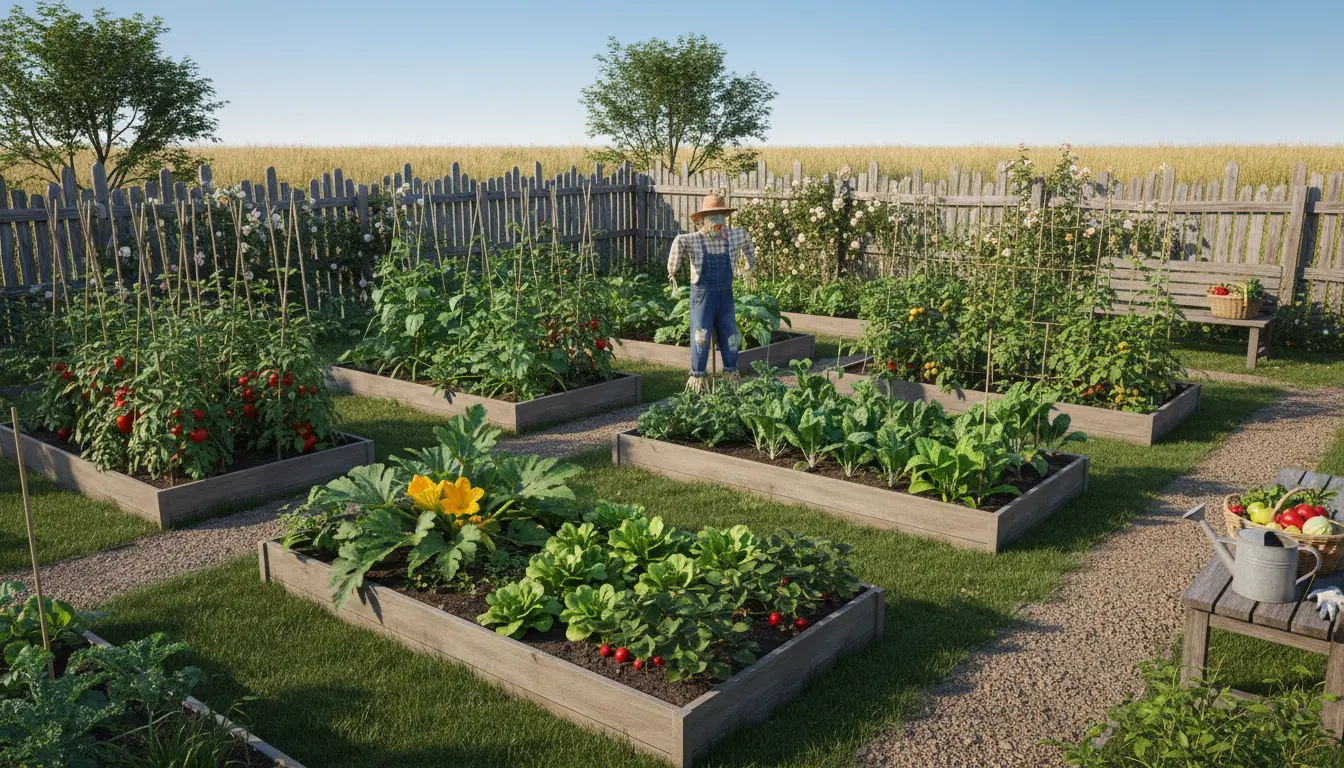
Why Start a Small Vegetable Garden
Growing vegetables in a compact space saves money, improves diet, and reduces food miles. A small vegetable garden fits balconies, patios, and tiny backyards while giving reliable harvests.
This guide explains practical steps to plan, build, and maintain a productive small vegetable garden. Follow the steps below for a straightforward start.
Plan Your Small Vegetable Garden
Begin with a simple plan that matches your time, space, and climate. Planning prevents wasted plants and frustration.
Consider these questions:
- How much sunlight does the space get? (Most vegetables need 6+ hours.)
- What is your budget for soil, containers, and tools?
- How much time can you commit each week?
Choose a Location for Your Small Vegetable Garden
Pick the sunniest spot you have, ideally facing south or west. If full sun is not available, choose crops that tolerate partial shade like leafy greens and herbs.
Also ensure easy access to water and a flat, well-drained area for containers or raised beds.
Decide on Containers or Raised Beds
Containers are ideal for balconies and patios. Raised beds work well for small yards and give better soil control.
- Containers: Use 12-inch deep pots for most vegetables; larger for tomatoes and peppers.
- Raised beds: 3–4 feet wide is comfortable for reaching the center from both sides.
- Recycled options: Wooden crates, fabric grow bags, or old barrels work if properly cleaned.
Soil and Planting for a Small Vegetable Garden
Healthy soil is the foundation of a productive garden. Improve poor soil with compost and choose quality potting mix for containers.
Soil Mix and Preparation
For raised beds, blend native soil with compost at roughly 60% soil to 40% compost. For containers, use a commercial potting mix with good drainage.
Test soil pH if possible. Most vegetables prefer pH 6.0–7.0. Amend with lime or sulfur if needed.
What to Plant First in a Small Vegetable Garden
Start with easy, high-yield crops suited to small spaces. Fast-growing and space-efficient choices include:
- Leafy greens: Lettuce, spinach, and arugula
- Herbs: Basil, parsley, chives
- Root crops: Radishes, baby carrots
- Compact fruiting plants: Cherry tomatoes, dwarf peppers
Use vertical supports for vining plants like peas and cucumbers to maximize footprint.
Planting Schedule and Succession Planting
A small vegetable garden benefits from succession planting to keep it productive. Plant a new batch of seeds every 2–3 weeks for continuous harvests.
Follow local frost dates to time your planting. Many regions allow cool-season crops early and warm-season crops after the last frost.
Watering, Feeding, and Maintenance
Consistent watering is critical in small gardens because containers dry quickly. Water deeply and less often to encourage root growth.
- Watering: Early morning watering reduces disease risk and evaporation.
- Mulch: Use straw or shredded bark to retain moisture and suppress weeds.
- Fertilizing: Feed with a balanced, slow-release fertilizer or liquid feed every 3–4 weeks for heavy feeders like tomatoes.
Pest and Disease Control in a Small Vegetable Garden
Start with prevention: healthy soil, good airflow, and crop rotation reduce problems. Hand-pick pests or use insecticidal soaps for small infestations.
Introduce beneficial insects by planting pollinator-friendly flowers near the garden.
Growing vegetables in containers can yield similar production per square foot as ground beds when you choose the right varieties and maintain soil fertility.
Design Tips for a Small Vegetable Garden
Maximize space with these layout ideas to increase yield without increasing footprint.
- Vertical growing: Trellises and obelisks save horizontal space.
- Interplanting: Combine slow-growing and fast-growing crops in the same bed.
- Succession layout: Reserve a small portion for quick crops to replant often.
Tool and Supply Checklist
Keep these basics on hand to maintain momentum and reduce excuses to skip tasks.
- Hand trowel and pruning shears
- Watering can or a soaker hose
- Quality potting soil and compost
- Plant labels and a small notebook for tracking
Small Case Study: A 150-Square-Foot Success
Marcos converted a 150 sq ft side yard into a raised-bed small vegetable garden. He used three 4×6 ft beds, added compost, and planted cherry tomatoes, bush beans, and salad greens.
Within one season he harvested continuous salads and enough tomatoes to preserve 10 jars of sauce. His success came from weekly attention, mulching, and rotating greens with root crops.
Final Tips to Keep Your Small Vegetable Garden Productive
Start small and expand only after you learn what works in your space. Track what you plant and note successes and failures.
Regular maintenance — watering, weeding, and feeding — keeps yields consistent and makes the garden enjoyable.
With simple planning and steady care, a small vegetable garden can provide fresh produce and satisfaction even in limited spaces.