
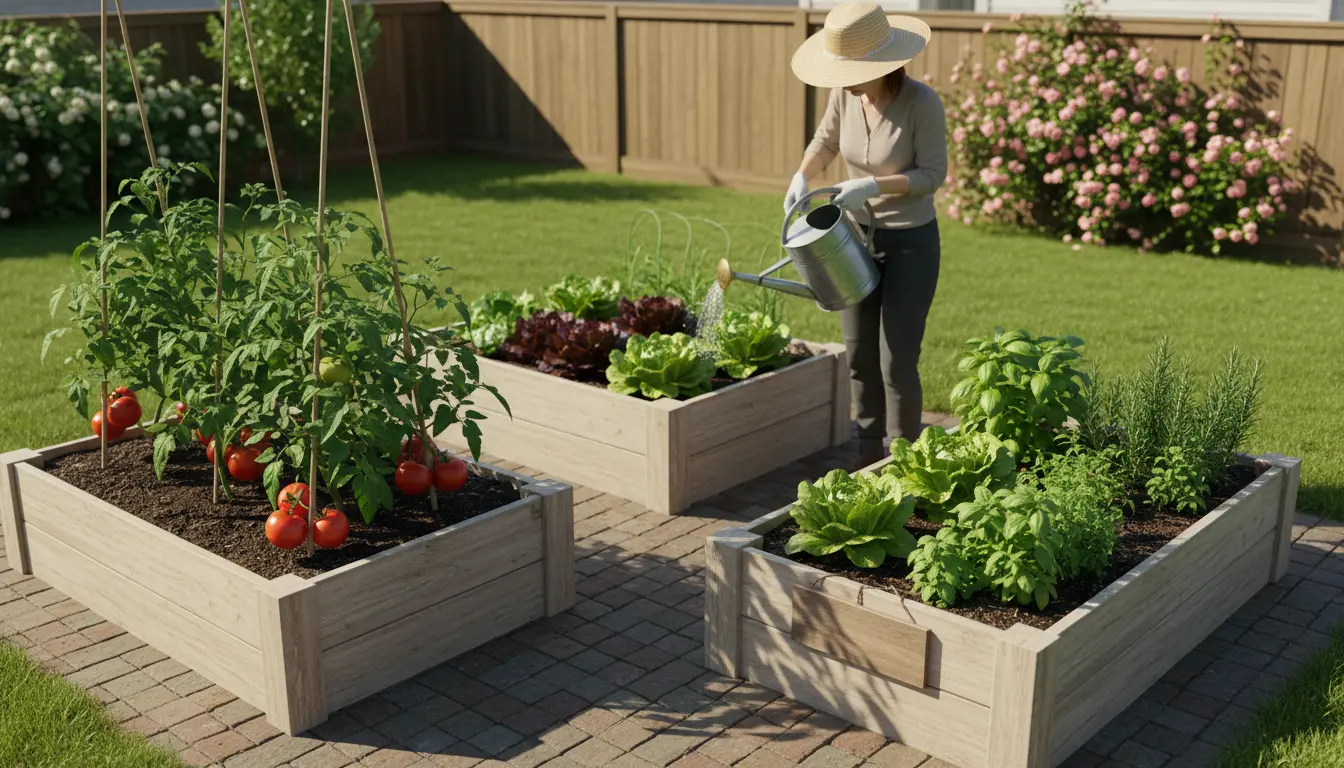
Starting a small vegetable garden is an achievable project for any home, balcony, or small yard. This guide gives clear, practical steps to plan, plant, and maintain a productive compact garden.
Planning Your Small Vegetable Garden
Good planning reduces wasted time and effort. Begin by assessing light, space, and your goals for harvests.
Choose a Location for a Small Vegetable Garden
Pick a spot that gets at least 5–6 hours of direct sun for most vegetables. If full sun is limited, choose leafy greens and herbs that tolerate partial shade.
Consider access to water and how you will carry soil, plants, and tools to the site.
Select Plants for a Small Vegetable Garden
Choose compact, high-yield or fast-growing varieties suited to small spaces. Good options include:
- Leafy greens: lettuce, spinach, arugula
- Herbs: basil, parsley, chives
- Compact fruiting plants: patio tomatoes, bush beans, peppers
- Root crops in containers: radishes, baby carrots
Prepare Soil and Beds for a Small Vegetable Garden
Healthy soil is the foundation of a productive garden. In small areas, raised beds or containers are often the easiest to manage.
Fill raised beds with a mix of topsoil, compost, and a light organic amendment. A common ratio is 60% topsoil, 30% compost, 10% coarse sand or perlite for drainage.
Soil Tests and Amendments
Do a simple soil test for pH and basic nutrients. Many vegetables prefer pH 6.0–7.0. Add lime to raise pH or sulfur to lower it if needed.
Work in 2–3 inches of compost each season to improve structure and fertility.
Planting and Spacing in a Small Vegetable Garden
Planting density matters in a compact garden. Use succession planting and vertical space to increase yield without crowding.
Seed vs. Transplants
Start fast-maturing greens from seed directly. Use transplants for tomatoes and peppers to get a head start on the season.
Follow seed packet spacing but reduce slightly when practicing close spacing; you can thin seedlings to provide more air as plants grow.
Using Vertical Space
Add trellises or cages for peas, beans, and indeterminate tomatoes. Vertical growing frees ground space for other crops.
- Install 4–6 ft trellises on the north side to avoid shading smaller plants.
- Use hanging baskets for trailing herbs or strawberries.
Watering, Fertilizing, and Maintenance
Consistent care beats perfection. Small gardens need regular attention to stay productive.
Watering Tips for a Small Vegetable Garden
Water deeply and less frequently to encourage strong roots. Aim for 1–1.5 inches per week depending on weather.
Use drip irrigation or soaker hoses under mulch to reduce evaporation and disease risk.
Feeding and Pest Management
Apply a balanced organic fertilizer at planting and again mid-season for heavy feeders like tomatoes. Use compost tea or fish emulsion sparingly for quick boosts.
Monitor pests weekly. Use physical controls first: handpick, row covers, or insecticidal soap. Encourage beneficial insects with flowering plants.
Harvesting and Extending the Season in a Small Vegetable Garden
Frequent harvests of leafy crops promote more production. Pick herbs before they flower for best flavor.
Extend the season with simple tools: row covers for frost protection, shade cloth for hot midsummer, and cold frames for early spring or late fall harvests.
Many vegetables mature faster in containers because roots warm up earlier. Radishes can be ready in as little as 25 days when grown in a warm spot.
Small Real-World Example or Case Study
Case: A 50-square-foot patio garden in Seattle produced weekly salads and herbs for a household of two. The gardener used two 4×4 raised beds and three 12-inch containers.
Plant choices: mixed leaf lettuce, two patio tomato plants, basil, chard, and radishes. Practices included:
- Succession sowing of lettuce every 2 weeks
- Drip irrigation on a timer for consistent moisture
- Compost added every fall and top-dressed mid-season
Result: Continuous salad greens and herbs from May through October, with enough cherry tomatoes for weekly sauces in July and August.
Quick Checklist for a Small Vegetable Garden
- Pick a sunny, easily watered site
- Use raised beds or containers with quality soil mix
- Choose compact, high-yield varieties
- Plan succession planting and vertical supports
- Water deeply, mulch, and monitor pests weekly
With modest space and regular care, a small vegetable garden can supply fresh produce, reduce grocery bills, and provide a satisfying outdoor hobby. Start small, learn each season, and expand as you gain confidence.