
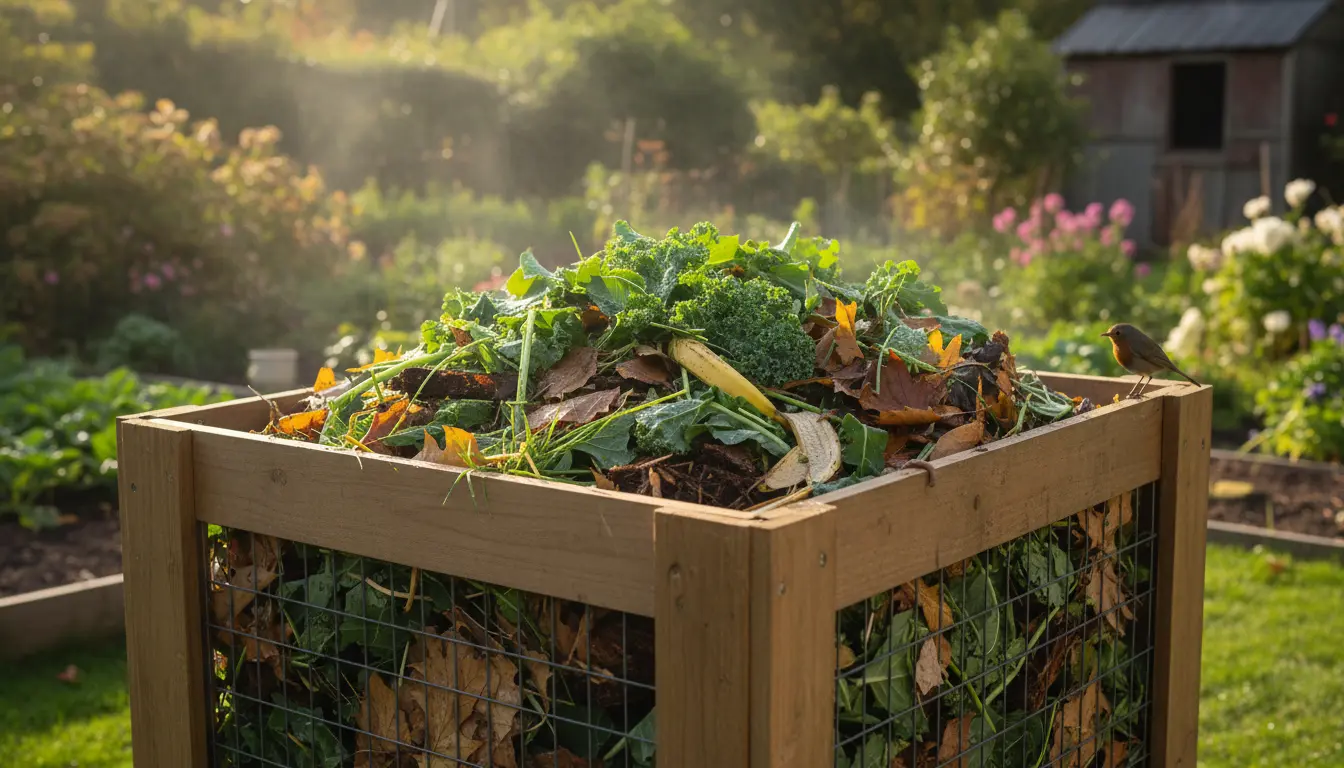
Why Start Home Composting
Home composting turns kitchen scraps and yard trimmings into nutrient-rich soil. It reduces household waste, lowers landfill impact, and improves garden health.
This guide gives practical, step-by-step instructions to start and maintain compost at home. You’ll learn methods, materials, troubleshooting tips, and a short case study from a real household.
Home Composting Guide: Basic Principles
Composting relies on three core elements: carbon, nitrogen, and air. Balancing these elements creates the right environment for microbes to break down organic matter efficiently.
Think of carbon as the structural materials and nitrogen as the food for microbes. Proper drainage and aeration keep the pile healthy and odor-free.
Key Ingredients and Ratios
- Carbon (brown): dry leaves, straw, shredded paper, cardboard.
- Nitrogen (green): vegetable scraps, coffee grounds, fresh grass clippings.
- Air and water: keep the pile moist like a wrung-out sponge and mix occasionally.
A common ratio is roughly 25–30 parts carbon to 1 part nitrogen by weight, but many home composters use a simple rule: mix 2–3 parts brown to 1 part green.
Home Composting Guide: Choosing a Bin or Method
Select a compost method based on space, time, and how much material you produce. Options range from tumblers to compost heaps and worm bins.
Common Methods
- Tumbler: Enclosed, good aeration, faster turnover, ideal for small yards.
- Open pile: Low cost, suitable for large gardens, requires regular turning.
- Worm bin (vermicomposting): Best for apartments and kitchen waste, produces rich worm castings.
Choose a bin that fits your routine. Tumblers need periodic spinning; open piles need turning; worm bins need feeding and temperature control.
Home Composting Guide: Step-by-Step Setup
Start with a level spot that drains well and gets partial sun. Place your bin on soil to allow worms and microbes access.
Layer materials to jump-start decomposition: begin with coarse browns for airflow, then alternate greens and browns.
Starter Steps
- Place coarse twigs or straw at the base for drainage.
- Add a 4–6 inch layer of brown material.
- Add a 2–3 inch layer of green material and sprinkle water if dry.
- Turn or aerate every 1–2 weeks to speed breakdown.
How to Maintain Compost
Maintenance is mainly about balance and aeration. Check moisture, turn the pile, and add materials in layers.
Signs that the pile is working include heat in the center, a rich earthy smell, and gradual volume reduction.
Troubleshooting Common Problems
- Smelly pile: Too wet or too much green. Add dry brown materials and aerate.
- Slow decomposition: Not enough nitrogen or moisture. Add fresh greens and water.
- Pests: Avoid meat, dairy, and oily foods. Use closed bins or bury scraps in the center.
How to Know When Compost Is Ready
Mature compost is dark, crumbly, and smells earthy. Most home systems produce usable compost in 3–12 months depending on method and care.
To finish compost quickly, sift out large pieces and return them to the pile to continue decomposing.
Uses and Benefits of Finished Compost
Use finished compost as a soil amendment, potting mix ingredient, or mulch. It improves soil structure, water retention, and nutrient availability.
Gardeners typically apply a 1–3 inch layer of compost around plants or mix it into planting beds before seeding or transplanting.
Composting one ton of food waste can reduce greenhouse gas emissions equivalent to removing about one car from the road for a year. Small actions at home scale up when many households compost.
Small Case Study: Apartment Composting Success
Sarah, a city dweller, started vermicomposting in a 2-cubby bin on her balcony. She collected kitchen scraps in a small container and fed her worm bin twice a week.
After six months she generated enough worm castings to enrich five potted herbs and reduced her weekly trash by nearly 50%. Her success came from routine feeding, avoiding citrus overload, and keeping the bin shaded.
Tips to Speed Up Composting
- Shred larger items to increase surface area and speed breakdown.
- Turn frequently for faster cooling and more uniform decomposition.
- Keep a diverse mix of materials to supply varied nutrients for microbes.
Quick Checklist to Start Today
- Choose a bin suitable for your space: tumbler, pile, or worm bin.
- Gather brown and green materials and a garden fork or tumbler to turn the pile.
- Set a regular schedule to add scraps and aerate the compost.
Home composting is a low-cost, high-impact way to reduce waste and enrich soil. Start small, stay consistent, and adjust based on what your pile tells you. With simple maintenance, you’ll produce valuable compost for plants and help the environment.