
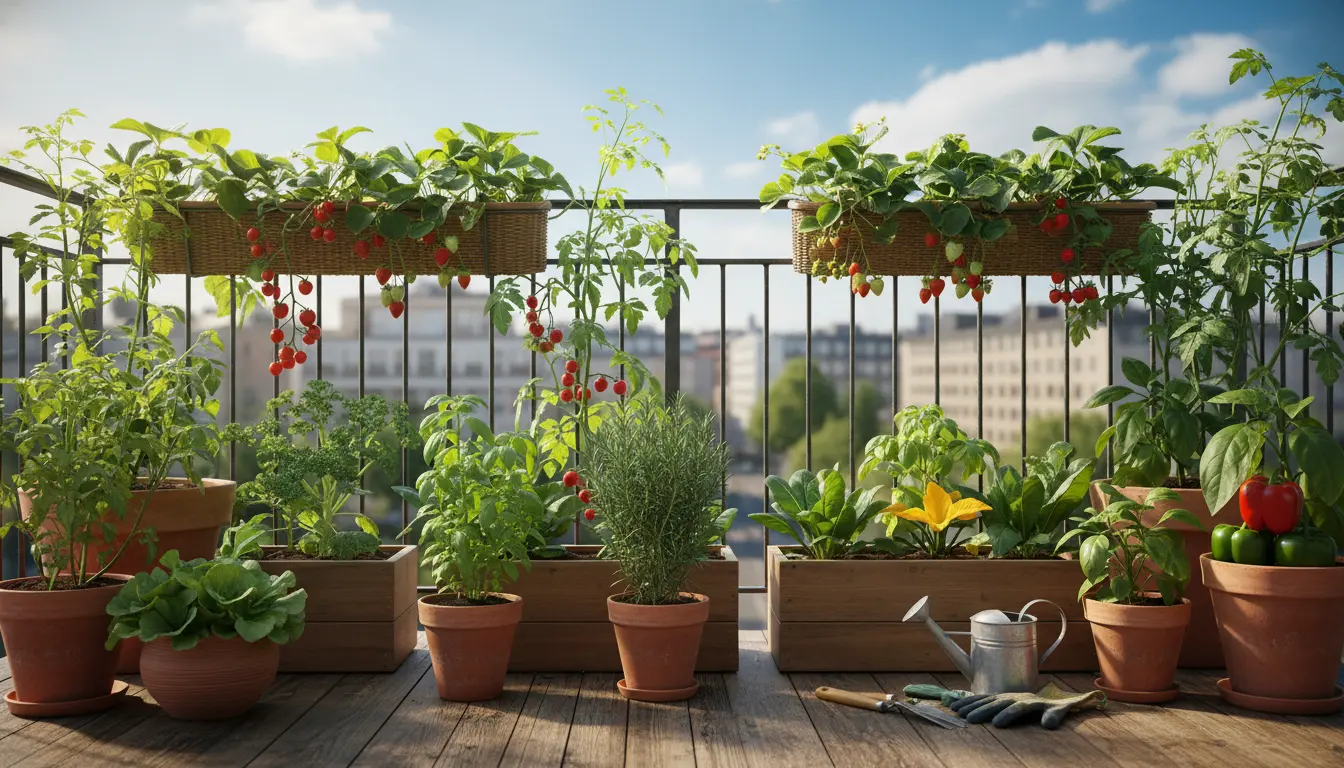
Vegetable Garden in Small Spaces: Overview
Growing vegetables in limited space is practical and rewarding. This guide focuses on simple, actionable steps for balconies, patios, and tiny yards.
Plan Your Vegetable Garden in Small Spaces
Start by measuring your available space and noting sun exposure. Most vegetables need 6 or more hours of direct sun, so position containers where light is best.
Decide whether you will use containers, raised beds, or vertical systems. Each option changes soil volume, watering, and plant choices.
Choose the Right Containers for a Vegetable Garden in Small Spaces
Select containers that match plant root needs. Deep-rooted vegetables like carrots and tomatoes need 12 inches or more of soil depth.
- Use sturdy plastic, ceramic, or fabric pots for good drainage.
- Choose wide containers for leaf crops that spread.
- Consider self-watering planters or containers with saucers to reduce runoff.
Soil and Fertility for Small-Space Vegetable Gardens
Good soil mix is the foundation. Use a high-quality potting mix blended with compost for nutrients and structure.
A simple mix: 60% potting mix, 30% compost, 10% perlite or coarse sand. This balance holds moisture but drains well.
Feeding and Fertilizing Tips
Container plants use nutrients faster than in-ground plants. Plan a regular feeding schedule with a balanced liquid fertilizer every 2 to 4 weeks.
- Use slow-release granular fertilizer at planting for steady nutrients.
- Supplement with compost tea or fish emulsion if leaves yellow.
- Follow product instructions to avoid overfeeding and salt buildup.
Watering and Microclimate Management
Small containers dry out faster than garden beds. Water deeply and regularly, aiming for consistent moisture without waterlogging.
Use mulch on container soil to reduce evaporation and stabilize temperatures. Mulch also reduces weed growth and soil splash.
Watering Techniques for a Vegetable Garden in Small Spaces
Try these methods to improve water efficiency:
- Drip irrigation or soaker hoses for even delivery.
- Self-watering containers to reduce daily checks.
- Check moisture with your finger or a moisture meter before watering.
Plant Selection and Layout
Choose compact, high-yield varieties labeled “bush,” “patio,” or “dwarf.” These are bred for containers and limited space.
Mix tall and low plants to use vertical space. Train vining plants on trellises or supports to free ground area.
Good Plants for a Vegetable Garden in Small Spaces
- Leafy greens: lettuce, spinach, arugula.
- Herbs: basil, parsley, chives.
- Compact fruits: cherry tomatoes, patio peppers.
- Root crops: radishes, short carrots, beets.
Pest and Disease Management in Small Spaces
Close quarters can invite pests, but prevention works well. Keep plants healthy with proper spacing, clean pots, and fresh soil each season.
Use physical barriers like row covers and hand-pick pests when possible. Introduce beneficial insects or use targeted organic sprays for larger infestations.
Harvesting and Seasonal Care
Harvest regularly to encourage production, especially for greens and herbs. Removing spent flowers on tomatoes and peppers can promote more fruiting.
At season end, clean containers and refresh soil. Store reusable pots in a dry place to prevent cracks in winter.
Small Real-World Example: Balcony Success Story
Case study: Maria, a city renter with a 6-foot balcony, converted three medium containers and a vertical planter into a productive patch. She planted cherry tomatoes, basil, lettuce, and radishes.
Within two months she harvested daily salad greens and enough tomatoes for weekly meals. Maria used a simple schedule: water every other day, liquid feed biweekly, and rotate leafy greens every six weeks.
Quick Checklist to Start a Vegetable Garden in Small Spaces
- Measure space and sun hours.
- Choose containers with adequate depth and drainage.
- Use a nutrient-rich potting mix plus compost.
- Select compact, container-friendly varieties.
- Set up watering: drip, self-watering pots, or regular schedule.
- Monitor pests and harvest regularly.
Final Tips for a Thriving Small-Space Vegetable Garden
Start small and expand as you learn which plants perform best in your microclimate. Keep a simple notebook of planting dates, varieties, and results to refine timing next season.
With the right containers, soil, and plant choices, a vegetable garden in small spaces can be productive and low-maintenance. Begin with easy crops and build confidence each month.