
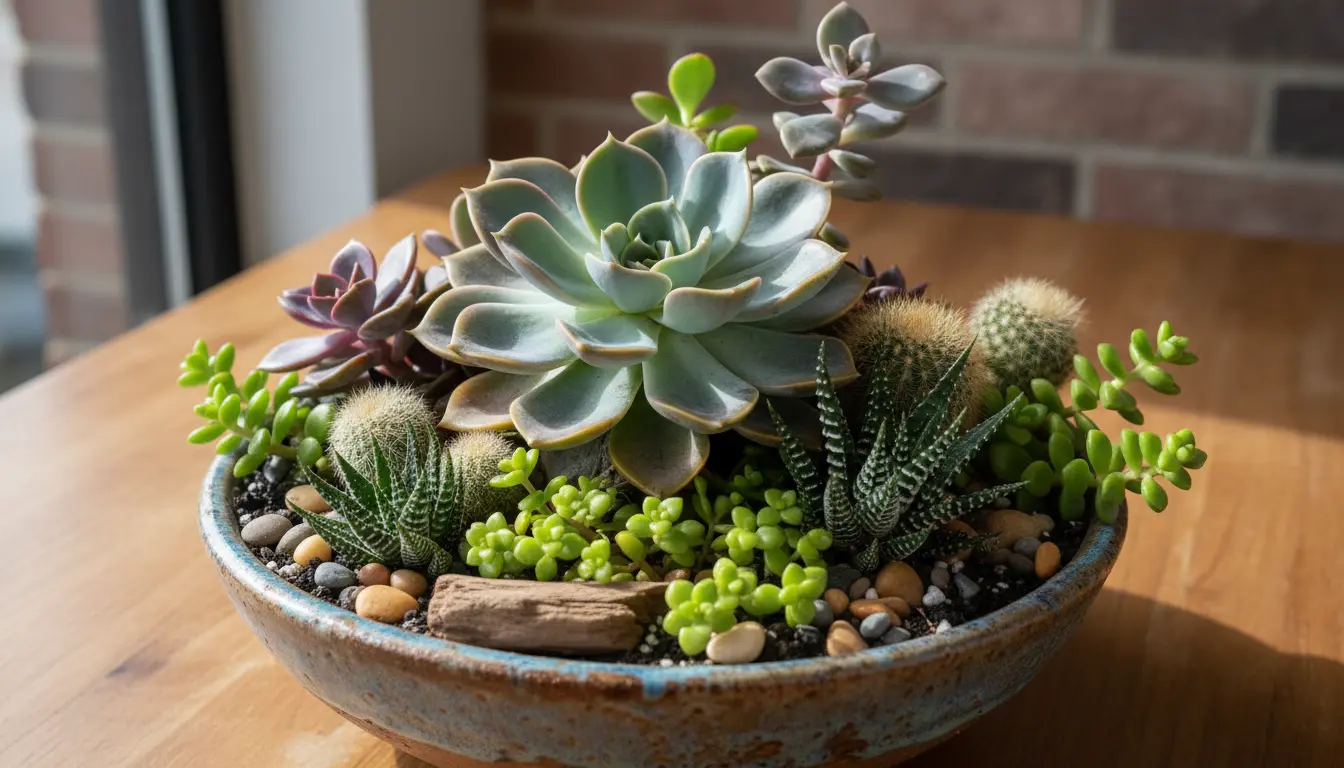
Why Indoor Succulent Care Matters
Succulents are popular because they store water and tolerate neglect better than many houseplants. Good indoor succulent care prevents common problems like root rot and leggy growth.
This guide gives clear, practical steps you can use in any home or apartment. Follow these fundamentals to keep your succulents thriving.
Basic Indoor Succulent Care: Light and Placement
Light is the most important factor in indoor succulent care. Most succulents prefer bright, indirect light for six hours or more each day.
Place plants near south- or west-facing windows when possible. Rotate pots weekly to keep growth even.
Adjusting Light for Different Conditions
In low-light rooms, use a grow light designed for succulents. LED grow lights with a full spectrum work well and are energy-efficient.
Watch for signs of too little light: stretched stems, pale leaves, and slow growth. If leaves brown at the tips, the light may be too intense.
Watering Rules for Indoor Succulent Care
Watering correctly is key to healthy succulents. The “soak and dry” method is the simplest and most reliable approach.
Water thoroughly until excess drains from the pot, then allow the soil to dry completely before watering again.
- Check soil moisture by finger or moisture meter.
- Reduce watering in winter when growth slows.
- Avoid leaving plants in standing water.
Signs of Overwatering and Underwatering
Overwatered succulents show soft, translucent leaves and may develop root rot. Underwatered plants have wrinkled, shriveled leaves.
Adjust frequency rather than volume. One heavy watering is better than frequent light misting.
Soil and Pot Selection for Indoor Succulent Care
Use a well-draining soil mix made for cacti and succulents. These mixes usually contain sand, pumice, or perlite to improve drainage.
Choose pots with drainage holes. Terracotta or unglazed ceramic pots help evaporate excess moisture and are preferable to sealed containers.
Repotting and Soil Refresh
Repot every 1–2 years to refresh soil and check roots. Repot when the plant outgrows its pot or soil is compacted.
When repotting, gently remove old soil and trim any dead roots before placing in fresh mix.
Fertilizing and Growth Management
Succulents need light feeding during the growing season. Use a balanced, diluted fertilizer once a month in spring and summer.
Avoid strong fertilizers in winter. Excess nutrients can encourage weak, leggy growth that is more vulnerable to pests.
Pruning and Propagation
Prune leggy stems to encourage compact growth. Healthy cuttings can be rooted in soil or water to make new plants.
Common propagation methods include leaf propagation and stem cuttings. Allow cut edges to callus for a few days before planting.
Pests and Common Problems in Indoor Succulent Care
Pests like mealybugs, spider mites, and scale can affect indoor succulents. Early detection makes treatment easier and more effective.
Use a cotton swab dipped in isopropyl alcohol for small infestations. For larger problems, use an insecticidal soap or neem oil, following label instructions.
- Inspect undersides of leaves weekly.
- Quarantine new plants for two weeks.
- Improve air circulation to reduce fungal issues.
Seasonal Care Tips for Indoor Succulent Care
Adjust care with the seasons. During spring and summer, increase light and water as growth resumes.
In fall and winter, reduce watering and hold off on fertilizing. Cooler, shorter days mean less active growth.
Winter Dormancy
Many succulents enter a dormant period in winter and need minimal water. Keep them in bright light and only water when soil is dry.
Avoid placing succulents near heat vents that dry the air excessively or in cold drafts from windows.
Some succulents, like Haworthia and Gasteria, tolerate lower light and are excellent choices for offices and north-facing rooms.
Simple Troubleshooting Guide
If a succulent is soft and discolored, check roots for rot and reduce watering immediately. Remove damaged tissue and repot in fresh soil if necessary.
If a plant is stretched and pale, move it to brighter light and trim leggy growth to encourage a fuller shape.
Real-World Example: Small Apartment Success
Case study: A city renter kept three succulents on a sunny windowsill. They followed the soak-and-dry method and used a cactus mix with terracotta pots.
Within six months, two plants produced pups and one recovered from overwatering after repotting. Simple changes in drainage and light solved the main issues.
Quick Checklist for Indoor Succulent Care
- Light: Bright, indirect for 6+ hours daily.
- Water: Soak and dry; less in winter.
- Soil: Fast-draining cactus mix.
- Pots: Prefer terracotta with drainage holes.
- Fertilizer: Diluted feed in growing season.
- Pests: Inspect regularly and treat early.
Indoor succulent care is straightforward when you focus on light, drainage, and conservative watering. With a few simple habits, most people can keep healthy, attractive succulents year-round.