
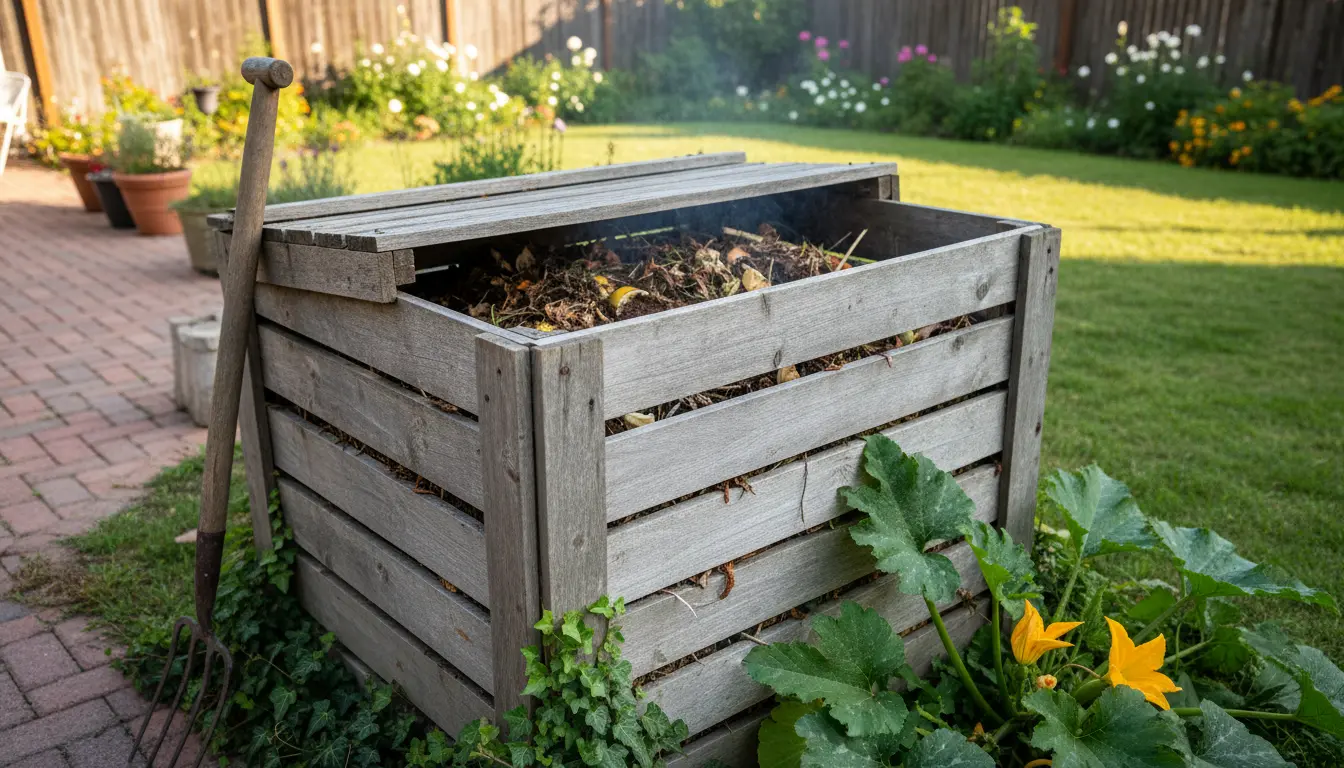
Composting at home turns kitchen and yard waste into nutrient-rich soil. This guide gives clear steps you can follow, tools you need, and common mistakes to avoid.
Why Home Composting Matters
Home composting reduces landfill waste and lowers household emissions. It also creates free, healthy soil for your garden or potted plants.
For beginners, composting is mostly about balance and patience. Small, steady efforts deliver the best results.
What You Can Compost
Knowing what goes into your compost is the first practical step. Materials are grouped as greens and browns.
- Greens (nitrogen): fruit and vegetable scraps, coffee grounds, fresh grass clippings.
- Browns (carbon): dry leaves, shredded paper, cardboard, straw.
- Do NOT compost: meat, dairy, oils, diseased plants, pet waste from carnivores.
Examples of Easy Starter Materials
Begin with simple items you already produce. A mix of kitchen scraps and yard waste works well.
- Eggshells, apple cores, tea bags (without staples)
- Dry leaves, shredded newspaper, small twigs
- Used coffee grounds and paper coffee filters
Choose a Home Composting Method
Select a method that matches your space and effort level. Each method has pros and cons.
Open Pile or Tumbler
Open piles are simple and low cost for yards. Tumblers speed up decomposition and reduce pests.
- Open pile: Best for large yards; needs turning with a fork.
- Tumbler: Good for small spaces; rotate every few days for faster compost.
Bokashi and Vermicomposting
Bokashi ferments kitchen waste, including cooked food. Vermicomposting uses worms to break down scraps indoors.
- Bokashi: Fast, handles more food types, final product needs soil mixing.
- Worm bins: Great for apartments; keep bin moist and avoid citrus overload.
Step-by-Step Home Composting Setup
Follow these steps to start a balanced compost system at home. They focus on easy routines for beginners.
- Choose a container: open pile, tumbler, or indoor worm bin.
- Layer materials: start with a brown base, add green scraps, then cover with more browns.
- Maintain moisture: compost should be like a wrung-out sponge.
- Turn occasionally: every 1–2 weeks for hot compost; less for slower systems.
- Harvest finished compost: dark, crumbly, and earthy-smelling after 2–6 months.
Tips for Balance and Speed
Use a 2:1 or 3:1 ratio of browns to greens by volume to prevent odors. Smaller pieces break down faster.
- Chop large scraps and shred paper for faster composting.
- Keep piles at least 3 feet wide for better heat retention.
- Add finished compost to speed decomposition if starting a new pile.
Compost can hold up to 50% more water than plain soil, reducing the need for frequent watering in summer.
Common Problems and Fixes in Home Composting
Problems often come from imbalance, poor aeration, or too much moisture. Each has a simple fix.
- Bad smell: Add more browns and turn the pile to add air.
- Slow decomposition: Chop materials smaller and ensure enough greens for nitrogen.
- Pests: Use a closed container or bury fresh food scraps deeper in the pile.
Using Finished Home Compost
Finished compost improves soil structure and feeds plants slowly. Apply it as a top dressing or mix into garden beds.
- Mix 1–2 inches of compost into the top 6 inches of soil when planting.
- Use compost tea or steeped compost to feed container plants.
- Avoid using unfinished compost directly on seedlings; wait until fully broken down.
Quick Checklist for Beginner Home Composting
Keep this checklist near your bin to stay consistent and avoid common errors.
- Collect greens in a small kitchen caddy each day.
- Store a supply of browns like shredded paper or dry leaves.
- Turn or rotate your bin according to the method you chose.
- Monitor moisture and smell weekly.
Small Case Study: A Family Starts Composting
A family of four in a suburban home began composting with a simple tumbler. They used kitchen scraps and yard leaves.
Within three months they had usable compost and reduced their trash by about 30% each week. They used the compost in raised vegetable beds with noticeable improvement in soil texture and plant vigor.
Final Practical Advice for Home Composting
Start small and learn by doing. Choose a method that fits your space and routine, and aim for consistent, short efforts.
Composting becomes easier with a simple system, a few tools, and weekly attention. You will improve soil health and reduce waste over time.