
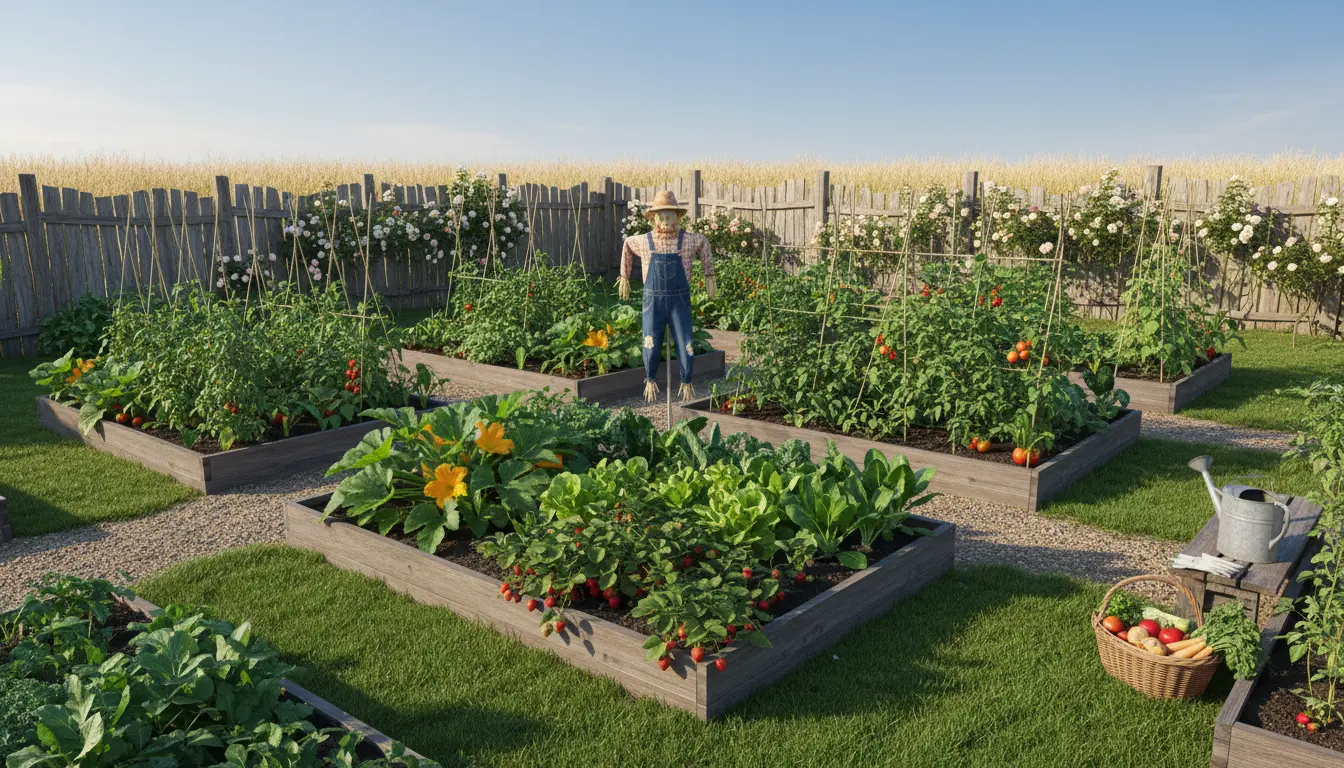
Starting a vegetable garden is a practical way to save money, eat fresher produce, and learn a useful skill. This guide gives clear steps you can follow in your first season, using simple tools and common plants.
Plan Your Vegetable Garden
Good planning reduces wasted time and frustration. Decide on the garden size, location, and the vegetables you want to grow before you dig.
Choose the right location
Pick a spot that gets at least 6 hours of sun daily for most vegetables. Ensure easy access to water and a flat area or the possibility to build raised beds.
Select vegetables for beginners
Start with low-maintenance crops that give quick results. Examples include lettuce, radishes, green beans, tomatoes, and herbs like basil.
- Lettuce and spinach: Quick harvest (30–45 days).
- Radishes: Very fast and easy for beginners.
- Tomatoes: Rewarding but need staking and regular watering.
- Green beans: Productive and tolerant of many soils.
Prepare Soil and Beds
Healthy soil is the foundation of a successful vegetable garden. Improving soil quality raises yields and reduces pest problems.
Test and improve soil
Use a simple soil test kit to check pH and basic nutrients. Most vegetables prefer slightly acidic to neutral soil (pH 6.0–7.0).
Amend the soil with organic matter: compost, well-rotted manure, or leaf mold. Mix 2–4 inches of compost into the top 6–8 inches of soil for established beds.
Raised beds and containers
Raised beds warm faster, drain better, and are easier to manage. Containers are ideal for small spaces or patios.
- Raised bed mix: 60% topsoil, 30% compost, 10% coarse sand or perlite.
- Container soil: Use a commercial potting mix for consistent drainage.
Planting: Timing and Techniques
Sow seeds or transplant seedlings at the right time for your climate. Follow seed packet instructions for depth and spacing.
Start seeds or buy seedlings
Cold-hardy crops like peas and spinach can be seeded directly. Tender crops such as tomatoes and peppers often do better when transplanted after the last frost.
Succession planting
To maximize yield, plant fast crops in succession. For example, sow a new row of lettuce every 2–3 weeks.
Watering and Feeding
Consistent water is critical during germination and fruit development. Deep, infrequent watering encourages strong roots.
- Water early in the morning to reduce evaporation and disease risk.
- Aim for 1–1.5 inches of water per week from rain and irrigation.
- Mulch beds to retain moisture and suppress weeds.
Fertilizing basics
Use a balanced organic fertilizer at planting and side-dress with compost mid-season. Avoid over-fertilizing leafy vegetables if you want fruiting crops.
Pest and Disease Management
Preventive care is the most effective pest strategy. Healthy plants resist pests and recover faster from damage.
Integrated pest control
Use these low-impact tactics first:
- Crop rotation to reduce disease buildup.
- Hand-pick large pests like caterpillars and slugs.
- Encourage beneficial insects with flowering herbs and companion plants.
When to use treatments
Choose targeted organic options like insecticidal soap or neem oil for persistent problems. Read labels and apply in early morning or late evening to protect pollinators.
Harvesting and Storage
Harvest at peak ripeness for best flavor. Regular harvesting often encourages more production, especially with greens and beans.
- Leafy greens: Harvest outer leaves as needed to allow continuous growth.
- Tomatoes: Pick when fully colored and slightly soft to the touch.
- Root crops: Pull when roots reach recommended size for each variety.
Small Case Study: A First Season Success
Maria, a city renter, started a 4×4 foot raised bed on her balcony. She chose lettuce, cherry tomatoes, basil, and radishes and used a commercial raised bed mix.
She watered twice weekly, mulched to retain moisture, and used a small trellis for tomatoes. By week 10 she harvested multiple lettuce pickings and ripe cherry tomatoes, saving about $30 in groceries and learning how to spot early pest problems.
Simple Checklist to Start a Vegetable Garden
- Choose a sunny spot and measure available space.
- Pick 3–6 easy vegetables for your first season.
- Test soil and add compost or use raised bed mix.
- Plant at the correct time for your climate.
- Water consistently and mulch to save time.
- Monitor pests and use organic controls when needed.
Interplanting flowers like marigolds with vegetables can reduce some pests and attract beneficial insects, improving pollination and natural pest control.
Final Tips for New Gardeners
Start small to keep tasks manageable. Track what you plant and when, so you can improve each season. Gardening is about learning; mistakes in year one are normal and useful.
With a basic plan, good soil, and consistent care you can start a productive vegetable garden in your first season. Use the checklist and case study above as a model to organize your steps.