
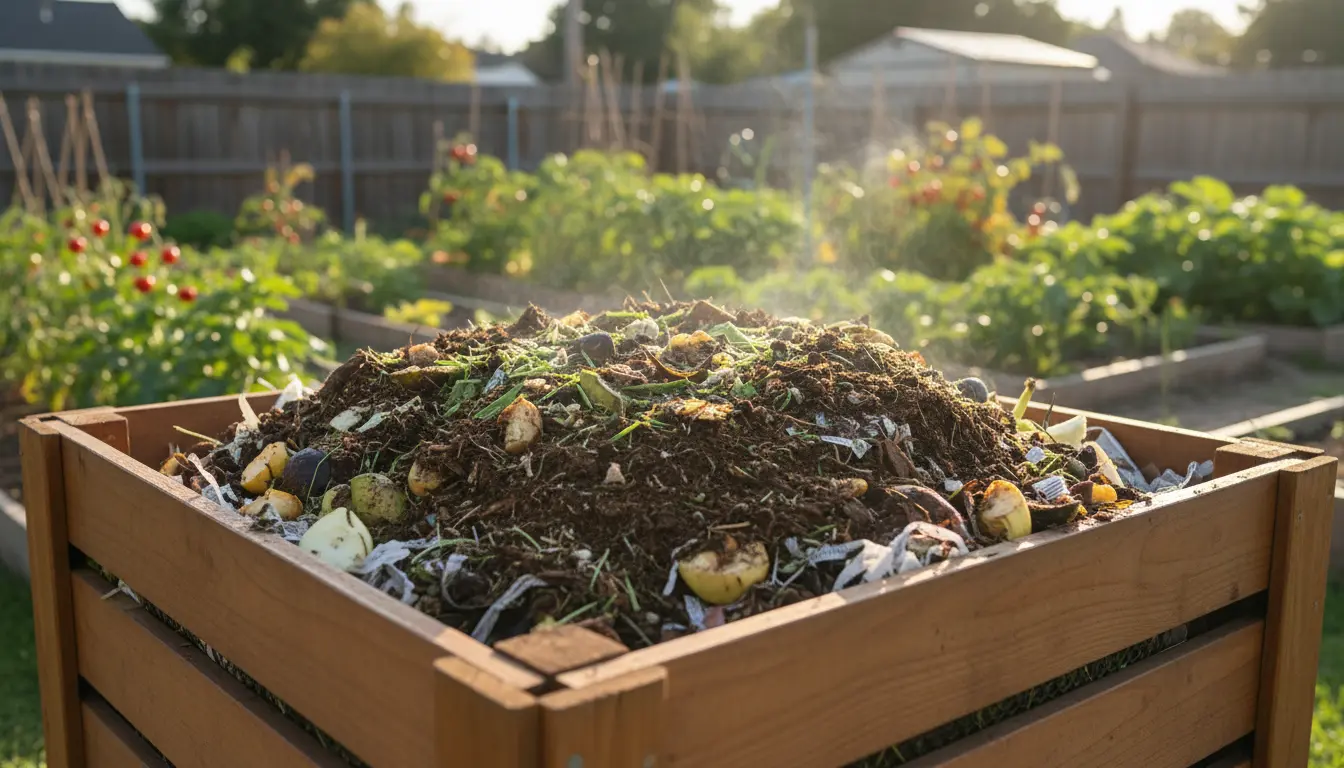
Home Composting Basics
Home composting turns kitchen scraps and yard waste into rich soil amendment. It reduces household waste and improves garden soil without chemical fertilizers.
This guide explains what to compost, how to start a compost bin, and common problems with clear, practical steps for beginners.
Why Choose Home Composting
Composting reduces landfill waste and lowers greenhouse gas emissions from organic matter. It also returns nutrients to soil, improving plant health and water retention.
Even small households can make meaningful amounts of compost with the right approach and consistent routine.
What to Compost: Simple Rules
Compostable materials fall into two broad groups: greens and browns. Balancing these groups helps microbes break material down efficiently.
Greens (Nitrogen-rich)
- Fruit and vegetable scraps
- Fresh grass clippings
- Coffee grounds and tea bags (remove staples)
Browns (Carbon-rich)
- Dry leaves and straw
- Shredded paper and cardboard (no glossy ink)
- Wood chips and small twigs
Aim for a rough mix of about 2–3 parts browns to 1 part greens by volume. Too many greens smells bad; too many browns slows decomposition.
How to Start a Compost Bin
Choose a container that fits your yard and budget: a simple pile, a tumbling bin, or a stationary bin. Size affects heat and speed; a 3x3x3 foot pile is a good target for active composting.
Step-by-step Setup
- Location: Place on bare soil in a partly shaded spot to allow drainage and access for worms.
- Layering: Start with a coarse layer of twigs to aid airflow, then alternate browns and greens.
- Moisture: Aim for a damp sponge consistency — add water or dry material to adjust.
- Turning: Turn the pile weekly or every two weeks to introduce oxygen and speed breakdown.
- Monitoring: Use a simple garden thermometer if you like; active piles reach 120–160°F (49–71°C).
For those with limited space, try a small kitchen collector and a compact bin, or use vermicomposting with red wiggler worms indoors.
Troubleshooting Home Composting Problems
Common issues are easy to fix with small adjustments. Below are problems and quick solutions to keep your compost healthy.
Problem: Bad Odor
Cause: Too many greens or poor airflow. Solution: Add more browns, turn the pile, and ensure proper drainage.
Problem: Pile Too Dry or Too Wet
Cause: Dry piles slow down; overly wet piles become anaerobic. Solution: Add water to dry piles, and add dry browns or increase aeration for wet piles.
Problem: Slow Decomposition
Cause: Imbalanced carbon-to-nitrogen ratio or large pieces. Solution: Shred or chop materials and balance greens and browns. Turning more often also helps.
Using Finished Compost
Finished compost is dark, crumbly, and smells earthy. Use it as a top dressing, mix it into potting soil, or work it into garden beds before planting.
Apply a 1–3 inch layer to beds or mix 10–20% compost into potting mixes for potted plants.
Case Study: Suburban Home Composting Success
Neighborhood: Suburban yard with moderate shade and a vegetable garden. Household: Family of four with weekly yard trimming.
Action: They started a 3-bin system, collecting kitchen scraps in a countertop pail and adding shredded leaves and grass clippings from the yard. They turned the active bin every 10 days.
Result: After six months they had rich compost for their vegetable beds. Their weekly trash volume dropped noticeably, and tomatoes grown in amended beds were visibly healthier and produced larger yields.
Tips and Practical Examples for Beginners
- Save time: Use a kitchen pail with a lid to collect scraps and empty it every 2–3 days into the outdoor bin.
- Prevent pests: Bury food scraps under a brown layer and avoid adding meat or oily foods.
- Speed up compost: Chop materials smaller and maintain moisture and aeration.
- Small-space option: Vermicomposting works well on balconies or small apartments.
Final Checklist for Home Composting for Beginners
- Pick a bin type that suits space and capacity.
- Maintain a mix of browns and greens and keep moisture moderate.
- Turn the pile regularly for faster results.
- Use finished compost to improve soil structure and plant health.
Home composting is a low-cost, high-impact way to reduce waste and enrich your garden’s soil. Start small, observe, and adjust; consistency is the key to success.