
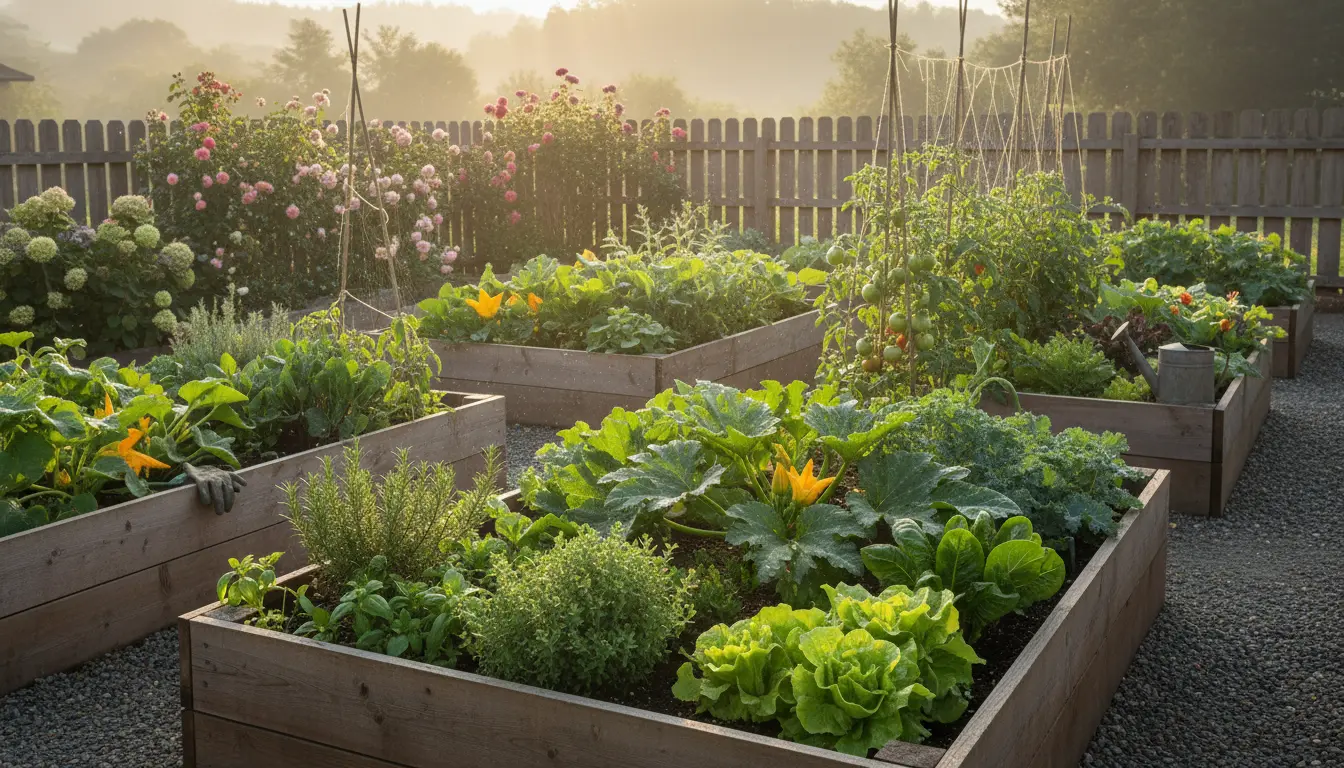
Why Start a Vegetable Garden
Growing your own vegetables saves money and gives you fresher, healthier food. A small garden can fit in a yard, balcony, or even a few containers.
This guide explains simple, practical steps to start a vegetable garden and get reliable results in your first season.
Planning Your Vegetable Garden
Start by deciding what to grow and how much time you can commit. Pick a mix of fast-growing, reliable crops and a couple of recipes you use often.
Consider space: a single 4×4 or 4×8 raised bed can feed a small family if planted efficiently.
Choosing Vegetables
Choose vegetables that match your climate, space, and food preferences. Beginners often have success with tomatoes, lettuce, radishes, beans, and herbs.
Look for beginner-friendly varieties labeled “easy” or “disease-resistant” at seed catalogs or nurseries.
Picking the Right Location for a Vegetable Garden
Vegetables need sunlight to produce well. Aim for six to eight hours of direct sun daily for most crops.
Also choose a level spot with good drainage and easy access to water to reduce daily effort.
Preparing Soil and Beds
Good soil is the single most important factor for a productive vegetable garden. Focus on texture, fertility, and drainage.
If you have poor native soil, a raised bed with amended soil gives faster success and better control.
Soil Mix and Amendment
Use a mix of topsoil, compost, and coarse sand or small bark for raised beds. For in-ground gardens, work 2–4 inches of compost into the top 6–8 inches.
- Basic raised bed mix: 50% topsoil, 40% compost, 10% coarse sand or perlite.
- Test pH if possible; most vegetables prefer pH 6.0–7.0.
- Add slow-release organic fertilizer if compost is low in nutrients.
Planting: Seeds vs. Transplants
Decide whether to start from seed or buy established seedlings. Seeds are cheaper and offer variety; transplants give a head start.
Use seed packets and plant labels to follow spacing and depth recommendations to avoid overcrowding.
Timing and Succession Planting
Plant cool-season crops (lettuce, peas, radishes) early in spring or fall. Warm-season crops (tomatoes, peppers, cucumbers) go in after the last frost.
Practice succession planting by sowing small amounts of leaf crops every 2–3 weeks to maintain continuous harvests.
Watering and Maintenance
Consistent watering is critical. Aim for deep, infrequent watering rather than light daily sprinkles to encourage strong roots.
Use soaker hoses, drip irrigation, or a watering wand with a shutoff to control water and conserve resources.
Weeding, Mulching, and Pest Control
Mulch conserves moisture and reduces weeds. Apply 2–3 inches of organic mulch like straw, shredded leaves, or wood chips around established plants.
Monitor pests weekly. Hand-pick large pests, use row covers for young plants, and favor biological controls before chemical ones.
Harvesting and Storage
Harvest vegetables at peak ripeness for the best flavor and nutrition. Frequent harvesting often encourages more production.
Store harvests appropriately: leafy greens refrigerated, root vegetables in cool, dark places, and tomatoes at room temperature until fully ripe.
Seasonal Care and Crop Rotation
Rotate crop families between beds each season to reduce disease and nutrient depletion. For example, follow tomatoes with legumes the next year.
Cover crops like clover or winter rye can protect and improve soil in the off-season.
Companion planting like basil near tomatoes can improve flavor and may deter some pests. Simple pairings save space and help plant health.
Real World Example: A Small Raised Bed Case Study
Case study: A 10×4 raised bed planted by a beginner homeowner produced steady yields in the first season. The gardener used a 50/40/10 soil mix and rotated warm-season and cool-season crops.
They planted tomatoes, basil, and peppers in one half and staggered lettuce, radishes, and carrots in the other. Weekly watering with a soaker hose and monthly compost top-dressing kept plants vigorous.
Results: Continuous salad greens for four months, five tomato plants producing dozens of fruit, and a modest surplus shared with neighbors.
Practical Checklist to Start a Vegetable Garden
- Choose location with 6+ hours sun and access to water.
- Select 3–6 beginner-friendly crops to start.
- Prepare soil or build a raised bed and add compost.
- Decide seeds or transplants and follow planting dates.
- Set up irrigation and mulch to retain moisture.
- Monitor pests, weed weekly, and harvest regularly.
Final Tips for Success
Start small and expand as you learn what grows well in your space. Keep a simple garden journal to record planting dates and outcomes.
Most importantly, enjoy the process. Gardening improves with practice and a season of trial and error will teach the best techniques for your site.