
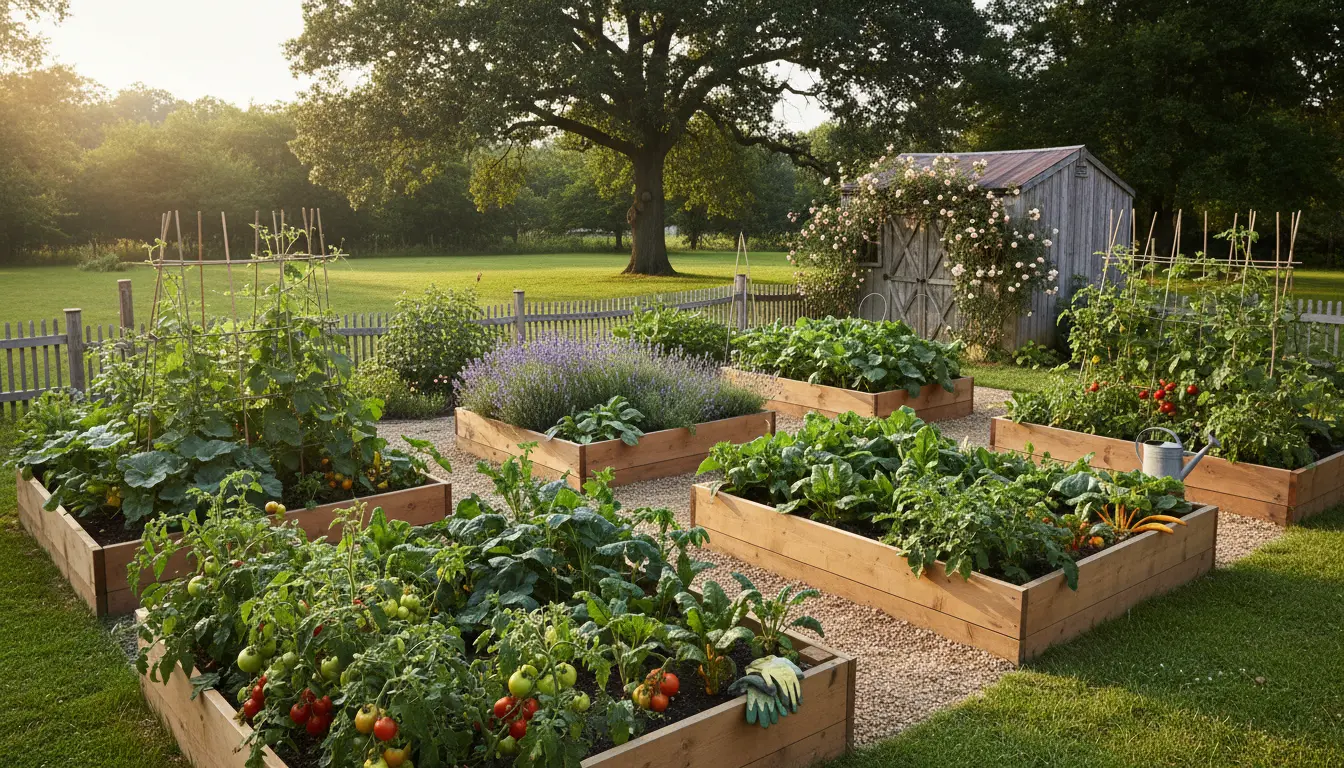
How to Start a Vegetable Garden
Starting a vegetable garden is a practical way to grow fresh produce at home. This guide gives clear steps you can follow, whether you have a backyard, patio, or balcony.
Start a Vegetable Garden: Choose the Right Site
Select a location that gets at least 6 hours of direct sunlight daily for most vegetables. Good sunlight improves flavor and yields.
Consider access to water and flat ground. If space is limited, use raised beds or containers placed where they will receive sun.
Start a Vegetable Garden: Plan and Design
Decide what you want to grow and how much. Beginners should start with easy crops like tomatoes, lettuce, radishes, and herbs.
- Make a simple map of your plot or container layout.
- Group plants by water and sun needs.
- Use companion planting basics to reduce pests.
Prepare the Soil
Healthy soil is the foundation of a productive garden. Test soil pH if possible; most vegetables prefer pH 6.0–7.0.
Improve soil with organic matter: compost, well-rotted manure, or leaf mold. Mix 2–4 inches of compost into the top 6–8 inches of soil.
Planting: Seeds and Starts
Choose between seeds or transplants (starts). Seeds are cheaper but take longer; starts give a head start on the season.
Follow seed packet or plant tag spacing and depth instructions. Overcrowding reduces airflow and increases disease risk.
Watering and Mulching
Water consistently. Most gardens need about 1 inch of water per week, more in hot weather. Water at the base to keep foliage dry.
- Use drip irrigation or a soaker hose for efficient watering.
- Apply 2–3 inches of organic mulch to conserve moisture and suppress weeds.
Fertilizing and Feeding
Start with a balanced slow-release fertilizer at planting, or side-dress with compost midseason. Avoid over-fertilizing leafy crops at the expense of fruiting plants.
Observe plants for pale leaves or poor growth; those are common signs of nutrient deficiency.
Pest and Disease Management
Use integrated pest management: monitor, identify, and choose controls that are least disruptive. Handpick beetles, use row covers for young plants, and encourage beneficial insects.
Rotate crops yearly to reduce soil-borne diseases and pests. Clean up plant debris at season end.
Harvesting and Successive Planting
Harvest frequently to encourage continued production. Pick leafy greens when young and tender; harvest tomatoes and peppers when fully colored.
Practice successive planting: sow quick crops like radishes or lettuce in intervals to extend harvests through the season.
Companion planting can reduce pests: marigolds and basil often repel or confuse common garden pests while attracting pollinators.
Tools and Supplies to Start a Vegetable Garden
You only need a few basic tools to begin: a spade, hand trowel, watering can or hose with a soft nozzle, gloves, and a rake. Raised bed lumber or containers are optional but helpful.
- Spade or shovel for digging and soil mixing
- Hand trowel for planting seedlings
- Watering tool suited to your site (hose, soaker hose, or watering can)
- Compost or organic matter for soil improvement
Simple Seasonal Timeline
Follow a basic timeline to keep the garden productive.
- Early spring: prepare beds, start seeds indoors if needed.
- Late spring: transplant frost-tender crops and sow warm-season seeds.
- Summer: water, weed, and harvest regularly.
- Fall: plant cool-season crops and clean up after first frost.
Small Case Study: A Balcony to Table Success
Sarah, a city renter, used two 4-foot containers on her sunny balcony to start a vegetable garden. She planted cherry tomatoes, basil, and leaf lettuce in spring.
Within eight weeks she had her first tomatoes and multiple harvests of lettuce. By midsummer she reduced grocery purchases of fresh herbs and salad greens by half, saving money and enjoying better flavor.
Key actions that worked: consistent watering, using good potting mix with compost, and harvesting lettuce often to encourage regrowth.
Common Mistakes to Avoid When You Start a Vegetable Garden
- Planting too many varieties at once. Start small and expand each year.
- Ignoring soil health. Poor soil leads to poor crops regardless of care.
- Overwatering or underwatering. Check soil moisture rather than following a strict schedule.
Final Tips for New Gardeners
Keep a simple garden journal to record planting dates, varieties, and problems. Small adjustments each season improve results.
Start with easy crops and build confidence. Growing food is a skill you develop over time.