
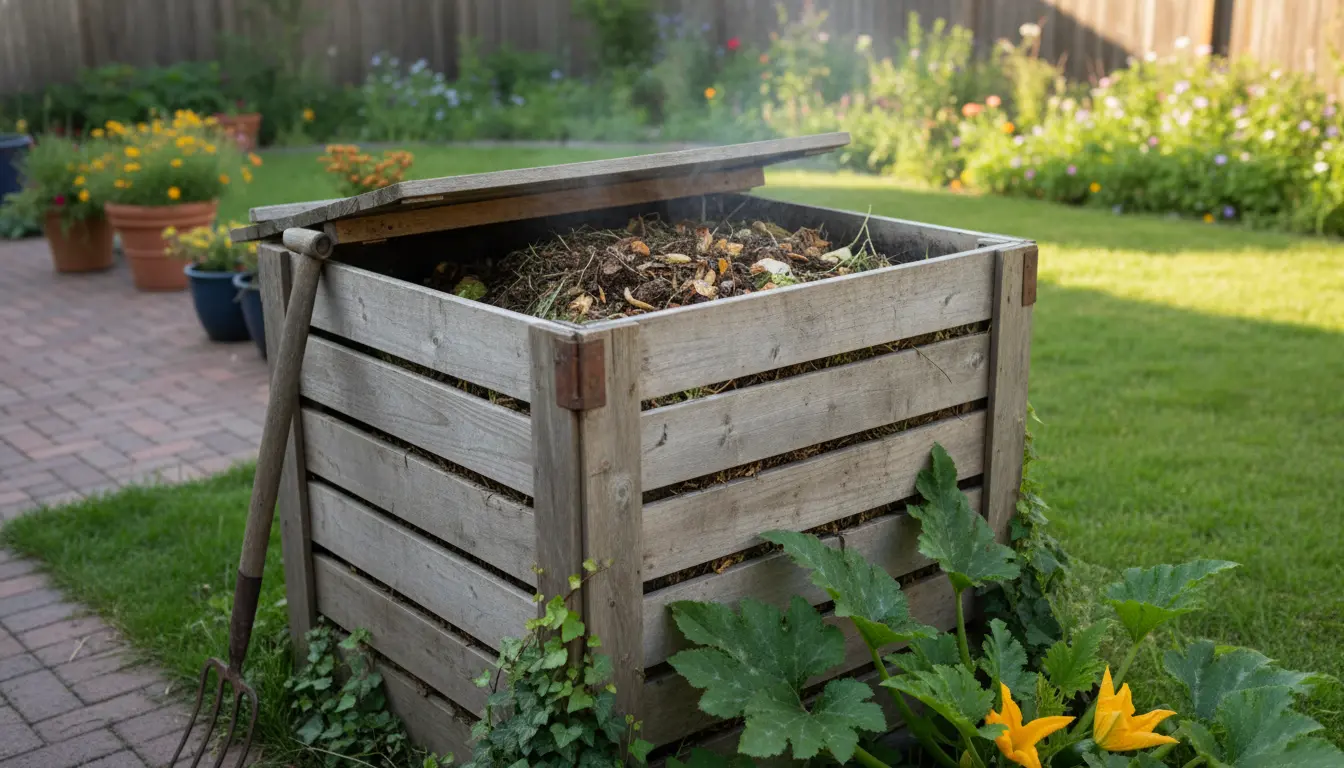
Why composting at home matters
Composting at home turns kitchen scraps and yard waste into a valuable soil amendment. It reduces landfill contributions and lowers household waste collection costs.
For many homeowners and renters, composting is a simple way to improve garden health while practicing sustainable waste management.
Getting started with composting at home
Start by choosing a method that fits your space and lifestyle. There are several composting options that work well for beginners.
Composting methods for beginners
- Cold bin composting – Simple pile or bin. Low maintenance, slower breakdown.
- Hot composting – Faster decomposition with active management of heat, moisture, and aeration.
- Compost tumblers – Enclosed drum rotated periodically to speed up breakdown and reduce pest access.
- Vermicomposting – Indoor or outdoor worm bins that break down food scraps quickly into nutrient-rich castings.
Choosing the right location
Pick a level, well-drained spot near a water source if possible. For apartment dwellers, a balcony bin or worm composter works well.
A shaded area prevents compost from drying out in hot weather, while partial sun helps in cooler climates.
Materials to use in composting at home
Successful composting balances carbon-rich (brown) and nitrogen-rich (green) materials. Aim for variety to support microbial activity.
Common green materials
- Fruit and vegetable scraps
- Coffee grounds and tea leaves
- Fresh grass clippings
Common brown materials
- Dry leaves and straw
- Shredded cardboard and paper
- Wood chips and sawdust (in moderation)
How to build and maintain your compost
Layer greens and browns or mix them for quicker decomposition. Aim for a roughly 2:1 ratio of browns to greens by volume.
Maintain moisture like a wrung-out sponge and turn the pile every 1–2 weeks for aerobic decomposition, especially for hot composting.
Quick maintenance checklist
- Turn or aerate regularly to avoid odors.
- Add water during dry periods and cover in heavy rain.
- Chop or shred large pieces to speed breakdown.
Troubleshooting common issues with composting at home
Problems are usually signs you can adjust balance or moisture. Address them quickly for consistent results.
Bad smells
Smelly compost usually means too much nitrogen or poor aeration. Add browns and turn the pile.
Pests
Use a closed bin, bury food scraps in the center, and avoid meat, dairy, or oily foods to reduce pests.
Slow decomposition
Chop materials, increase aeration, and ensure adequate moisture to speed up the process.
Composting can reduce household waste volume by up to 30 to 60 percent and returns nutrients to soil instead of sending them to landfills.
Using finished compost
Finished compost looks dark, crumbly, and smells earthy. Use it as a soil amendment, mulch, or tea to boost plant health.
Incorporate 1–3 inches into planting beds or mix 10–20% compost into potting mixes for better structure and nutrient retention.
Real-world example: Backyard composting case study
A family of four in a suburban home started a 4×4-foot compost bin and a small worm bin indoors. They sorted kitchen scraps and yard waste into the two systems.
Within six months they:
- Reduced weekly trash volume by 40%.
- Produced enough compost to top-dress vegetable beds and improve soil for spring planting.
- Reported healthier tomatoes and fewer fertilizer purchases.
They maintained the system by turning the outdoor bin every two weeks and harvesting worm castings monthly. Small adjustments—more dry leaves in the fall and covering during heavy rain—kept the bins balanced.
Practical tips for long-term success with composting at home
- Keep a small countertop pail with a charcoal filter for daily scraps to make composting convenient.
- Record what you add and how the pile responds for a simple composting log.
- Seasonally adjust: add more browns in fall, more greens in spring.
- Start small and expand once you find a rhythm that fits your household.
Next steps
Choose a method that suits your space and commit to two months of regular attention. Composting at home becomes easier as you learn what your pile or bin needs.
Expect better soil and less waste as tangible results of consistent, simple composting habits.