
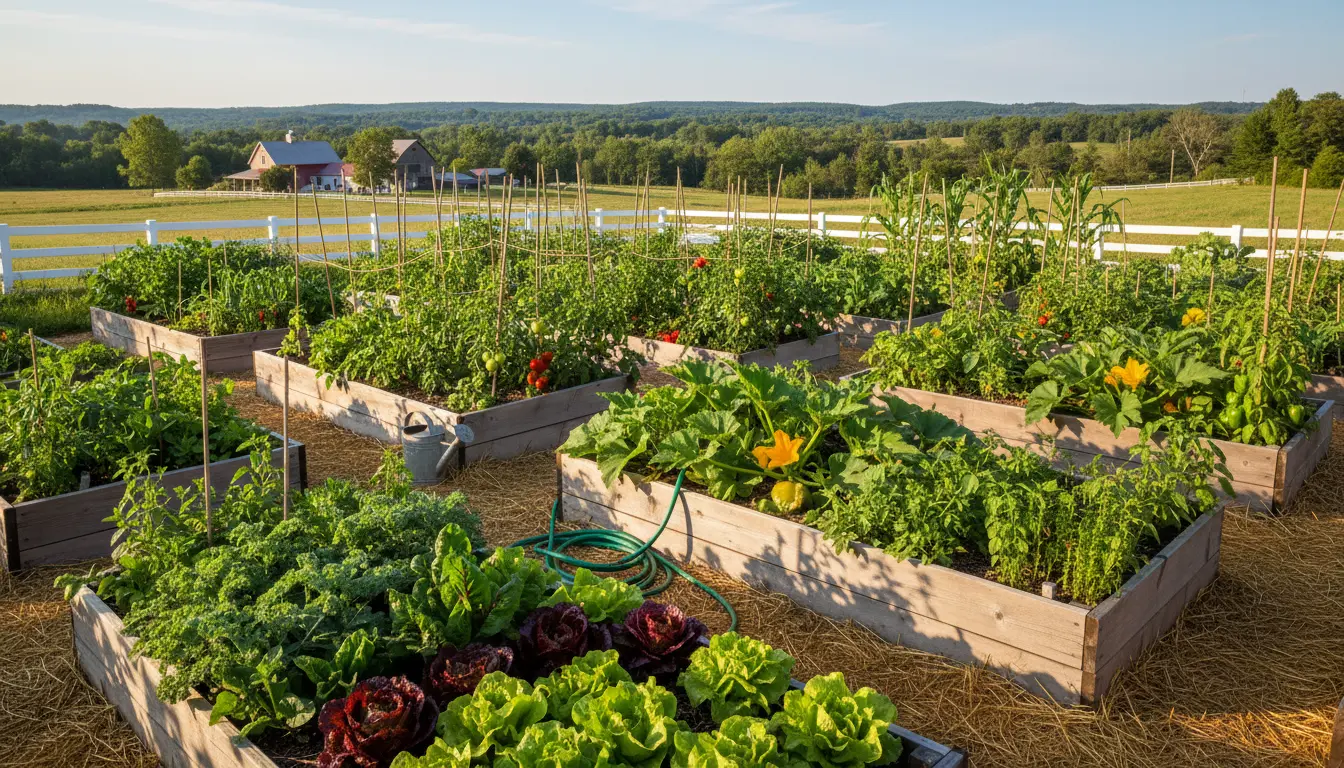
Starting a vegetable garden is an approachable way to grow fresh food, save money, and learn about seasonality. This guide gives clear, practical steps so you can plan, plant, and maintain a productive home garden.
How to Start a Vegetable Garden: Plan Your Space
Decide where to start your vegetable garden by looking for sunlight and access to water. Most vegetables need at least six hours of direct sun daily.
Consider these quick checks before you dig:
- Sun exposure: full sun, partial shade, or shade?
- Soil access: native soil or raised beds?
- Water source: hose, drip line, or watering can?
- Space: containers, raised beds, or in-ground rows?
Choose Location to Start a Vegetable Garden
Pick a flat or gently sloped site with good drainage. Avoid low spots where water pools after rain.
If backyard space is limited, use containers or vertical planters. Even a sunny balcony can grow tomatoes, peppers, and herbs.
How to Start a Vegetable Garden: Prepare Soil and Beds
Healthy soil is the foundation of a productive garden. Test your soil or assume you need to amend it for vegetables.
Basic soil prep steps:
- Clear weeds and grass from the planting area.
- Loosen the soil to 8–12 inches for most vegetables.
- Add compost or well-rotted manure to improve fertility and structure.
- Consider raised beds if native soil is poor or compacted.
Soil Mix for Containers and Raised Beds
Use a mix of quality topsoil, compost, and coarse sand or perlite for containers. A common ratio is 50% topsoil, 30% compost, 20% drainage material.
Mulch beds with straw or wood chips to conserve moisture and suppress weeds once plants are established.
How to Start a Vegetable Garden: Select Crops for Beginners
Choose easy-to-grow vegetables and follow your climate’s planting calendar. Fast, reliable crops boost confidence for new gardeners.
Beginner-friendly vegetables:
- Lettuce and salad greens (quick to harvest)
- Radishes (ready in weeks)
- Green beans (productive and low maintenance)
- Zucchini and summer squash (high yields)
- Tomatoes and peppers (great in containers or beds)
Stagger Planting to Extend Harvests
Plant small batches every 2–3 weeks for continuous harvests. Staggering reduces waste and keeps the garden producing longer.
How to Start a Vegetable Garden: Planting and Watering
Follow seed packet or plant tag spacing and depth. Seeds planted too deep or too close together may fail to thrive.
Water young plants gently but deeply to encourage strong roots. Aim for consistent moisture rather than frequent shallow watering.
- Water schedule: 1–2 inches per week, depending on weather.
- Use drip irrigation or soaker hoses to reduce leaf wetness and disease.
- Water early in the day to allow foliage to dry before evening.
How to Start a Vegetable Garden: Maintain and Protect
Regular maintenance keeps the garden productive. Tasks include weeding, feeding, staking, and monitoring for pests.
Integrated pest management tips:
- Inspect plants weekly for damage or pests.
- Use row covers to protect seedlings from birds and insects.
- Encourage beneficial insects with flowering herbs and native plants.
- Remove diseased leaves and keep good air circulation to reduce fungal issues.
Fertilizing Basics
Feed vegetables with a balanced organic fertilizer when growth slows or leaves yellow. Compost tea or fish emulsion are good mild feeds.
Avoid over-fertilizing, which can produce lush foliage but poor fruit set.
How to Start a Vegetable Garden: Harvesting and Storage
Harvest crops at peak maturity for best flavor and to encourage more production. Most vegetables are best picked in the morning when plants are turgid.
Simple storage tips:
- Leafy greens: refrigerate in a sealed bag for up to a week.
- Tomatoes: store at room temperature away from direct sun until ripe.
- Root crops: trim tops and store in a cool, dark place.
Did You Know? Many common vegetables, like lettuce and radishes, can be harvested in as little as 3–6 weeks from sowing. Fast crops are great for learning and keeping motivation high.
Small Case Study: A First-Season Raised Bed
Maria, a first-time gardener, built a 4×8 foot raised bed and planted lettuce, cherry tomatoes, bush beans, and basil. She used a 50/30/20 soil mix with compost and installed a soaker hose.
By midsummer she harvested weekly salads and a steady supply of beans. Maria reduced grocery lettuce purchases and learned to adjust watering after a dry spell caused wilting. The raised bed simplified weeding and improved drainage compared with her backyard soil.
Final Tips to Start a Vegetable Garden
- Start small: a few beds or containers are easier to manage than a large plot.
- Keep a simple journal of planting dates and yields to improve next season.
- Learn from neighbors, extension services, or local garden groups.
With basic planning, soil work, and regular care you can start a vegetable garden that feeds your family and teaches valuable skills. Begin with easy crops, adjust as you learn, and enjoy fresh produce from your own backyard.