
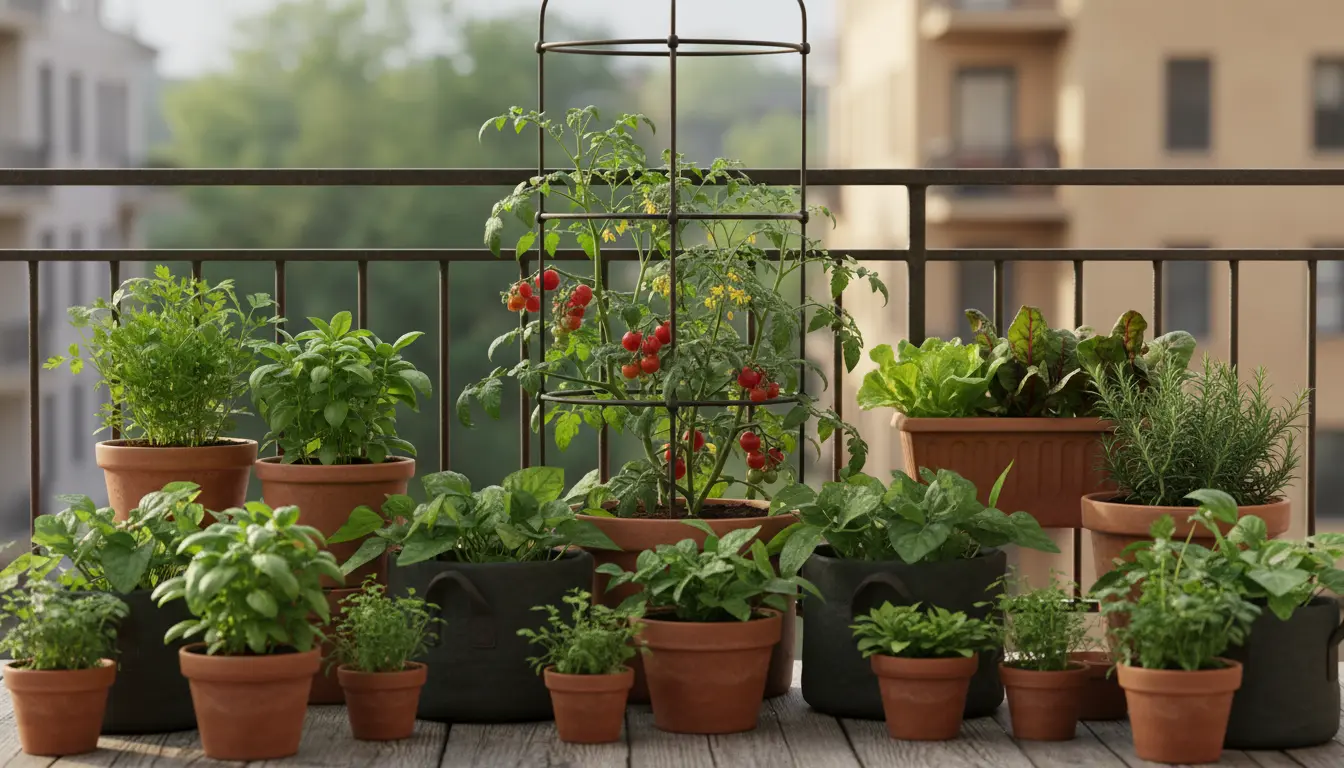
Plan Your Vegetable Garden in Small Spaces
Successful small-space gardening starts with a short planning step. Identify available space, sunlight hours, and how much time you can commit each week.
Measure the area and note orientation (north, south, east, west). Most vegetables need 4–6 hours of direct sun, so match plant choices to the light you have.
Choose Containers and Raised Beds
Containers are the backbone of small-space vegetable gardening. Use pots, window boxes, grow bags, and small raised beds depending on your surface.
Consider these factors when picking containers:
- Size: Deeper containers for root vegetables; at least 12 inches for tomatoes and peppers.
- Drainage: Holes and a saucer or a drip tray protect surfaces.
- Material: Terracotta breathes but dries fast; plastic holds moisture longer.
Container Ideas for a Vegetable Garden in Small Spaces
- Large half-barrels for compact tomatoes.
- Stacked planters for herbs and lettuces.
- Vertical planter pockets for lettuces, strawberries, and greens.
Pick the Right Soil and Fertilizer
Good potting mix is well-draining and rich in organic matter. Avoid garden soil in containers; it compacts and drains poorly.
Look for a mix labeled ‘potting mix’ or make your own by combining compost, coconut coir or peat, and perlite at roughly 3:2:1 by volume.
- Add slow-release fertilizer at planting time.
- Top-dress with compost every 4–6 weeks during the growing season.
Choose Plants Suited for Small Spaces
Select compact, dwarf, or bush varieties labeled ‘patio’, ‘bush’, or ‘compact’. These are bred to produce well in containers and tight spaces.
Good beginner-friendly choices include:
- Leafy greens: lettuce, spinach, arugula.
- Herbs: basil, parsley, cilantro, chives.
- Vegetables: cherry tomatoes, peppers, radishes, bush beans.
Use Vertical Gardening and Space-Saving Techniques
Vertical gardening multiplies usable area without increasing footprint. Use trellises, cages, and wall planters to grow vining crops upward.
Interplant fast-growing crops (radishes, lettuce) with slower growers (tomatoes) to maximize harvest from a single container.
Vertical Options for a Vegetable Garden in Small Spaces
- Trellises for cucumbers and pole beans.
- Hanging baskets for trailing cherry tomatoes.
- Stacked planters or pallet walls for herbs and greens.
Watering and Irrigation Tips
Containers dry faster than ground beds, so consistent watering is crucial. Check soil moisture with your finger: water when the top 1–2 inches feel dry.
Consider these watering solutions:
- Self-watering containers or wicking systems for steady moisture.
- Soaker hoses or micro-drip lines for grouped containers.
- Mulch the soil surface to reduce evaporation.
Light and Temperature Management
Match plants to available light. Shade-tolerant greens need 3–4 hours of sun, while fruiting crops require 6+ hours.
In hot climates, provide afternoon shade or move containers to cooler spots to prevent stress and bolting.
Maintenance and Pest Management
Inspect plants weekly for pests and disease. Small-space gardens are easier to monitor and treat quickly before problems spread.
Control methods include hand-picking pests, using insecticidal soap for soft-bodied insects, and encouraging beneficial insects like ladybugs.
Harvesting and Rotation
Harvest frequently to encourage continuous production—pick lettuce leaves, herbs, and ripe tomatoes when ready. Frequent harvesting also reduces disease risk.
Practice crop rotation in containers by changing plant families each season and refreshing the potting mix annually to avoid nutrient depletion.
One well-managed 4×4 foot raised bed or a few large containers can produce enough salad greens and herbs for a household of two for several months.
Small Real-World Case Study
Case Study: Sarah’s Balcony Vegetable Garden. Sarah had a 50 sq ft south-facing balcony and wanted fresh vegetables for two people.
She used three 20-gallon containers for tomatoes and peppers, two long window boxes for lettuce and herbs, and a vertical planter for strawberries. She watered with a simple drip system twice a day in summer and added compost monthly.
Results after one season: continuous salad greens for four months, three tomato harvests totaling about 25 pounds, and enough herbs to freeze for winter. The setup cost under $250 and required 3–4 hours of weekly maintenance.
Quick Checklist to Start Your Vegetable Garden in Small Spaces
- Measure space and record sunlight hours.
- Choose containers with good drainage and appropriate depth.
- Use high-quality potting mix and compost.
- Select compact plant varieties suited to your light levels.
- Water consistently and consider drip irrigation for convenience.
- Inspect for pests weekly and harvest frequently.
Starting a vegetable garden in small spaces is practical and rewarding with minimal investment. With the right containers, soil, plant choices, and routine care, you can grow a steady supply of fresh vegetables even in apartments and tiny yards.