
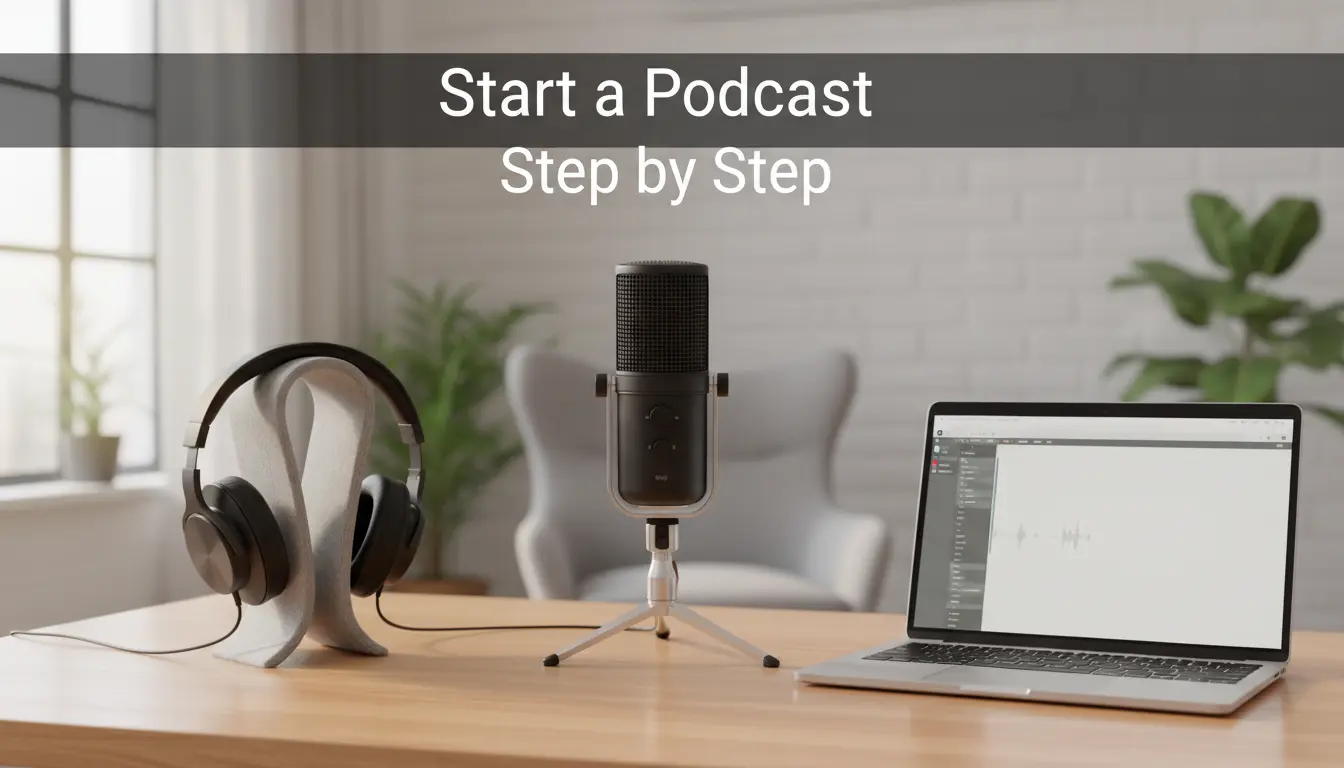
Plan Before You Start a Podcast
Successful podcasts begin with a clear plan. Define your topic, target audience, and episode format before recording.
Decide episode length, release cadence, and the primary goal—educate, entertain, or build an audience. A simple plan keeps production consistent.
Choose the Right Equipment to Start a Podcast
You do not need expensive gear to begin, but reliable basics matter. Prioritize audio clarity over flashy extras.
- Microphone: USB mics are affordable and easy; XLR mics offer better quality for long-term growth.
- Headphones: Closed-back headphones help detect background noise while recording.
- Pop filter and stand: Reduce plosives and stabilize the mic position.
Example starter setup: USB microphone, pop filter, laptop, and free editing software.
Recording Basics When You Start a Podcast
Choose a quiet, reflective space to minimize room noise. Test levels and record a short sample to check clarity.
Keep these recording tips in mind:
- Speak clearly at a consistent distance from the microphone.
- Record in segments or chapters to simplify editing later.
- Monitor audio on headphones to catch issues in real time.
Remote Interviews and Guests
For remote guests, use reliable tools like Zoom, Riverside, or SquadCast. Ask guests to use headphones and a quiet room.
Record separate tracks for each speaker when possible; it gives more control in editing.
Edit and Produce Your Episodes
Editing improves pacing and removes mistakes. Basic editing includes trimming silence, normalizing volume, and adding intros.
Software options range from free to professional:
- Free: Audacity, GarageBand
- Paid: Adobe Audition, Reaper
Export episodes as 128–192 kbps MP3 for a balance of quality and file size.
Host and Distribute After You Start a Podcast
Choose a podcast host to store files and generate an RSS feed. Popular hosts include Libsyn, Podbean, and Anchor.
Submit your RSS feed to major directories: Apple Podcasts, Spotify, Google Podcasts, and smaller aggregators.
Write Good Episode Titles and Descriptions
Clear titles and SEO-friendly descriptions help people find episodes. Include the main keyword and a concise summary.
Use timestamps and show notes when helpful to improve listener experience and search visibility.
Promote Your Podcast Practically
Promotion starts with consistency. Release episodes on a predictable schedule and maintain a simple content calendar.
Promotion tactics that work:
- Share episodes on social platforms with short audiograms or quotes.
- Repurpose episode highlights into blog posts or newsletters.
- Collaborate with other podcasters or guests who can cross-promote.
Monetization Options Once You Start a Podcast
Monetization takes time and audience. Common paths include sponsorships, listener support, and premium content.
Start with audience-building before pursuing ads. Even basic metrics help you negotiate sponsorships later.
Apple Podcasts and Spotify host millions of podcasts, but a focused niche often grows faster than generalist shows. Narrow topics can attract loyal listeners quickly.
Case Study: Local Book Club Podcast
A small city book club launched a weekly 30-minute podcast to discuss local authors. They used a single USB mic and free editing software.
After six months of consistent weekly episodes and local promotion, downloads grew to 1,200 per episode and they landed a sponsorship from a local independent bookstore.
Checklist: Steps to Start a Podcast
- Define topic, audience, and format.
- Choose equipment and recording space.
- Record a pilot episode and edit for clarity.
- Select a host and publish your RSS feed.
- Submit to directories and promote consistently.
Final Tips for Long-Term Podcast Success
Focus on consistency and gradual improvement. Measure downloads, ask for listener feedback, and adapt content based on data.
Start small, keep episodes manageable, and iterate. With a clear plan and steady effort, a podcast can become a valuable channel for audience growth.