
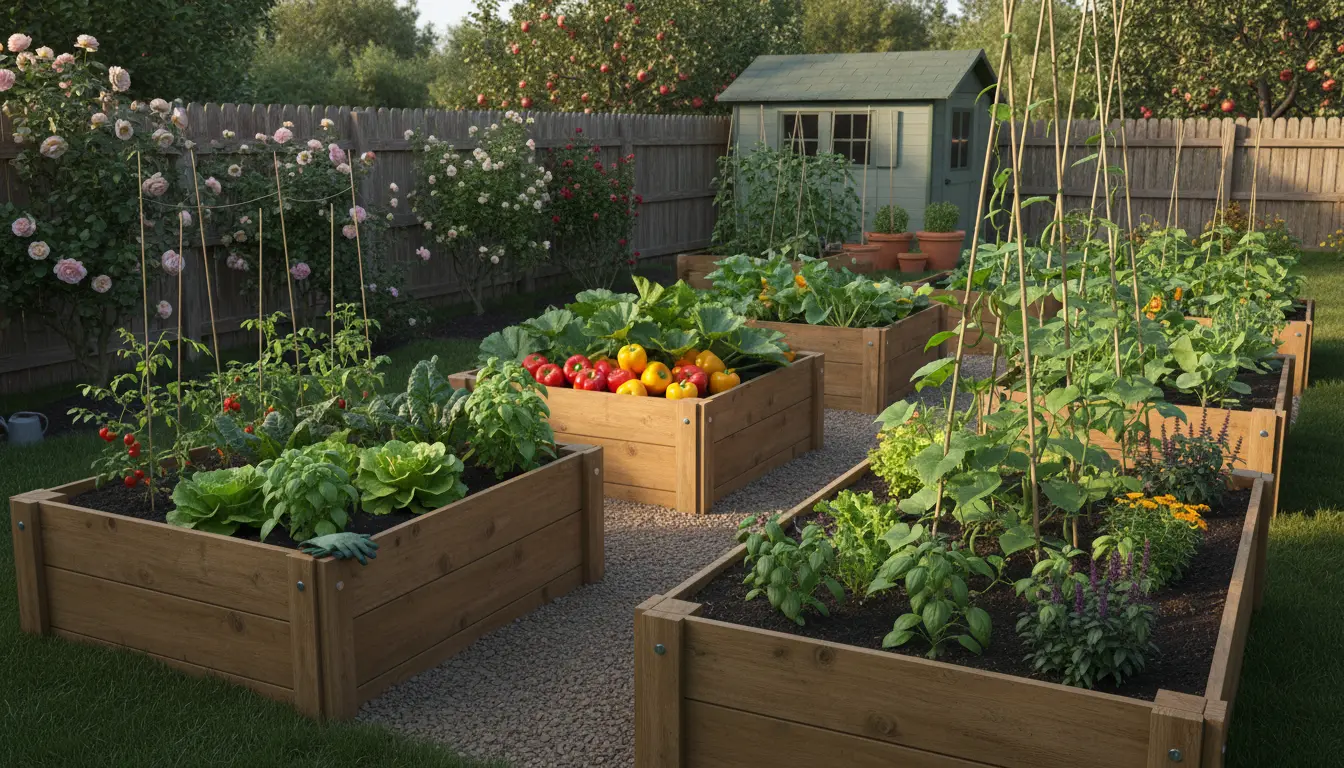
Start a Vegetable Garden: First Steps
Starting a vegetable garden is a practical way to grow fresh food and save money. This guide explains clear steps you can follow, even if you have limited space or experience.
Choose the Right Location to Start a Vegetable Garden
Pick a spot that gets at least six hours of direct sunlight daily. Vegetables need sun to produce fruit and strong growth.
Consider access to water and how close the bed is to your home. A convenient location makes maintenance easier and improves success.
Start a Vegetable Garden: Plan Your Layout
Decide between in-ground beds, raised beds, or containers. Each option suits different spaces and soil conditions.
- In-ground beds: Best for larger yards with good soil.
- Raised beds: Improve drainage and soil control in small or poor-soil sites.
- Containers: Ideal for balconies and patios; use large pots for root crops.
Sketch a Simple Garden Layout
Draw a plan showing bed sizes, access paths, and where tall plants will go. Leave 2-3 feet paths for easy access and harvest.
Group plants with similar water and sun needs to simplify care and reduce waste.
Start a Vegetable Garden: Prepare Soil and Compost
Healthy soil is the single most important factor in a productive vegetable garden. Test your soil pH with a simple kit; most vegetables prefer pH 6.0–7.0.
Amend soil with organic matter like compost to improve structure and nutrients. Work 2–3 inches of compost into the top 6–8 inches of soil.
Basic Soil Prep Steps
- Clear grass and weeds from the bed area.
- Loosen soil to a depth of 6–8 inches with a fork or tiller.
- Mix in compost at a 1:4 ratio (compost to native soil) for raised beds.
Start a Vegetable Garden: Choose Plants for Beginners
Select easy-to-grow vegetables that fit your climate and season. Many beginners start with lettuce, tomatoes, radishes, beans, and zucchini.
Use local extension services or seed catalogues to choose varieties labeled “beginner friendly” or “disease resistant.”
Planting Schedule and Succession Planting
Follow planting dates for your region. Cool-season crops (lettuce, peas) go in early spring or fall. Warm-season crops (tomatoes, peppers) go out after the last frost.
Use succession planting—stagger plantings every 2–3 weeks—to extend harvests and reduce gaps in production.
Start a Vegetable Garden: Watering and Mulching
Consistent moisture is crucial for healthy vegetables. Water deeply and less frequently rather than shallow daily watering.
- Water 1–2 inches per week, adjusting for weather and soil type.
- Use drip irrigation or soaker hoses to target roots and conserve water.
Apply 2–3 inches of organic mulch (straw, shredded bark) to reduce evaporation, suppress weeds, and moderate soil temperature.
Fertilizing Tips
Start with a balanced organic fertilizer at planting, then side-dress with compost or light fertilizer during the growing season. Avoid over-fertilizing leafy growth at the expense of fruit production.
Start a Vegetable Garden: Pest and Disease Basics
Monitor plants weekly for pests, yellowing leaves, or unusual spots. Early detection makes control manageable and less chemical-dependent.
Use integrated practices: hand-pick pests, encourage beneficial insects, rotate crops, and remove diseased plants promptly.
Simple Organic Controls
- Row covers to protect seedlings from insects.
- Neem oil or insecticidal soap for soft-bodied pests.
- Crop rotation to reduce soil-borne diseases.
Start a Vegetable Garden: Harvesting and Ongoing Care
Harvest regularly to encourage continued production. Pick tomatoes when slightly soft, and harvest lettuce leaves when young for better flavor.
Keep beds tidy by removing spent plants and adding compost in the fall. This maintenance prepares soil for the next season and reduces pests.
Case Study: A Small Raised Bed Success
Anna converted a 4×8 raised bed in her urban yard and planted tomatoes, bush beans, and leaf lettuce. She added two inches of compost before planting and installed a soaker hose linked to a timer.
By midseason she harvested tomatoes every week and multiple salads from lettuce rotations. Her initial investment returned in fresh produce within three months.
Key Takeaways from the Case Study
- Raised beds improve drainage and reduce weeding time.
- Simple irrigation saves time and ensures consistent yields.
- Regular harvesting and succession planting maximize productivity.
Start a Vegetable Garden: Quick Checklist
- Choose a sunny, accessible spot.
- Decide bed type: in-ground, raised, or containers.
- Test and amend soil with compost.
- Select beginner-friendly varieties suited to your climate.
- Set up simple irrigation and mulch to retain moisture.
- Monitor pests and rotate crops annually.
With basic planning and weekly care, you can start a vegetable garden that provides fresh food and satisfaction. Begin small, learn from each season, and expand as you gain confidence.