
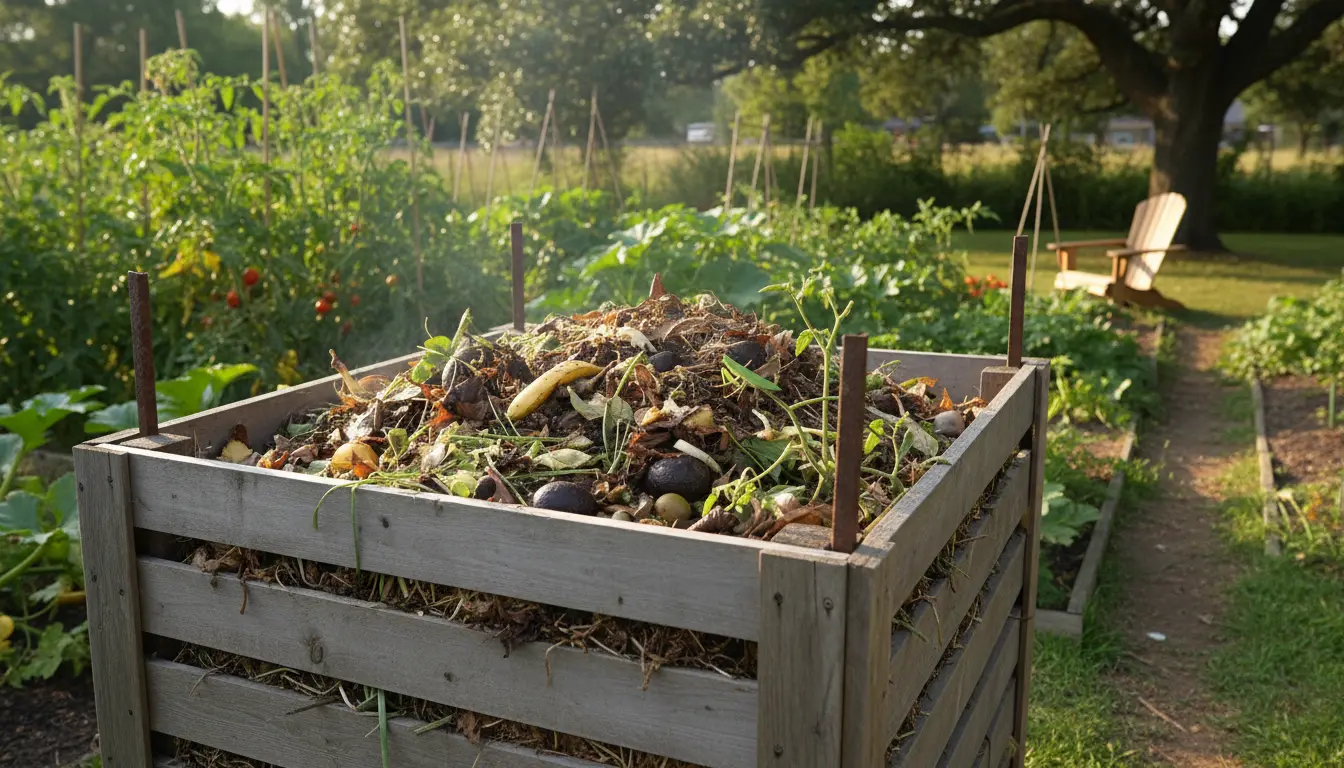
Start Here: Why Home Composting Matters
Home composting turns kitchen scraps and yard trimmings into rich soil. It reduces household waste, lowers landfill emissions, and improves garden health.
This guide gives clear, practical steps to start composting at home. It focuses on small-scale systems that fit patios, balconies, and backyards.
How to Start Home Composting
Choose a compost method that fits your space and needs. The common types are a simple pile, a bin, or a tumbler. Each method works if you follow basic rules.
- Compost pile: Best for bigger yards and more material.
- Compost bin: Tidier option; retains heat and moisture well.
- Compost tumbler: Fast processing and easy turning.
Find a level, shaded spot with good drainage. If using a container, place it on soil to let worms and microbes in.
Gather the Right Materials for Home Composting
Effective compost needs a balance of carbon and nitrogen. Aim for a mix of “brown” and “green” materials.
- Browns: Dry leaves, shredded paper, cardboard, straw. These add carbon.
- Greens: Fruit and vegetable scraps, coffee grounds, fresh grass clippings. These add nitrogen.
A simple rule is roughly 3 parts browns to 1 part greens by volume. Chop larger items to speed decomposition.
Basic Composting Process and Maintenance
Follow these steps to keep your compost active and odor-free. Regular attention makes composting simple and reliable.
- Add layers of browns and greens. Start with a layer of coarse browns for airflow.
- Keep the pile moist, like a wrung-out sponge. Water if it gets dry; cover if too wet.
- Turn the pile every 1 to 3 weeks to aerate and mix materials.
- Monitor temperature. A hot pile (40 to 60°C) breaks down faster; cool piles still work but take longer.
Use a pitchfork or a garden fork to turn small piles. Tumblers simplify turning by rotating the drum.
What Not to Put in Home Composting
Avoid items that attract pests, spread disease, or slow the process. Keep these out of your compost:
- Meat, fish, bones, and dairy
- Oily or greasy foods
- Diseased plants and persistent weeds with seeds
- Pet waste from carnivores
Composting can reduce household waste volume by up to 30 percent. Finished compost improves soil structure and water retention for healthier plants.
Troubleshooting Common Home Composting Problems
Most issues are simple to fix once you know the signs. Below are common problems and quick remedies.
- Bad smell: Add more browns and turn the pile to increase oxygen.
- Sluggish breakdown: Chop materials finer, add greens, and keep the pile moist.
- Too wet: Mix in dry browns and ensure good drainage.
- Pests: Bury food scraps within the pile, or use a closed bin or tumbler.
Speeding Up Composting at Home
Want finished compost faster? Use these tips to accelerate the process without extra cost.
- Shred or chop kitchen scraps and yard waste to increase surface area.
- Maintain a higher green-to-brown ratio temporarily to raise temperature.
- Add finished compost or garden soil to introduce beneficial microbes.
- Insulate the pile in cold weather with straw or a compost cover.
Using Finished Compost in Your Garden
Compost is ready when it looks dark, crumbly, and earth-like, with no recognizable food or leaves. Use it in multiple ways around your home.
- Top-dress garden beds to add nutrients and improve soil texture.
- Mix compost into potting mix for container plants.
- Work a few inches into vegetable beds before planting.
Small Real-World Case Study
Sarah, an apartment gardener, started a small bin on her balcony. She used 2 parts shredded paper to 1 part kitchen greens and turned the bin weekly.
Within six months she had enough compost to top-dress five container plants. Her plants showed better growth and needed less frequent watering.
Simple Checklist to Start Home Composting Today
Use this quick checklist to begin composting this week. Keep it visible near your compost area.
- Choose a bin or pile location with shade and drainage.
- Collect a supply of browns and a container for kitchen scraps.
- Layer materials and keep the mix moist but not soggy.
- Turn the pile every 1 to 3 weeks and monitor progress.
Home composting is a low-cost way to reduce waste and build healthier soil. With simple tools and regular attention you can create nutrient-rich compost that benefits your plants and the planet.