
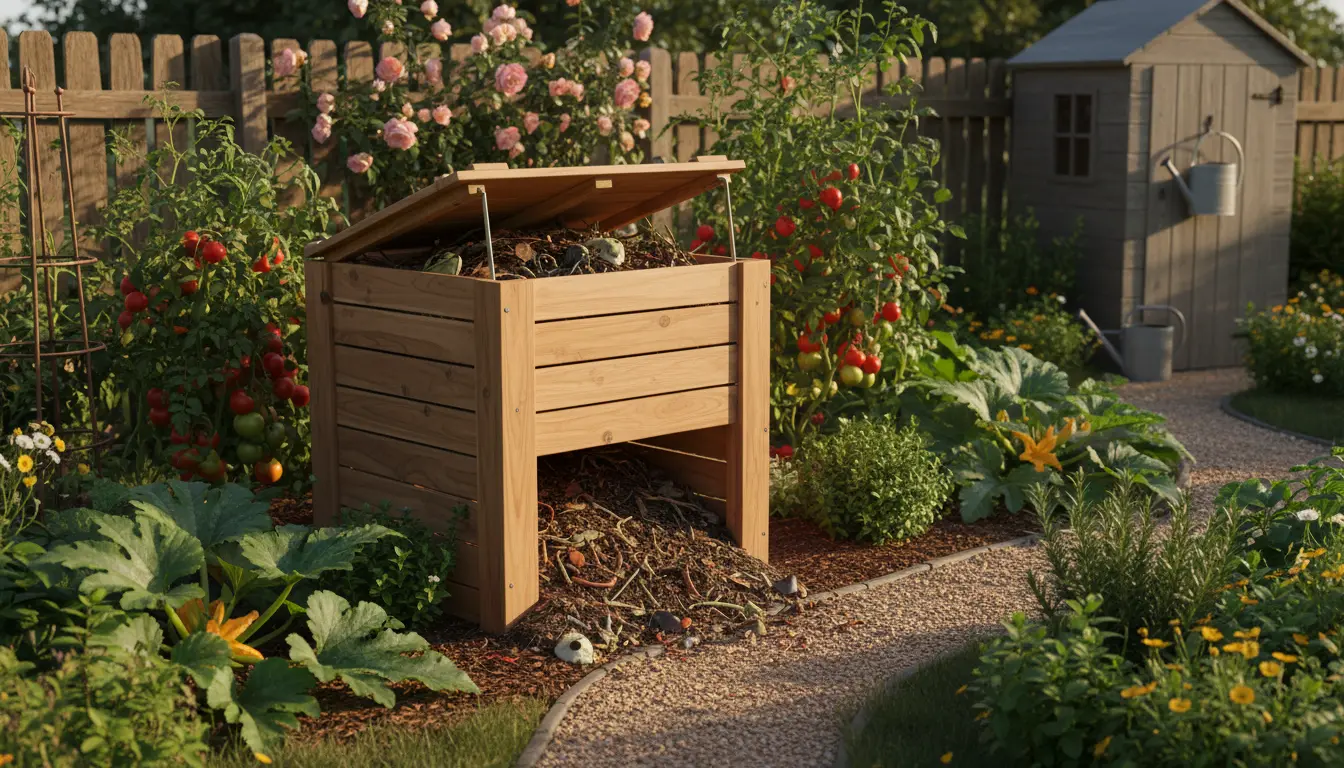
Why Home Composting Matters
Home composting turns kitchen and yard waste into valuable soil amendment. It reduces landfill waste and improves garden health without chemicals.
For beginners, composting is a low-cost way to recycle nutrients and save on fertilizer. You can start with a small bin or a simple pile.
Getting Started with Home Composting for Beginners
Before you buy equipment, decide where you will compost. Pick a well-drained spot with partial shade and easy access from the kitchen.
Choose a container that matches your space and waste volume. Options include open piles, tumblers, wooden bins, and worm bins for small spaces.
Essential tools and supplies
- Compost bin or container
- Garden fork or turning tool
- Kitchen collection bucket with a lid
- Optional: thermometer to monitor temperature
Setting Up Your Compost Bin
Create a base layer of coarse material like small branches or straw to improve airflow. This helps microbes do their job and reduces odors.
Layer green (nitrogen-rich) and brown (carbon-rich) materials. Aim for about 2 parts brown to 1 part green by volume.
Step-by-step setup
- Place bin on soil to allow worms and microbes to enter.
- Add a 2-4 inch layer of coarse browns for drainage.
- Add green scraps and cover with brown material to keep pests away.
- Keep the pile moist like a wrung-out sponge and turn every 1-2 weeks.
What to Compost and What to Avoid
Knowing acceptable materials makes composting simple and safe. Good items decompose quickly and balance the pile.
Compostable materials
- Greens: vegetable peels, fruit scraps, coffee grounds, fresh grass clippings
- Browns: dry leaves, shredded paper, cardboard, straw
- Small amounts of plant trimmings and finished garden waste
Materials to avoid
- Meat, dairy, and oily foods that attract pests
- Diseased plants and weed seeds if you plan to use compost on edible gardens
- Pet waste from carnivores and coal ash
Maintaining Your Home Composting System
Regular maintenance keeps compost active and fast. The three variables to manage are carbon, nitrogen, and moisture.
Turn the pile to add oxygen and speed up decomposition. If the pile is slow, add more greens and water if dry.
Routine checklist
- Weekly: Add kitchen scraps and cover with brown material.
- Every 1–2 weeks: Turn the pile to aerate.
- Monthly: Check moisture and temperature. Adjust as needed.
Properly managed compost can reach temperatures of 130 to 160°F and kill most weed seeds and pathogens. Hot composting speeds up breakdown and produces finished compost in weeks to months.
Troubleshooting Common Problems in Home Composting
Beginners often face odors, pests, or slow decomposition. Each problem has a simple fix based on the pile’s balance.
Bad smells
Smells usually mean too much moisture or too many greens. Add dry browns like shredded cardboard and turn the pile to aerate.
Pests
Raccoons, rodents, or flies come from exposed food scraps. Keep a tight lid, bury fresh scraps under brown layers, and avoid meat or dairy.
Slow breakdown
Slow decomposition often means poor aeration, low moisture, or lack of nitrogen. Turn the pile, add water if dry, and mix in fresh greens.
Small Case Study: Urban Apartment Compost
Maria lives in a third-floor apartment and started home composting with a small worm bin on her balcony. She used food scraps and shredded paper as bedding.
Within three months, the worms produced crumbly compost used to top houseplants. Maria reduced her trash by about 30 percent and saved on potting mixes.
Practical Tips for Home Composting for Beginners
- Start small and scale up as you learn what works.
- Keep a small kitchen pail with a tight lid for daily scraps.
- Shred or chop materials to speed decomposition.
- Use finished compost as a soil topper, in potting mixes, or to enrich garden beds.
Final Thoughts
Home composting is an easy, practical way to reduce waste and improve soil health. With simple tools and a little routine, beginners can produce nutrient-rich compost in months.
Focus on balance, aeration, and moisture. Troubleshoot problems quickly and adapt your system to your space and needs.