
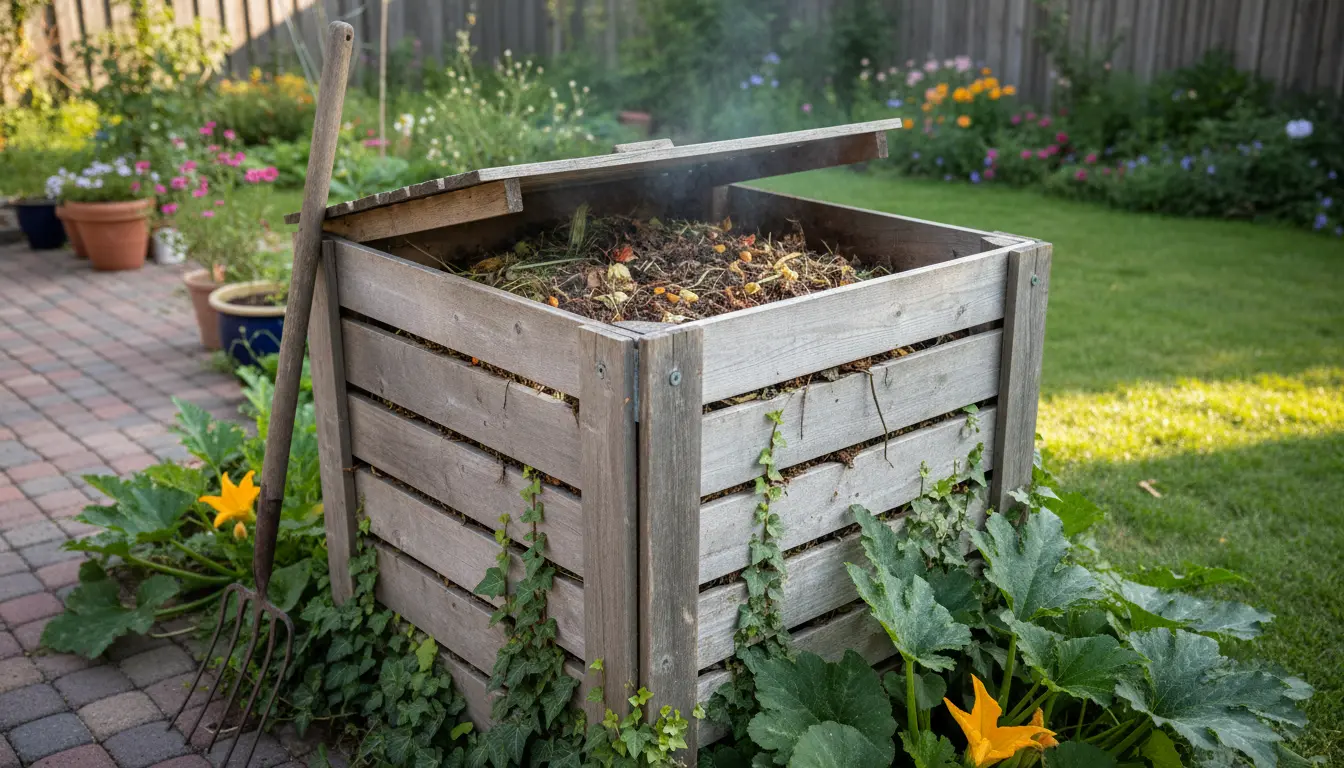
Home Composting Basics
Home composting turns kitchen scraps and yard waste into nutrient-rich soil. It reduces landfill waste and improves garden health without complex equipment.
This guide covers simple methods, what to compost, and common problems so beginners can start confidently.
Why Choose Home Composting
Composting is an easy, low-cost way to recycle organic material. It lowers household waste volume and cuts methane emissions from landfills.
Gardeners get a free soil amendment that improves soil structure, water retention, and plant growth.
Choose a Composting Method
Select a method that fits your space, time, and comfort level. Each method works but has different maintenance needs.
- Bin composting — Simple, contained system for yards and patios.
- Tumbler composting — Faster breakdown with easy turning; good for small gardens.
- Bokashi — Fermentation method for apartments; handles cooked food and dairy.
- Vermicomposting — Uses worms to process kitchen waste indoors or in a small outdoor bin.
What to Compost: Green and Brown Balance
Compost needs a balance of nitrogen-rich “greens” and carbon-rich “browns.” Aim for roughly a 2:1 ratio by volume (greens to browns) for rapid decomposition.
- Greens: Fruit and vegetable scraps, coffee grounds, grass clippings.
- Browns: Dry leaves, shredded paper, cardboard, straw.
Avoid meat, bones, oily foods, and pet waste in open outdoor heaps to prevent pests. Use Bokashi or high-heat systems for those materials.
Setting Up a Home Compost Bin
Place the bin on bare soil or a well-drained area to allow beneficial organisms to enter. Avoid sealed concrete platforms unless you plan to move finished compost.
Layer materials and keep the pile moist like a wrung-out sponge. Turn or aerate regularly to speed breakdown and prevent odors.
Step-by-Step Setup
- Choose your bin location and type.
- Start with a 3–4 inch layer of coarse browns for drainage.
- Add alternating layers of greens and browns.
- Keep the pile moist and turn every 1–2 weeks for faster results.
- Harvest finished compost after 2–6 months depending on method and maintenance.
Troubleshooting Common Issues
Problems are usually easy to fix once you know the cause. Below are common issues and quick solutions.
- Bad smells: Add more browns and turn the pile. Smells usually mean too much moisture or too many greens.
- Slow decomposition: Check particle size and aeration. Chop scraps smaller and turn more often.
- Pests: Avoid meat and fatty foods. Use a closed bin or bury food in the center of the pile.
- Too dry: Water the pile until it’s damp but not soggy.
Compost can raise soil organic matter and can increase water retention by up to 20 percent in sandy soils. Adding a few inches of finished compost can greatly improve plant resilience during dry spells.
Simple Maintenance Checklist
Keep maintenance predictable with a weekly checklist. Small, consistent actions prevent larger problems.
- Mix new kitchen scraps with browns each time you add them.
- Check moisture level; add water or dry browns as needed.
- Turn or aerate the pile according to method.
- Harvest finished compost and replace with fresh materials.
Real-World Example: A Small Urban Garden Case Study
Anna, a city gardener with limited space, started a 60-liter tumbler on her apartment balcony. She used coffee grounds, vegetable peelings, and shredded newspaper.
By turning the tumbler twice a week and balancing greens and browns, Anna produced usable compost in about three months. She used the compost to top-dress potted herbs, resulting in visibly healthier plants and less purchased potting mix.
Key takeaways from her case:
- Small systems can be effective with regular attention.
- Shredding or chopping scraps accelerates decomposition.
- Even limited compost use improves plant growth and reduces waste.
Using Finished Compost
Finished compost looks dark, crumbly, and earthy-smelling. Use it as a soil conditioner, potting mix ingredient, or mulch top layer.
- Mix 10–30% compost into garden beds to improve structure.
- Top-dress lawns and containers to add nutrients slowly.
- Make a compost tea by steeping compost in water for a mild liquid feed.
Final Tips for Home Composting Beginners
Start small and keep it simple. You can scale up as you gain confidence and see results.
Track what you add and how often you turn the pile. This record helps identify what works best for your climate and household habits.
With basic attention to balance, moisture, and aeration, home composting is an accessible and rewarding way to reduce waste and support healthier plants.