
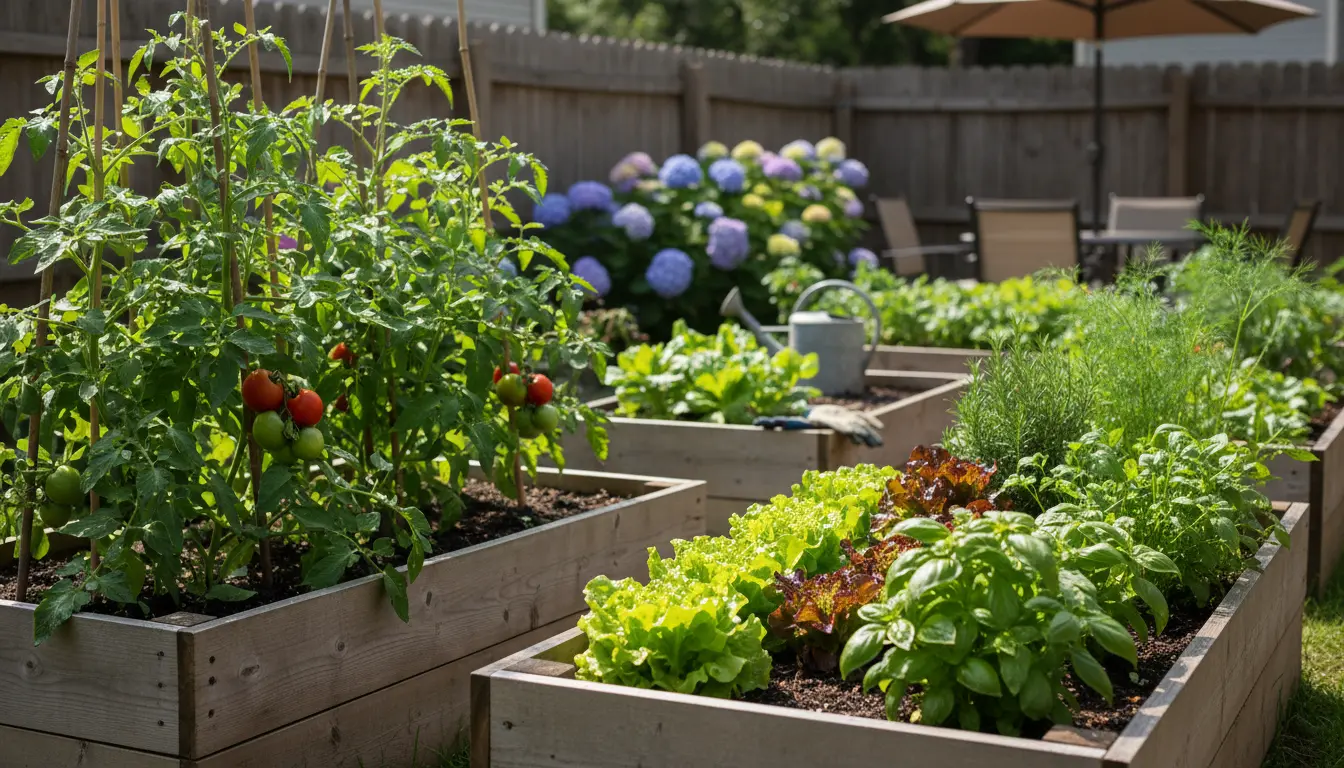
Starting a vegetable garden at home is a manageable project for beginners and experienced gardeners alike. This guide breaks the process into clear, actionable steps so you can grow healthy vegetables without unnecessary complexity.
Why start a vegetable garden at home
Growing your own vegetables saves money and gives you fresher produce with better flavor. A home garden also reduces food miles and can be a therapeutic outdoor activity for the whole family.
You don’t need a large yard or specialized tools to begin. A small raised bed, containers, or a sunny balcony can produce meaningful yields.
Plan your garden: choose location and size
Pick the right spot for your vegetable garden
Most vegetables need at least 6 hours of direct sunlight. Look for a spot with good drainage and convenient water access. Avoid low areas that stay wet after rain.
Consider proximity to the kitchen for easy harvests and a location that is visible so you remember to water and maintain it.
Decide on garden size and type
Begin with a small, manageable space. A 4×8 foot raised bed or a few large containers is ideal for first-time gardeners. Expand later as you gain experience.
- Raised beds: Better soil control and drainage.
- Containers: Good for balconies and patios.
- In-ground plots: Best for larger spaces and long-term planting.
Prepare soil and choose amendments
Soil quality determines how well plants grow. Test the soil pH with a simple kit to see if adjustments are needed. Most vegetables prefer a pH between 6.0 and 7.0.
Improve soil by adding organic matter. Compost and well-rotted manure increase fertility and structure, helping roots grow stronger.
Basic soil mix for raised beds
Use a blend of topsoil, compost, and a loamy amendment. A common mix is 50% topsoil, 30% compost, and 20% coarse sand or aged bark for drainage.
Pick the right vegetables for your start
Choose crops that fit your climate, season, and skill level. Fast-yielding, low-maintenance plants help build confidence early on.
- Beginner-friendly choices: Lettuce, radishes, spinach, cherry tomatoes, bush beans, and herbs.
- Consider succession planting to harvest multiple times through the season.
Planting schedule and spacing
Follow seed packet or plant tag recommendations for planting depth and spacing. Crowding plants reduces airflow and increases disease risk.
Use a simple planting schedule based on your last frost date. Many regions offer local planting calendars from extension services.
Watering and feeding your vegetable garden
Consistent moisture is essential for steady growth and good flavor. Water deeply at the base of plants rather than frequent shallow sprays.
Mulch around plants to retain moisture and suppress weeds. Apply a balanced organic fertilizer every 4–6 weeks for nutrient support.
Watering tips
- Water in the morning to reduce fungal problems.
- Use drip irrigation or soaker hoses to conserve water.
- Check soil moisture by pressing a finger an inch into the soil; water if dry at that depth.
Pest and disease management
Prevention is the best strategy. Healthy soil and proper spacing reduce pest pressure. Regularly inspect plants for signs of insects or disease.
Use integrated pest management (IPM): physical barriers, hand-picking pests, encouraging beneficial insects, and organic controls as a last resort.
Common solutions
- Floating row covers protect young plants from insects.
- Companion planting can deter pests and attract pollinators.
- Neem oil and insecticidal soap handle many soft-bodied insects without harming beneficials when used properly.
Planting basil near tomatoes may improve tomato flavor and attract pollinators. Quick-growing radishes help mark rows and can be harvested before slower crops need the space.
Small real-world example: Sara’s 10×10 raised bed
Sara converted a 10×10 corner of her yard into two 4×8 raised beds and several containers. She started with lettuce, tomatoes, bush beans, and herbs. By using compost and a drip hose, she reduced watering time to 15 minutes every other day.
After the first season, Sara reported weekly harvests of salad greens and enough tomatoes to share with neighbors. She expanded one bed the next year and added peppers based on what grew well for her climate.
Seasonal care and harvesting
Monitor plants for maturity and harvest regularly to encourage more production. Leafy greens can be picked leaf-by-leaf, while root crops need gentle digging.
Prepare beds for winter by adding compost and removing diseased plant material. Consider cover crops to improve soil fertility over the offseason.
Quick checklist to start a vegetable garden
- Choose a sunny location and suitable container or bed.
- Test and amend soil; add compost.
- Select beginner-friendly vegetables and plan spacing.
- Set up watering: drip line, soaker hose, or hand-watering routine.
- Mulch to conserve moisture and control weeds.
- Inspect regularly for pests and apply IPM methods.
Starting a vegetable garden at home is a step-by-step process that rewards attention and patience. Begin small, learn what works in your microclimate, and expand gradually. With basic care and planning, you can enjoy fresh homegrown vegetables all season long.